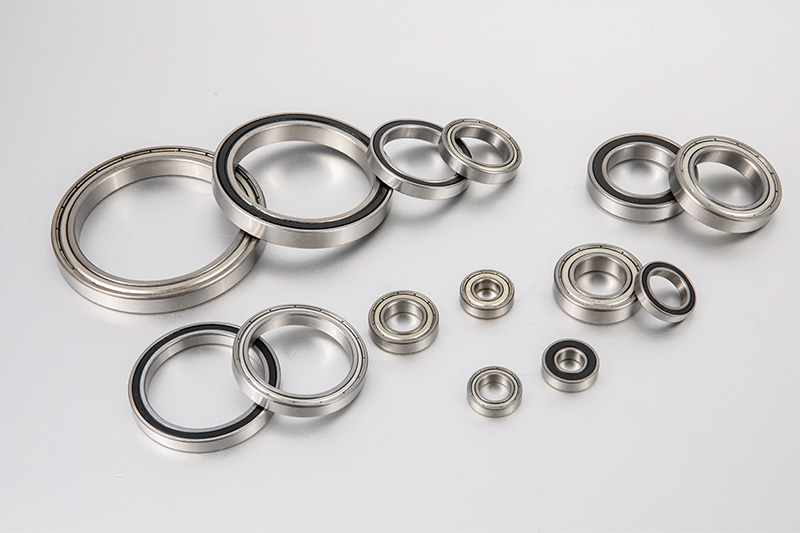
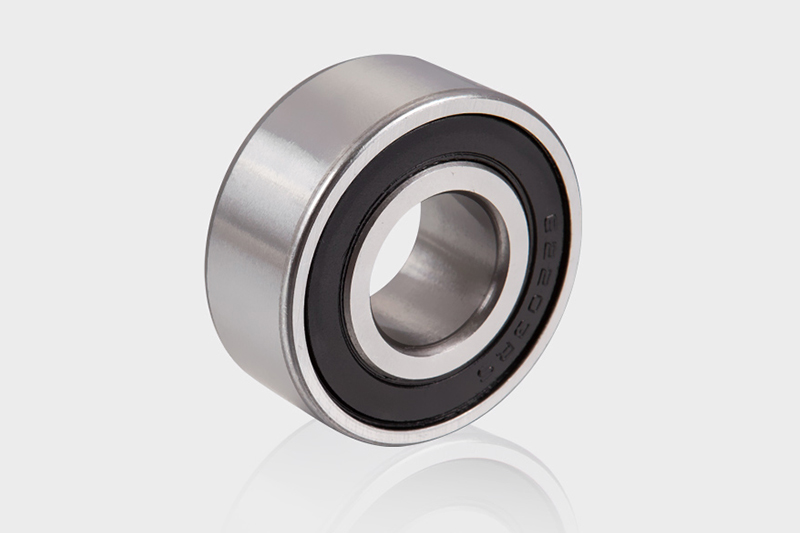
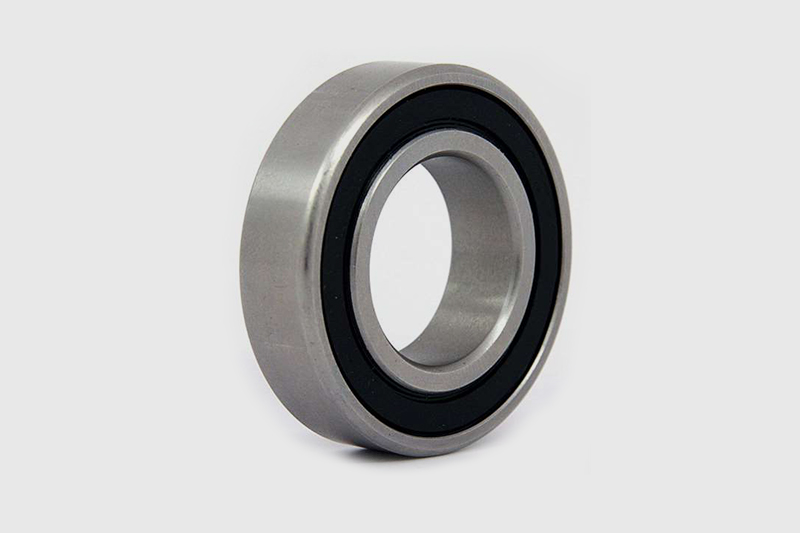
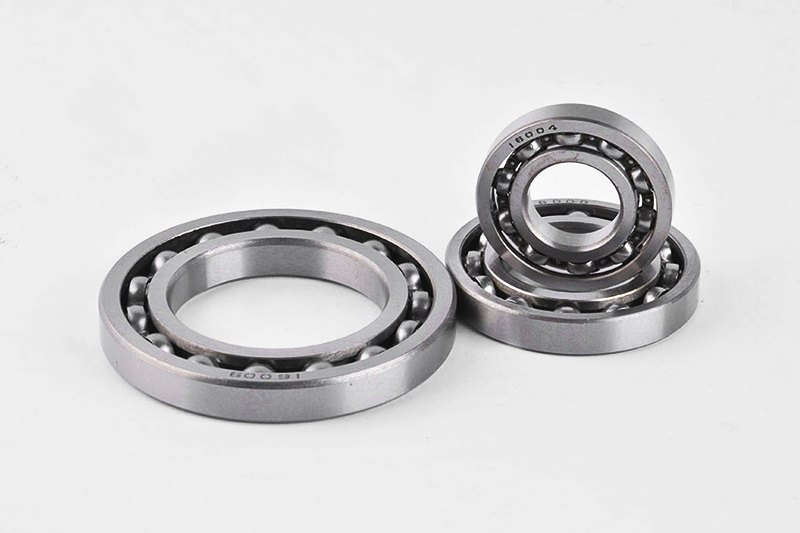
Series 1600 Chrome Steel Deep Groove Ball Bearing
Product Overview The Series 1600 Deep Groove Ball ...




Content
Efficiency in food manufacturing is rarely decided by one big machine. It is decided by hundreds of small, repeatable moments: a filler that starts on the first attempt, a conveyor that runs a whole shift without a stop, a washdown that finishes before the next batch is due. When those moments repeat reliably, output rises without anyone working harder.
Most improvement programmes begin with the expensive, visible systems. That is natural, because they are easy to justify. But in plants that run well year after year, the difference is usually found lower down, in the rotating components that carry every load the process creates. This article looks at food manufacturing efficiency from that angle: the line, the losses, and the small parts that decide whether production keeps moving.
Efficiency describes how well a line converts energy, materials, labour and time into saleable product. It is not a single number. In practice, most food plants watch four measures together, because a gain in one place often shows up as a loss somewhere else if it is chased in isolation.
Availability multiplied by performance and quality. It tells you how much of the scheduled time produced good product, and it separates the three reasons a line falls short.
Finished kilograms against input kilograms. Small, persistent losses in transfer, filling and trimming add up to far more than a single dramatic event.
Motors, refrigeration and compressed air dominate. Friction, misalignment and over-tensioning quietly raise consumption on every drive in the plant.
In high-variety production, the time between good batches matters as much as the time during them. Hygienic design shortens both cleaning and inspection.
When maintenance teams review unplanned downtime, the same patterns appear again and again. The chart below reflects common experience rather than any single plant's data, but it is a useful reminder of where attention usually pays back fastest.
The first bar is the one this article can influence most. A bearing rarely fails without warning. It announces itself through noise, temperature, vibration and grease condition, long before the line stops. Catching those signals early is the cheapest efficiency project available to most food manufacturers.
Walking a line from intake to palletiser makes the losses easier to see. Each stage loads its shafts differently, and each stage asks something different of the components that support rotation. The timeline below follows a typical sequence.
Screw conveyors, bucket elevators and belt feeders carry the first loads. Head and tail pulley bearings here work in dust and uneven tension. A slightly misaligned pillow block unit turns into belt wander, spillage and repeated operator correction, which is a hidden cost every hour of the shift.
Agitator shafts combine heavy radial loads with vibration and frequent stops. Insert bearings are common here because they tolerate shaft deflection and are straightforward to replace. When they loosen on the shaft, the whole mixing action becomes inconsistent, and batch-to-batch variation appears as a quality cost rather than a maintenance one.
Forming equipment pushes material against resistance, so axial loads arrive together with radial ones. Thrust capability, preload and clearance control decide whether the product keeps its shape at higher speeds. This is one of the few places where a marginal bearing choice changes the product itself.
Transfer points are where product accumulates, where belts are re-tensioned and where washdown water collects. Sealed units and stainless housings reduce the friction that grows from contamination, and they cut the time an operator spends freeing a jammed belt.
Ovens, fryers and steamers test grease life. High temperatures thin lubricant, reduce clearance and accelerate cage wear. Units specified for heat, with the right clearance and heat-stable lubrication, keep throughput steady instead of forcing speed reductions as the equipment warms up.
Cold rooms and spiral freezers bring condensation and ice. Grease stiffens, starting torque rises and motors draw more current. Bearings that handle low temperatures well protect both the drive and the product quality that depends on consistent cooling.
At the end of the line, speeds are highest and tolerances tightest. Noise, vibration and film tracking all trace back to rotating accuracy. A precise, low-noise ball bearing is not a luxury here; it is what allows a packaging machine to run at rated speed without constant adjustment.
The final stage is not a process step but a reset. Water, detergent and time pressure meet in the same twenty minutes. Hygienic components that shed water and resist corrosion turn cleaning into a predictable task instead of an inspection exercise.
Bearings occupy a strange position in food plants. They are inexpensive relative to the equipment they support, yet a single failure can stop a line, spoil a batch and consume a maintenance shift. Choosing the right family for each duty is therefore an efficiency decision, not a purchasing detail.
Deep groove ball bearings handle the majority of steady, high-speed duties: fans, pumps, small gearboxes, packaging shafts. Their low friction and quiet running suit continuous operation, and sealed variants keep lubricant in and contamination out. For washdown zones, stainless and hybrid ceramic options offer corrosion resistance where standard chrome steel would pit.
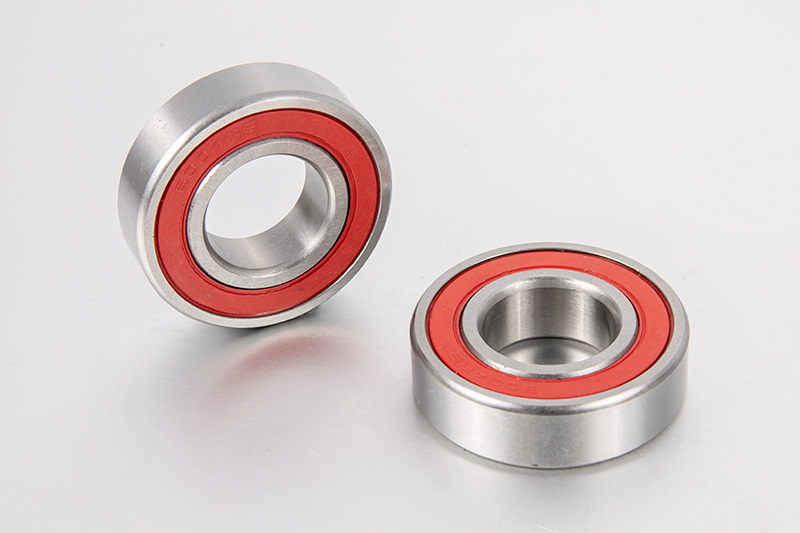 Series 6000 Sealed Deep Groove Ball BearingsSealed, pre-lubricated 6000-series bearings suit quiet continuous duties in fans, pumps and gearboxes, with contact seals resisting dust and moisture.View Product →
Insert bearings and housed units solve a different problem. They mount quickly, tolerate shaft deflection and can be re-lubricated or replaced without dismantling the machine. On conveyors, mixers and fans, that means shorter stops and fewer specialist hours. The familiar pillow block unit is often the most practical way to keep a food line moving when space is tight and hygiene demands are high.
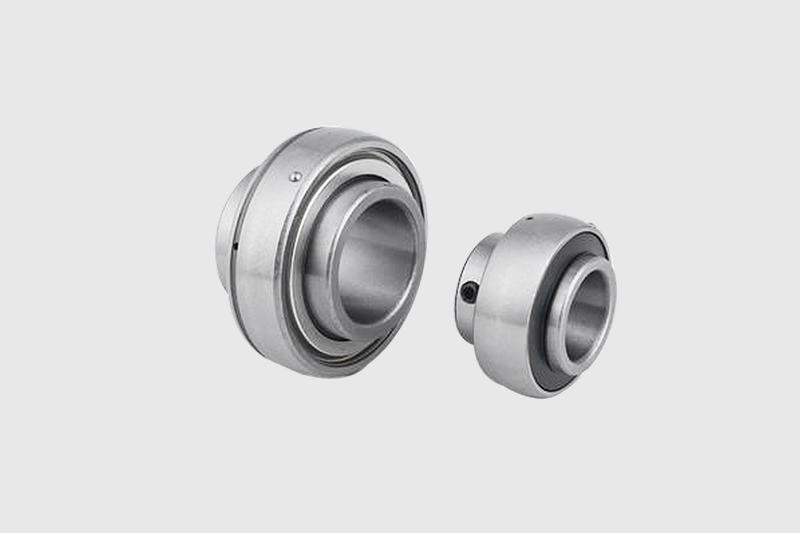 UC Set Screw Locking Insert BearingsSet-screw locking UC insert bearings secure shafts quickly and fit standard pillow block housings, offering a practical replacement for conveyors, mixers and fans.View Product →
Stainless housed units take that logic further into wet areas. Where products are washed, chilled or sprayed, a corrosion-resistant housing and insert combination removes the rust streaks that inspectors notice and the seizure that follows. It also reduces the temptation to over-grease as a defence, which is itself a source of contamination risk.
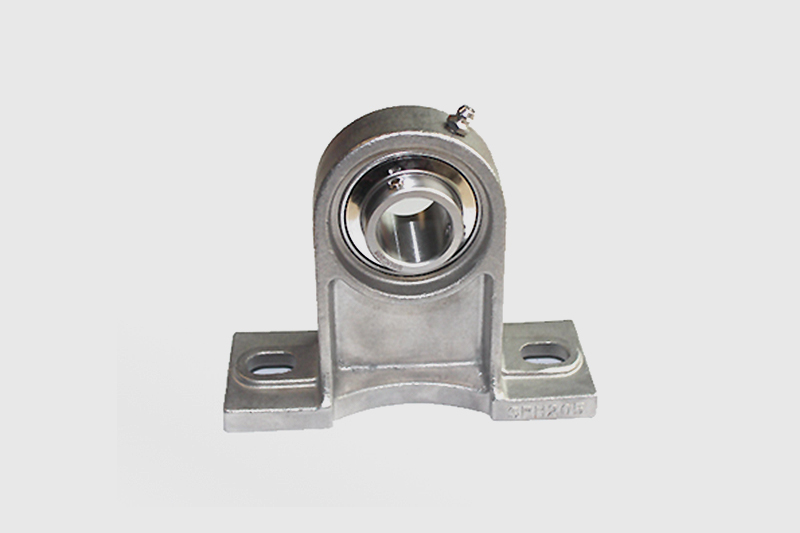 SSUCPH200 Stainless Steel Pillow Block Bearing UnitsStainless pillow block units in 440C, 304 or 316L grades resist corrosion in wet, hygienic areas and suit equipment where rust resistance is essential.View Product →
Matching these families to each duty is easier when the application is considered first. A dedicated overview of food processing bearings is a reasonable starting point for mapping stainless, sealed and high-temperature variants onto specific equipment.
Every extra minute spent brushing, rinsing and re-inspecting is production time that never returns. Components with crevices, exposed threads and trapped product extend cleaning, invite microbial growth and increase the chance that a start-up is delayed by a failed swab test.
Housings that drain, seals that survive spray, and materials that resist detergent all shorten the reset between batches. The benefit shows up twice: less cleaning labour, and more confidence to run longer campaigns before the next changeover.
It is worth being honest about trade-offs. Fully sealed units protect lubricant but are harder to re-lubricate. Open units are easy to service but vulnerable in wet zones. Stainless costs more up front and pays back in corrosion-prone areas rather than dry ones. The table below sets out the usual fits.
| Bearing family | Typical duty | Housing and sealing note | Points to watch |
|---|---|---|---|
| Sealed deep groove ball bearing | Fans, pumps, packaging shafts, small gearboxes | Two contact seals retain grease and exclude dust | Do not over-speed; check temperature rise after fitting |
| Insert bearing in a housed unit | Conveyors, mixers, elevators, ventilation | Wide choice of cast iron, pressed steel or thermoplastic housings | Confirm locking method and re-lubrication interval |
| Stainless housed unit | Washdown zones, chilled rooms, wet transfer points | Corrosion-resistant insert and housing, drainage-friendly base | Verify grade suits the detergents actually used |
| High-temperature variant | Ovens, fryers, hot-air ducts | Heat-stable grease, controlled internal clearance | Thermal growth changes preload; review mounting fits |
| Hybrid ceramic insert | High-speed, low-lubrication or electrically stressed shafts | Ceramic rolling elements in a steel ring | Cost is only justified where the duty genuinely demands it |
Maintenance strategy is where efficiency is won or lost quietly. Three stages are common, and most plants sit somewhere between them.
Fix it when it breaks. Cheap on paper, expensive in practice, because failures arrive at the worst possible moment and spares are always urgent.
Replace on a schedule. Predictable, but it discards serviceable parts and can introduce new faults during unnecessary dismantling.
Listen to the equipment. Vibration, temperature and grease condition tell you when to act, so intervention lands before a stop and after value has been delivered.
Route-based vibration checks, infrared temperature readings and a short lubrication log move most plants from stage one to stage three within a year.
Lubrication deserves its own line in any efficiency plan. Too little grease destroys bearings; too much traps product dust, raises temperature and can contaminate food contact areas. A written schedule with quantities, intervals and ownership removes both errors. Readers working through a cost review may find practical context in this note on how insert bearings help reduce maintenance costs.
Technology alone does not raise efficiency. Someone has to notice the pattern, decide what it means and change the routine. The plants that improve fastest usually combine three modest habits.
A practical rule from experienced maintenance teams: before adding a new sensor, solve one recurring failure for good. Six months of one fewer breakdown per month usually outperforms any dashboard.
Efficiency work fails when it is treated as a project with an end date. It succeeds when it becomes a rhythm. The sequence below is deliberately modest, and it is ordered so that each step makes the next one easier.
| Period | Focus | Expected outcome |
|---|---|---|
| Days 1 to 30 | Baseline the line, list recurring stops, audit lubrication and alignment | Clear picture of where time is actually lost |
| Days 31 to 60 | Replace chronic offenders with the correct bearing family, fix shaft alignment, standardise washdown routine | Fewer unplanned stops and shorter cleaning cycles |
| Days 61 to 90 | Introduce condition checks, hold spare parts for critical units, review changeover sequence | Predictable uptime and faster product switches |
None of these steps requires a new line or a large capital budget. Most of the gain comes from correct selection, correct installation and a routine that someone actually follows.
They sit in almost every rotating assembly, so their friction, alignment and condition influence energy draw, vibration, noise and the frequency of stops. A small percentage of lost efficiency across dozens of drives adds up to a significant share of plant output.
No. Stainless earns its cost where water, detergent and condensation are constant. In dry zones a sealed chrome steel bearing often performs just as well for less money. Matching the material to the real environment matters more than applying one rule everywhere.
They mount quickly on standard shafts, tolerate some misalignment, and can be re-lubricated or replaced without stripping the machine. On a conveyor where downtime is measured in minutes, that convenience is part of the efficiency case.
In food plants it is usually contamination or incorrect lubrication rather than simple fatigue. Water ingress during washdown, over-greasing and mismatched grease types account for a large share of early replacements.
With an honest baseline. Record stops for two weeks, list the components that fail repeatedly, and check alignment and lubrication on the worst offenders. Fixing chronic small failures usually delivers faster returns than any large equipment upgrade.

Product Overview The Series 1600 Deep Groove Ball ...
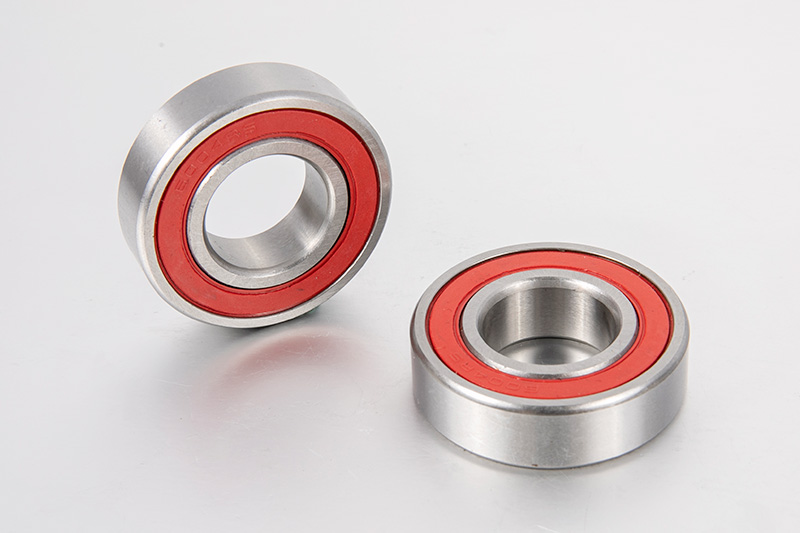
Key Features & Benefits 1. Superior Sealing Pe...

Product Overview:The 6200 Series Deep Groove Ball ...
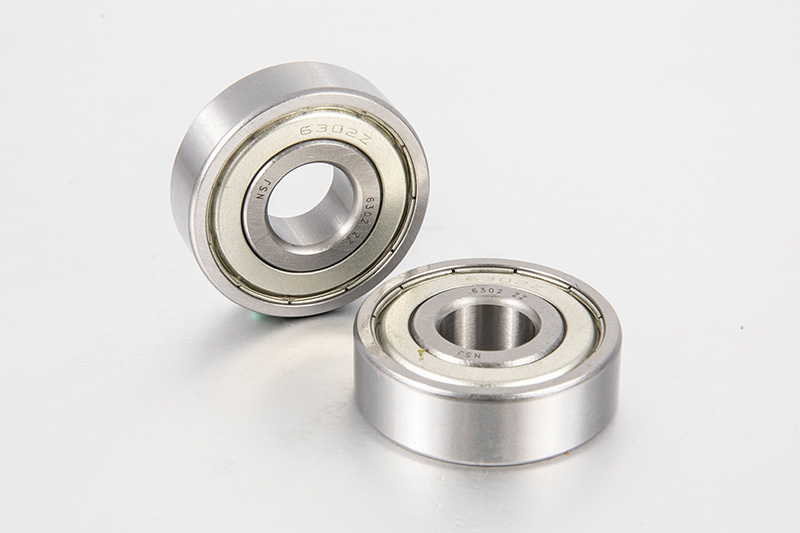
Core Differentiators: Enhanced Load Capacity: Unl...
Core Technical Advantages: Maximum Space Efficien...