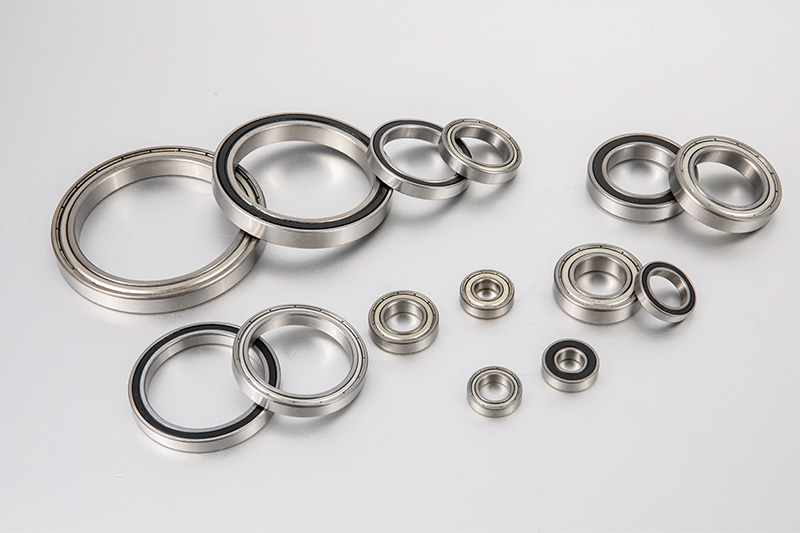
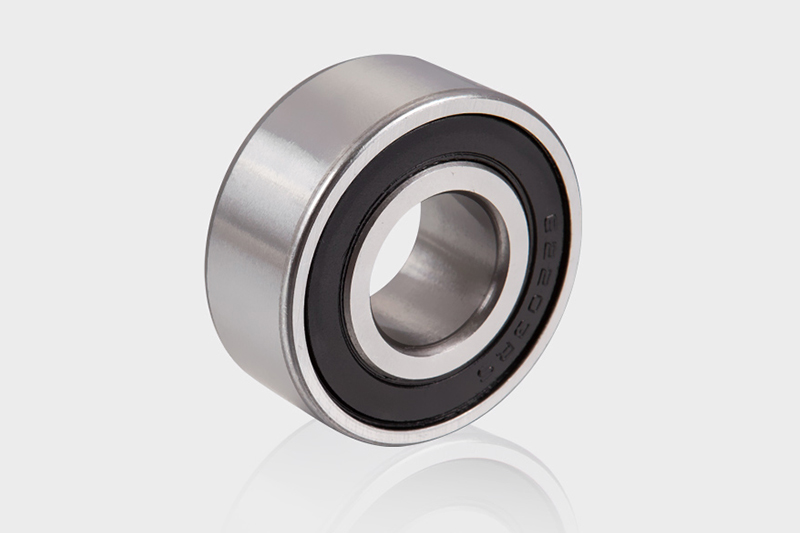
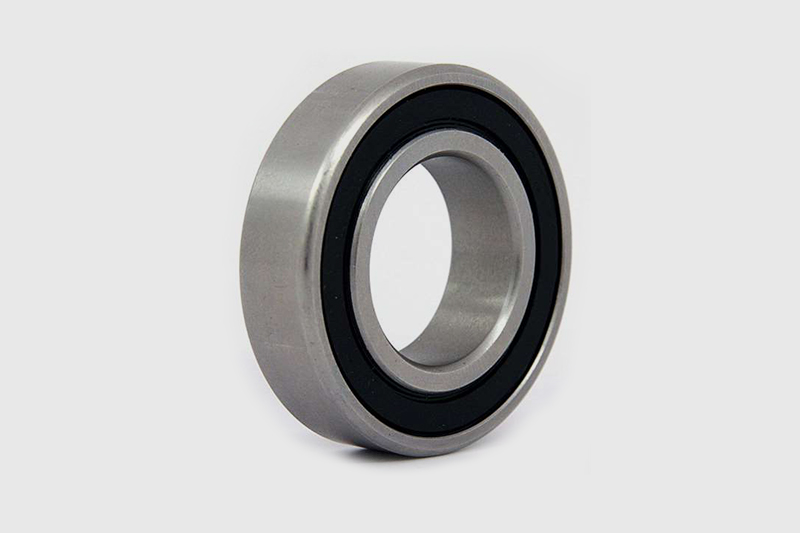
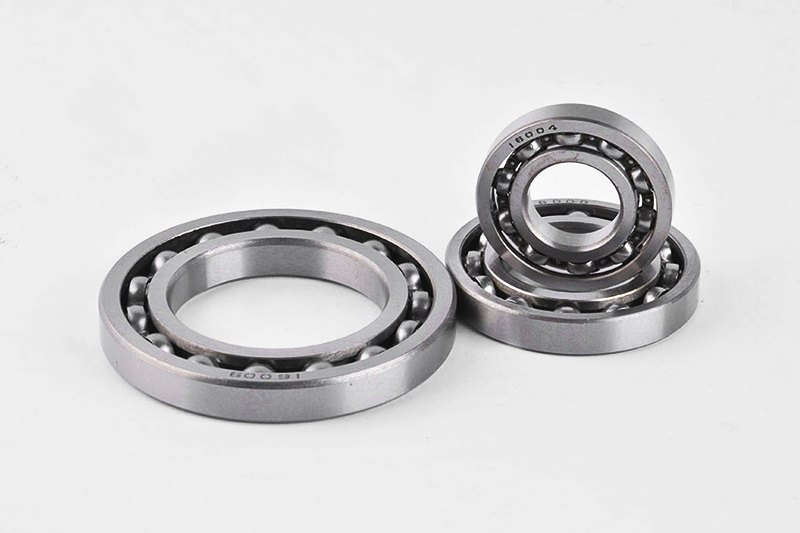
Series 1600 Chrome Steel Deep Groove Ball Bearing
Product Overview The Series 1600 Deep Groove Ball ...




Content
If you have ever stared at a bearing catalogue and wondered what the column marked C actually promises, you are in good company. Dynamic load capacity looks like a simple number and turns out to be full of conditions. It decides how long a bearing lasts in a rotating application, and it is the fairest way to compare two bearings that share the same bore size. Here is how we usually explain it to customers who ask.
In rolling bearings, dynamic load capacity, or the basic dynamic load rating C, is the constant load of constant magnitude and direction that a group of apparently identical bearings can carry for one million revolutions while 90 percent of them survive without fatigue failure. That is the ISO 281 definition, and it explains why the figure is given in newtons or kilonewtons rather than in hours.
Three details in that sentence deserve attention. The rating contains a statistical promise: 90 percent reliability, not absolute certainty. It only applies while the bearing rotates or oscillates, because it is bound to rolling contact fatigue, the gradual flaking of raceways and rolling elements after repeated stress cycles. And it is not a strength limit the way a bolt's tensile rating is. Exceed it and the bearing will not snap; it will simply live a shorter life.
The rating becomes life through L10 = (C/P)^p x 10^6 revolutions, where P is the equivalent load and the exponent p is 3 for ball bearings and 10/3 for roller bearings. That exponent is why roller bearings tolerate heavy loads more gracefully than ball bearings of similar size.
One note for readers coming from logistics: pallets, shelving and castors also use the phrase dynamic load capacity, meaning the load a product carries while it is being moved. The logic is similar, but the way it is measured is completely different.
Static and dynamic ratings sit next to each other in every catalogue and answer different questions. C0 describes what happens when a bearing stands still or indexes slowly. C describes what happens when it turns.
| Question | Static load rating (C0) | Dynamic load rating (C) |
|---|---|---|
| When it applies | Bearing stationary or slowly oscillating | Bearing rotating continuously or oscillating |
| What limits it | Permanent deformation at the loaded contact | Rolling contact fatigue |
| Definition | Load producing deformation equal to 0.0001 of the rolling element diameter | Load allowing one million revolutions at 90 percent reliability |
| Typical use | Peak loads, mounting forces, slewing applications | Life calculation and bearing size selection |
| Related check | Static safety factor s0 = C0 / P0 | Calculated life in hours or revolutions |
In most sizing work, C drives the decision while C0 acts as a check. Static ratings catch shock loads, the forces applied during installation, and applications such as indexing drives that spend most of their life stationary.
A bearing rarely sees a load equal to its catalogue rating, so the equivalent dynamic load P does the real work in the life equation. For radial bearings, P = X x Fr + Y x Fa, where X and Y depend on the bearing type and on how large the axial load is compared with the radial load.
Once the axial component passes a threshold, the ratio e shown in most catalogues, the factors change and P climbs quickly. Two bearings with identical C values can therefore behave very differently in service.
Catalogue tables usually list bore, outer diameter, width, C, C0 and a limiting speed. Within one bore size, wider series carry more capacity: the 6300 family carries more than the 6200 family at the same shaft diameter, because the balls are larger and the raceways sit further apart. Choosing a heavier series is often more effective than jumping to a bigger bore.
Values also differ slightly between manufacturers for the same boundary dimensions, because internal design, ball grade, cage material and heat treatment vary. Compare like with like, and always use the catalogue of the bearing you actually intend to buy.
Through-hardened chrome steel remains the workhorse for deep groove ball and insert bearings, and its fatigue behaviour underpins published ratings. Stainless versions trade a little capacity for corrosion resistance, and heat treatment for dimensional stability above roughly 120 degrees Celsius can shift the usable figure as well.
Ball size and count, raceway curvature and contact angle all influence C. A fuller ball complement raises capacity but leaves less room for the cage and can increase friction.
Ratings assume a healthy lubricant film and clean contacts. Contamination or starved lubrication shortens life regardless of C. Sealed and shielded variants protect the rating rather than change it, which is why they often last longer in dusty plants.
A heavy interference fit reduces internal clearance, while misalignment concentrates stress on part of the raceway. Insert bearings and spherical outer rings exist precisely to keep effective capacity close to the published number.
Heat softens lubricant, alters clearance and, above about 120 degrees Celsius, can leave standard bearings dimensionally unstable. High-temperature duties call for specific heat treatment and greases.
Electric motors show how ratings and reality interact. Radial load is modest, speeds are high, and grease life often ends a bearing's career before fatigue does, yet C still sets the baseline for life calculations. For this kind of duty, our electric motor bearings are usually selected on a combination of rating, clearance and lubricant life.
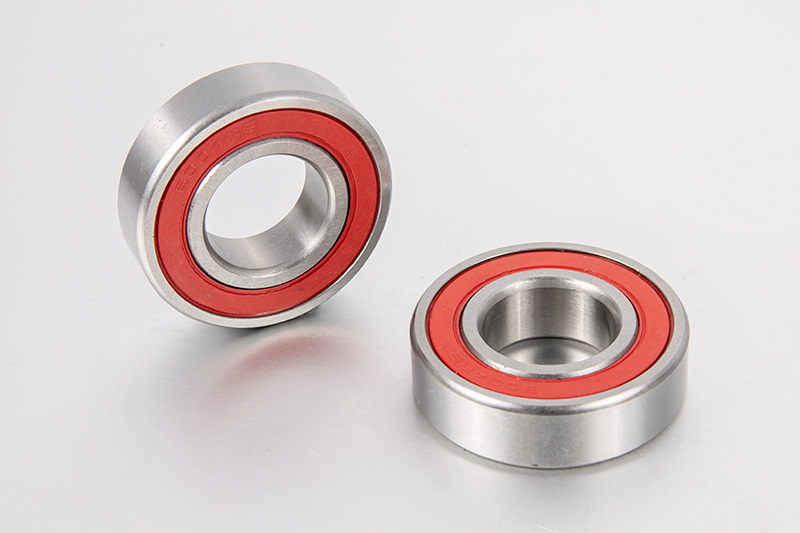 Series 6000 Sealed Deep Groove Ball BearingsSealed 6000-series deep groove ball bearings with contact lips, factory grease and quiet running suit electric motors and dusty, damp duties.View Product →
Pumps, compressors and ventilation units combine radial load with a varying axial component, and there the choice between a deep groove ball bearing and an angular contact or self-aligning design matters more than a small difference in C.
Conveyors and agricultural machinery sit at the other end of the spectrum. Loads are heavy, dirt is constant, and shafts are rarely perfectly aligned, so bearings with generous capacity and forgiving geometry keep equipment running through a full season. Our conveyor system bearings were developed around exactly this set of conditions.
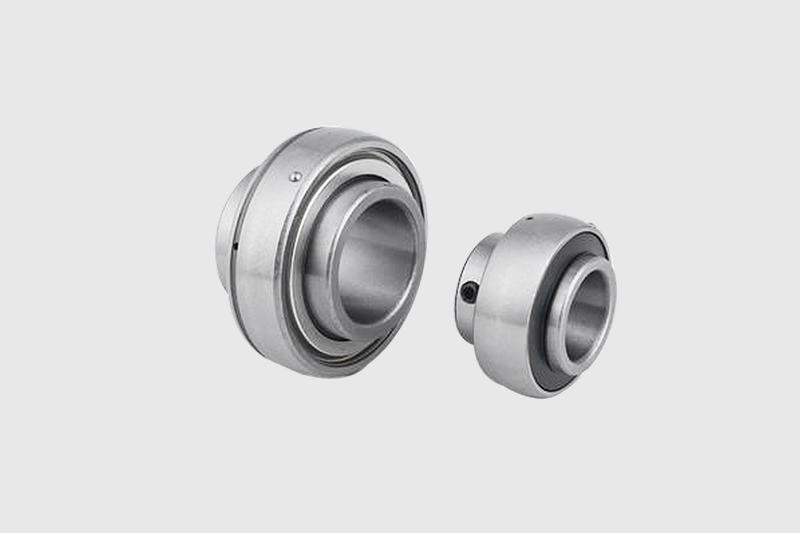 UC Set Screw Locking Insert BearingsSet-screw locking insert bearings from 12 to 90 mm bores with chrome steel rings suit conveyors, agricultural machinery and other dusty, heavy-duty shaft positions.View Product →
Food processing and medical equipment lean towards stainless and hybrid options for hygiene and corrosion resistance, while mining equipment and wind turbine gearboxes push both capacity and reliability to their limits.
A pillow block unit is a practical way to package dynamic load capacity. The rating comes from the insert bearing inside, while the housing adds simple mounting, initial alignment and, in many designs, re-lubrication. On driven shafts in dusty or wet areas, that combination frequently outlasts a bare bearing pressed into a machined housing.
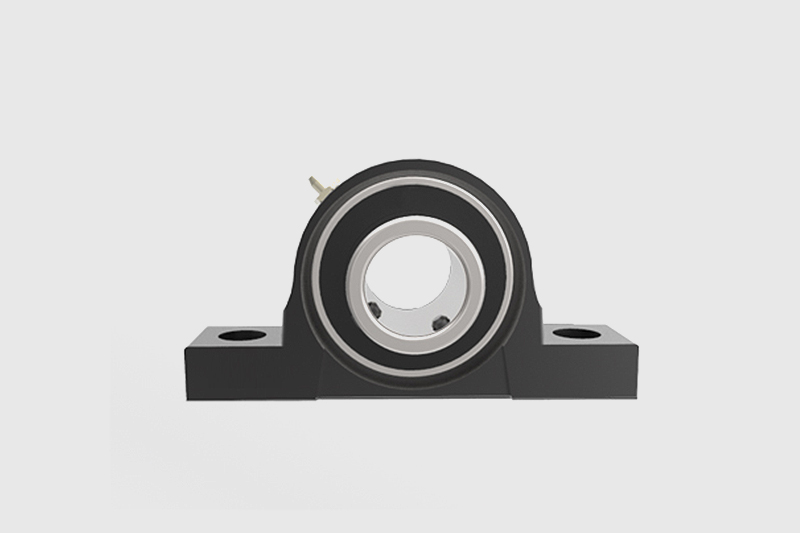 UCP Series Pillow Block Bearing UnitsUCP pillow block units combine insert bearings with mountable housings, grease fittings and shaft sizes 12–90 mm for driven shafts in dusty or wet areas.View Product →
We have been manufacturing deep groove ball bearings and insert bearings in Ningbo since 1994, working to ISO 9001 and, since 2017, ISO/TS 16949, with bores from 3 mm to 100 mm and custom non-standard designs when a catalogue part does not fit. If you are weighing two options and the ratings look close, send us the load case and the duty cycle. Most of the time the decision comes down to one or two details, and it is easier to talk them through than to guess.

Product Overview The Series 1600 Deep Groove Ball ...
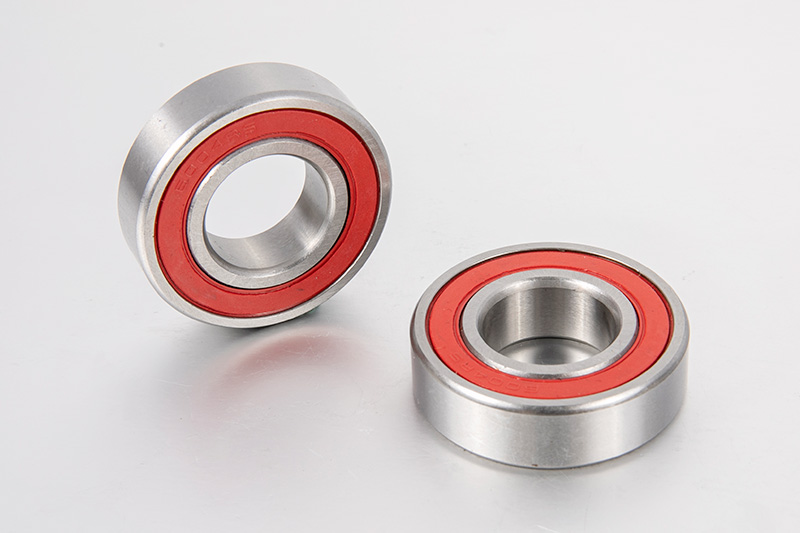
Key Features & Benefits 1. Superior Sealing Pe...

Product Overview:The 6200 Series Deep Groove Ball ...
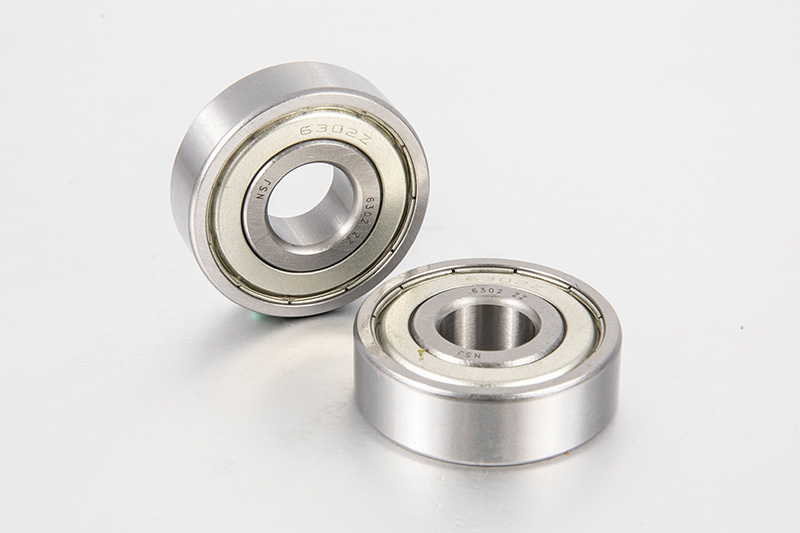
Core Differentiators: Enhanced Load Capacity: Unl...
Core Technical Advantages: Maximum Space Efficien...