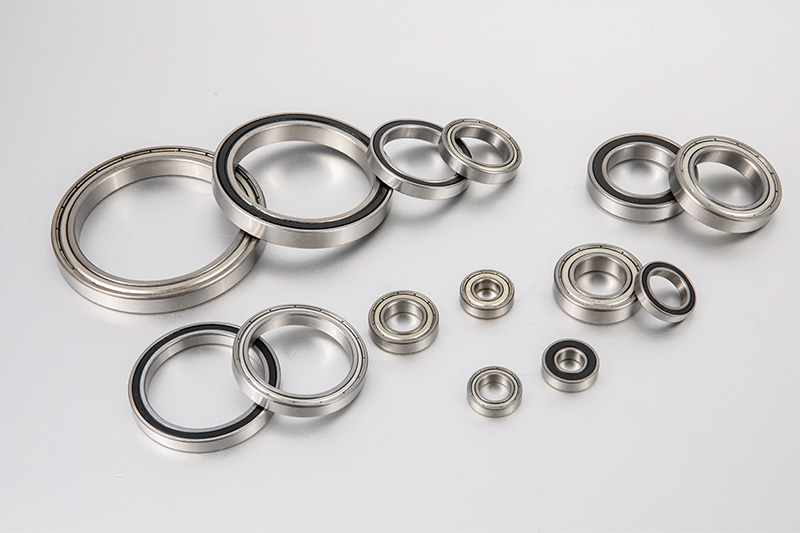
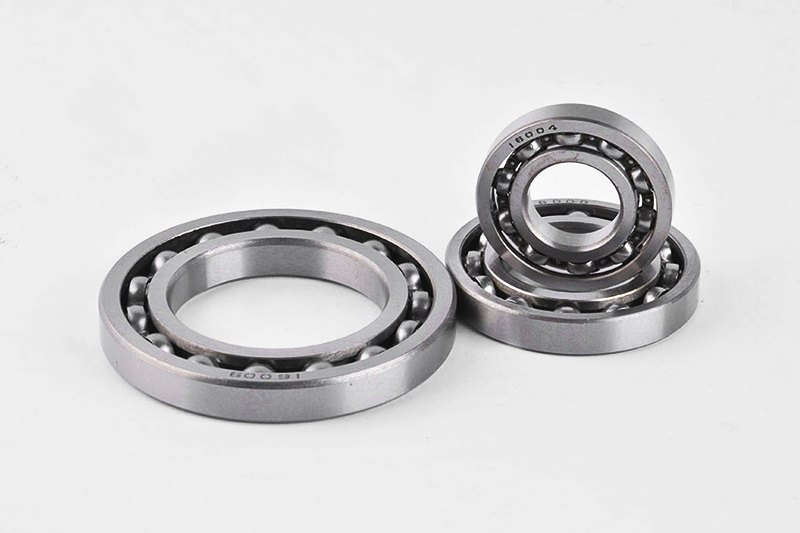
Series 1600 Chrome Steel Deep Groove Ball Bearing
Product Overview The Series 1600 Deep Groove Ball ...




Content
A bearing rarely fails because it was badly made. It fails because, after a certain number of revolutions under load, the material just below the raceway surface finally gives way to fatigue. Bearing life calculation is the discipline of estimating when that moment arrives, and it is one of the few engineering estimates that routinely decides whether a machine runs quietly for years or gets pulled apart every few months.
This guide walks through the standard method step by step: the basic rating life, the L10 formula, how to convert millions of revolutions into operating hours, and the correction factors that turn a catalogue figure into something closer to reality.
In rolling bearing terminology, life almost always refers to fatigue life rather than to wear, corrosion or lubricant breakdown. Three terms cover most conversations:
The 90% figure is a convention rather than a promise. It says that one bearing in ten in a statistically identical group may show fatigue before reaching L10, and that roughly half may survive five times L10. Calculating life is therefore not about finding a guaranteed replacement date; it is about comparing design options and setting sensible inspection intervals.
The starting point for any calculation relates the bearing's load capacity to the load it actually carries:
L10 = (C / P)p
Here L10 is expressed in millions of revolutions. The exponent p depends on the contact geometry: it is 3 for ball bearings and 10/3 for roller bearings, because line contact distributes load differently from point contact.
| Symbol | Meaning | Typical source |
|---|---|---|
| C | Basic dynamic load rating, in newtons | Bearing catalogue or datasheet |
| P | Equivalent dynamic bearing load, in newtons | Calculated from the forces acting on the shaft |
| p | Life exponent | 3 for ball bearings, 10/3 for roller bearings |
| L10 | Basic rating life, in millions of revolutions | Calculated result |
| n | Rotational speed, in revolutions per minute | Application data |
The equivalent dynamic load is where most of the engineering effort goes. Radial and axial forces are combined into a single value that produces the same fatigue effect as the real loading. For a lightly loaded deep groove ball bearing, that may be a simple radial term; for a bearing under heavy thrust, the axial contribution can dominate and change the result dramatically.
The load rating itself deserves attention too. Because a difference in C passes through a cubic relationship, a small difference in capacity becomes a large difference in calculated life.
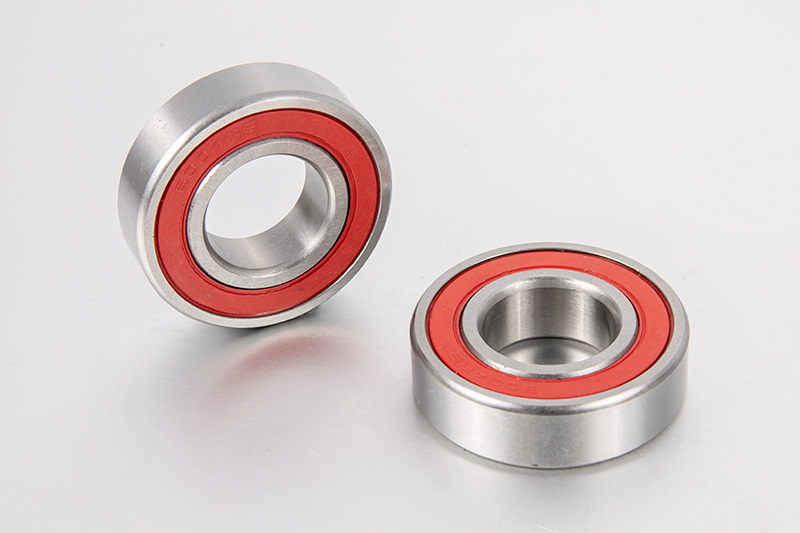 Series 6000 Sealed Deep Groove Ball BearingsSealed 6000-series bearings offer pre-lubricated contamination protection and published dynamic/static load ratings for comparing calculated fatigue life.View Product →
Fatigue life in revolutions is useful for theory, but planners think in hours. At a constant speed:
L10h = (1 000 000 / (60 × n)) × L10
where n is in revolutions per minute. The bracketed term is simply the number of hours needed to accumulate one million revolutions. At 1 500 rpm, that takes about 11.1 hours, so a basic rating life of 300 million revolutions corresponds to roughly 3 300 operating hours.
The formula assumes constant speed and constant load. When either varies during the duty cycle, the calculation has to be handled differently.
Basic rating life assumes a properly mounted bearing, an adequate lubricant film, a clean environment, and a load mild enough not to saturate the material. Real machines rarely meet all of those conditions, so standard practice is to adjust L10 with two factors:
A well-lubricated bearing in a clean housing can easily reach two or three times its basic rating life. The same bearing running on a thin lubricant film with abrasive dust around the seals may achieve a fraction of it. Viscosity ratio, filtration and seal choice are therefore not side issues; they are often the deciding variables.
Conveyors, gearboxes, pumps and farm machinery rarely run at one load and one speed. For a duty cycle made up of several segments, each segment is converted into an equivalent load that produces the same fatigue effect over the whole cycle:
Pm = [ Σ (Pip × ni × ti) / Σ (ni × ti) ]1/p
Each segment contributes in proportion to the revolutions it represents, and heavy segments dominate because of the exponent. A brief peak load can therefore matter more than hours of light running — a familiar pattern in equipment that starts and stops under load, where acceleration torque and shock shape the duty cycle.
For machines built around mounted units, load calculation and housing selection are usually handled together, since the housing, shaft fit and sealing arrangement all influence the load reaching the rolling elements.
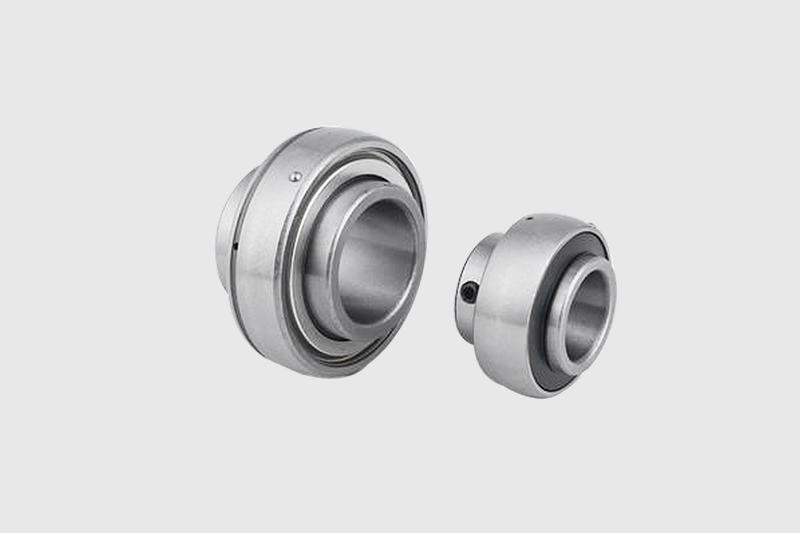 UC Set Screw Locking Insert Bearing SeriesMounted insert bearings with double set screws, GCr15 rings, 12–90 mm shaft sizes, and listed load ratings for housing selection.View Product →
Take a 6205 deep groove ball bearing with a basic dynamic load rating of about 14 kN, carrying an equivalent dynamic load of 2 kN at 1 500 rpm.
The numbers are illustrative, but the pattern is typical. Correction factors can double or halve a result, while a 20% change in load moves life by more than 60% through the cubic relationship. Sensitivity matters more than decimal places.
A calculation is a comparison tool, not a crystal ball. Its value lies in showing which change — a larger bearing, a better lubricant, a tighter seal — buys the most life for the least effort.
We have been manufacturing deep groove ball bearings and insert bearings in Ningbo since 1994, in bore sizes from 3 mm to 100 mm. A large share of what we ship goes into applications where someone has just finished a life calculation and needs a part that matches the answer. The questions we receive are usually about load ratings, clearance, seals and fits rather than about formulas, and that is the part of the work we know best.
If your duty cycle involves variable loads and a mounted unit, our technical team can walk through the numbers with you and confirm the housing, insert and shaft fit that suit the installation. The notes on load calculation and selection of pillow block units are a useful starting point.
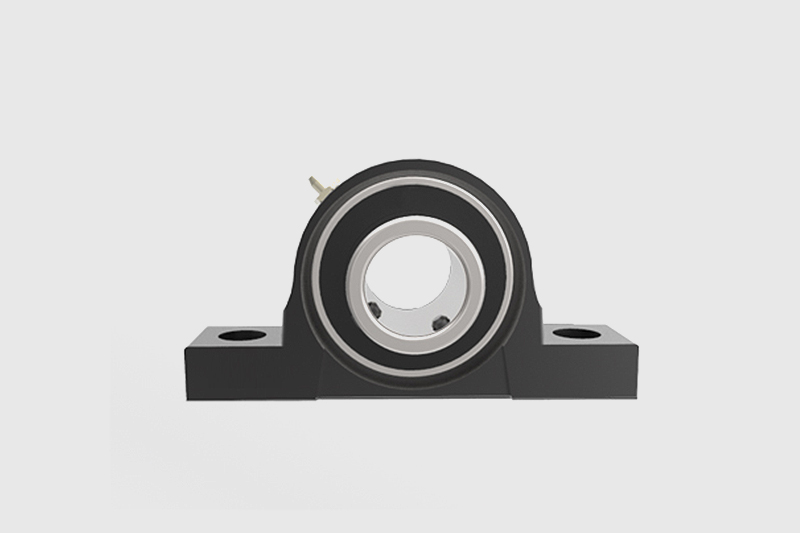 UCP Series Pillow Block Bearing UnitsPillow block units with HT200 or QT450-10 housings, GCr15 inserts, grease fitting, and UCP 201–218 dimensions for mounted-unit selection.View Product →
For equipment that runs continuously under moderate radial load — electric motors, pumps, small gearboxes — our standard deep groove range covers the most common sizes, and electric motor bearings shows what we normally supply for that duty. Send us the load, the speed and the running hours, and we will help you turn the calculation into a bearing you can actually order.

Product Overview The Series 1600 Deep Groove Ball ...
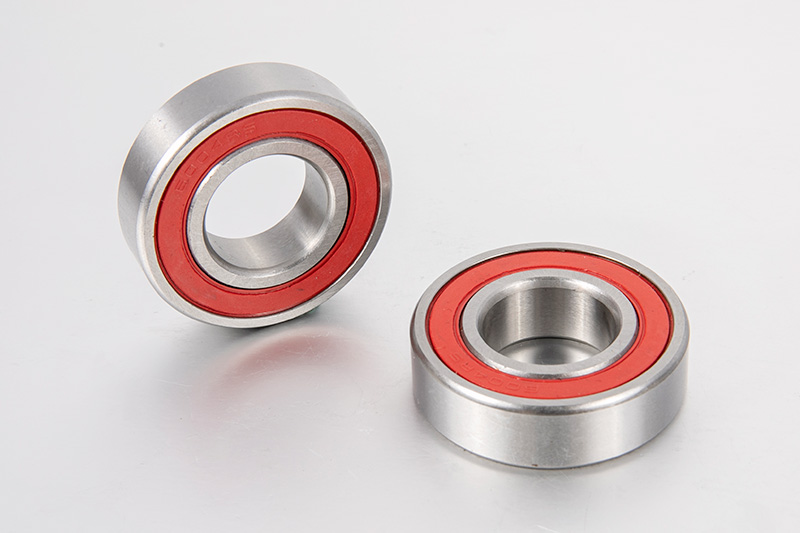
Key Features & Benefits 1. Superior Sealing Pe...

Product Overview:The 6200 Series Deep Groove Ball ...
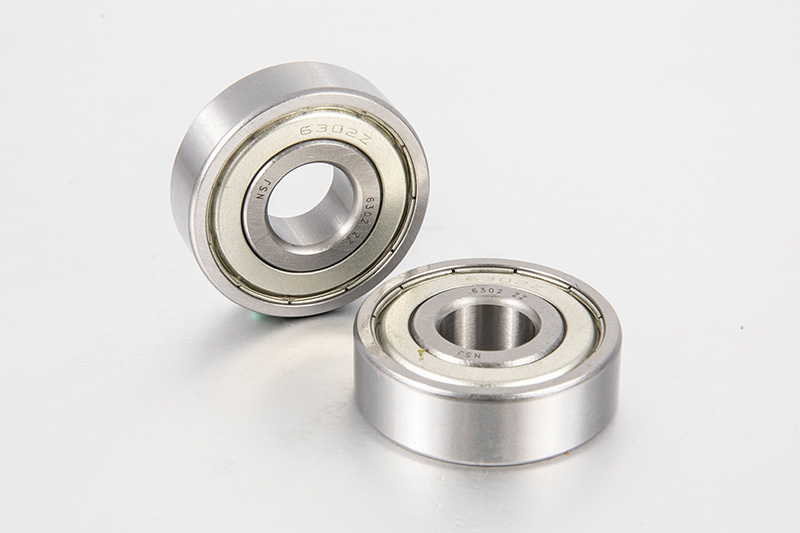
Core Differentiators: Enhanced Load Capacity: Unl...
Core Technical Advantages: Maximum Space Efficien...