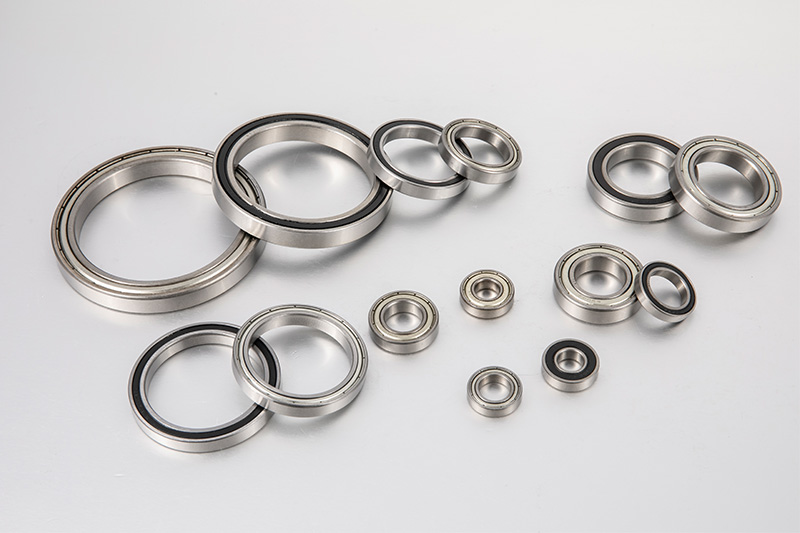
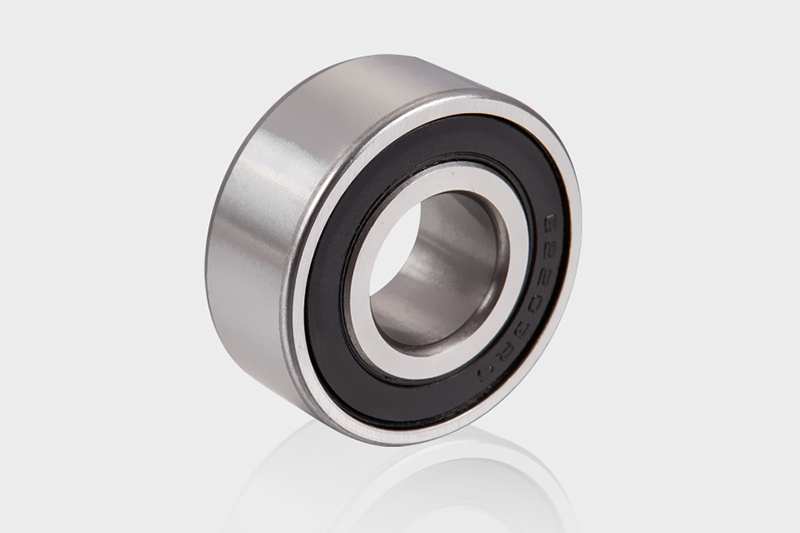
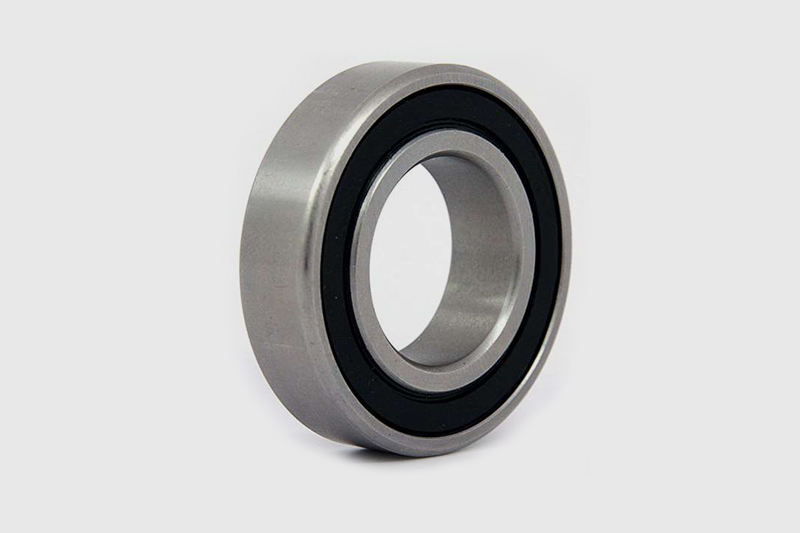
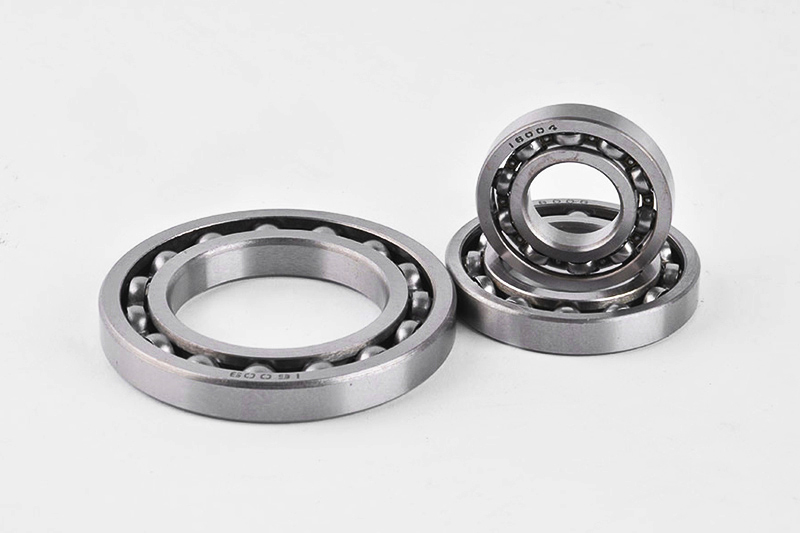
Series 1600 Chrome Steel Deep Groove Ball Bearing
Product Overview The Series 1600 Deep Groove Ball ...




Content
When you compare bearing catalogues, you often see two load ratings: C and C0. Many buyers instinctively choose the higher number, but that is not always the right move. For a rotating shaft, the basic dynamic load rating C is the value that determines how long the bearing is likely to last. It is not a measure of how much load the bearing can carry before breaking; rather, it is a fatigue-life parameter. Understanding what C, C0, and the L10 formula actually mean will help you avoid premature failures and unnecessary costs.
According to ISO 281, the basic dynamic load rating C is a constant load that a group of apparently identical bearings can endure for one million revolutions with at least 90% of them surviving under normal operating conditions. For radial bearings, that load is purely radial; for thrust bearings, it is purely axial. In practice, this means a bearing with C = 12 kN is not rated to handle 12 kN indefinitely. It means that at that load, the expected rating life is one million revolutions, which is a very short time in most industrial equipment.
The static load rating C0 is different. It refers to the maximum load that can be applied to a stationary bearing without causing permanent plastic deformation on the rolling elements or raceways. Static load matters for slow oscillations, heavy vibration at standstill, or startup shocks. But if your shaft actually rotates, the dynamic load rating C is the more relevant figure.
The most common way to use C is through the L10 basic rating life equation:
where P is the dynamic equivalent load. The exponent shows that a small change in load can have a dramatic effect on life. If you double the load, ball-bearing life drops by a factor of 8, while roller-bearing life drops by a factor of about 10.3. This is why selecting a bearing with only a slightly higher C can pay off enormously.
For example, a deep groove ball bearing with C = 15 kN operating at P = 7.5 kN would have a rating life of (15/7.5)^3 × 10^6 = 8 × 10^6 revolutions. If the speed is 3000 r/min, that corresponds to about 44 hours. That is surprisingly short, and it illustrates why you cannot simply size a bearing by looking at C alone.
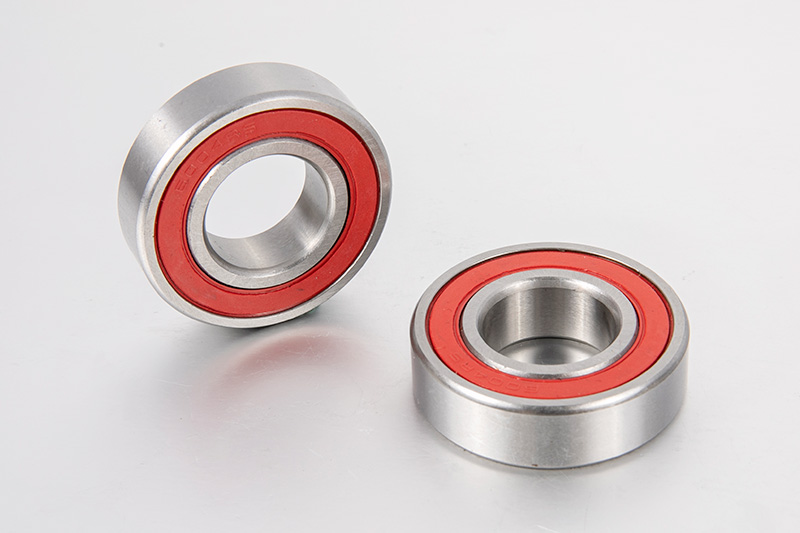 Series 6000 Two Contact Seals Deep Groove Ball Bearing1. Superior Sealing Performance: Total Protection Against ContaminationView Product →
Many industrial machines use deep groove ball bearings because they are simple, quiet, and relatively inexpensive. In such a bearing, the advertised C value is usually based on high-quality material and clean lubrication. For applications where loads are moderate and speeds are stable, this type is often adequate. However, you still need to confirm that the calculated L10 life at your operating speed exceeds the desired maintenance interval.
In real operation, the load is rarely purely radial. The dynamic equivalent load P is a combined load that produces the same life as a purely radial load. For radial bearings, the formula is P = XFr + YFa, where Fr is the radial load, Fa is the axial load, and X and Y are factors from the bearing manufacturer's table. The values of X and Y depend on the ratio Fa/Fr and the specific bearing type.
For example, a single-row deep groove ball bearing will accept a certain axial load only when the ratio Fa/Fr is small. As the axial portion grows, the equivalent load increases, and the bearing's useful life shrinks. This is a common mistake: buyers often compare only C values without calculating P, and then wonder why a bearing with a higher C failed early.
| Bearing group | Exponential factor | Application note |
|---|---|---|
| Ball bearings | 3 | General equipment, often quieter |
| Roller bearings | 10/3 | Higher load capacity for industrial machinery |
If the load varies during the operating cycle, you cannot simply take the maximum load value in the L10 formula. Instead, you must calculate a mean dynamic equivalent load using the weighted average of the load steps. The standard method is described in ISO 281 and is especially important for machines with intermittent processing cycles, such as presses or cranes.
The C value in the catalogue assumes ideal conditions: clean lubrication, proper alignment, and normal temperature. In practice, several factors reduce the effective dynamic capacity:
For instance, a bearing running at 120°C may retain only about 70% of its catalogue C value. If your process heats the bearing housing beyond 100°C, you should either select a higher C or use a special heat-stabilized steel.
ISO 281 provides life-adjustment factors such as aISO, which accounts for cleanliness and lubrication. If your application is dirty or runs at high speed, you should either choose a bearing with a higher C or add seals and better lubrication. Ignoring these factors is a common source of unexpected downtime.
Let's look at practical examples. In agricultural machinery, the bearing is often exposed to dust, moisture, and heavy intermittent loads. The dynamic equivalent load should be calculated using the highest expected impact, not the average. Insert bearings are designed for this because they can accommodate shaft misalignment and reduce installation cost. The C value of an insert bearing is usually lower than a same-size standard ball bearing, but the housing and sealing package often extend service life in a dirty environment.
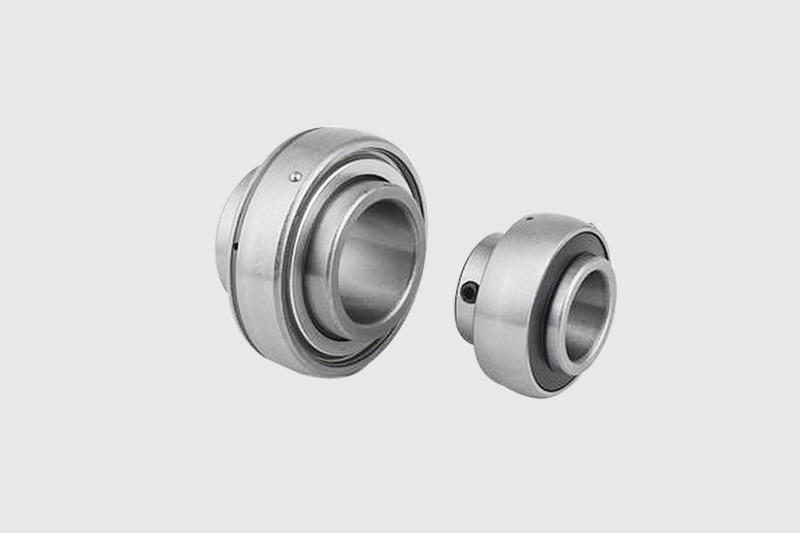 UC Set Screw Locking Insert Bearing SeriesUC Set Screw Locking Insert Bearing is a widely used mounted bearing unit designed for reliable shaft positioning and stable operation in various industrial applicatio...View Product →
On a conveyor line, the shaft may not be perfectly aligned with the housing, and maintenance downtime is costly. An insert bearing with a set-screw locking collar is a pragmatic solution: it allows quick mounting and moderate alignment tolerance. The dynamic load rating should still be checked against the actual radial load, and the equivalent load calculation should include any axial forces from the belt tension.
In electric motors, the situation is different. The load is steady, the speed is high, and noise is a concern. A precision deep groove ball bearing with a high C value and low-friction seals is usually the first choice. You can read more about the specific bearing requirements in our electric motor bearing guide.
Compressor bearings face high rotational speeds and often experience a constant axial load from the rotor thrust. In such cases, the dynamic equivalent load calculation must include the thrust load correctly, and the bearing's internal clearance should be selected for the operating speed.
For pillow block units, the dynamic load rating is combined with the housing strength. In a take-up unit, for example, the shaft may move and the load can be variable. The L10 calculation is the same, but the housing itself must be stiff enough to transmit the load. This is where a complete unit often makes sense in practice.
To avoid common mistakes, work through this checklist:
One real-world pitfall is using the static load rating C0 as the basis for a rotating application. A buyer might see a bearing with a high C0 and assume it is stronger, but if the C value is low and the applied load is moderate, the L10 life may still be unacceptably short.
If you are working with a pillow block unit or a mounted bearing system, the same principles apply. A complete pillow block unit simplifies installation but still depends on the bearing's dynamic load rating. That is why it is useful to compare the L10 life of a unit against your required hours before committing.
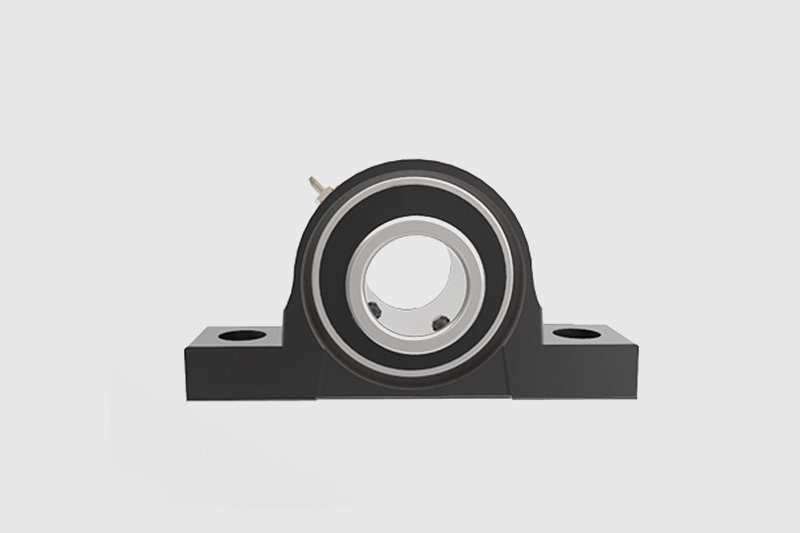 Pillow Block Units: UCP seriesHT200 or QT450-10, QT450-10 is only for PFTD2 series and FCT2 series.View Product →
For a step-by-step approach, see our guide on load calculation and selection of pillow block units.
Dynamic load rating is not a spec to be taken at face value. It is a tool for predicting fatigue life. When you combine C with a realistic equivalent load and the correct life-adjustment factors, you can make a solid purchasing decision. And when in doubt, talk to your bearing supplier. A competent manufacturer will share the load rating data, the calculation method, and the application experience that supports it.

Product Overview The Series 1600 Deep Groove Ball ...
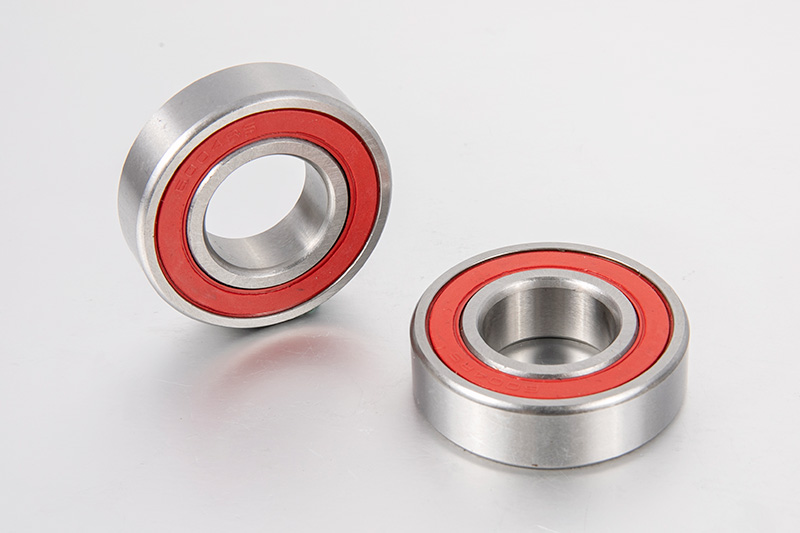
Key Features & Benefits 1. Superior Sealing Pe...

Product Overview:The 6200 Series Deep Groove Ball ...
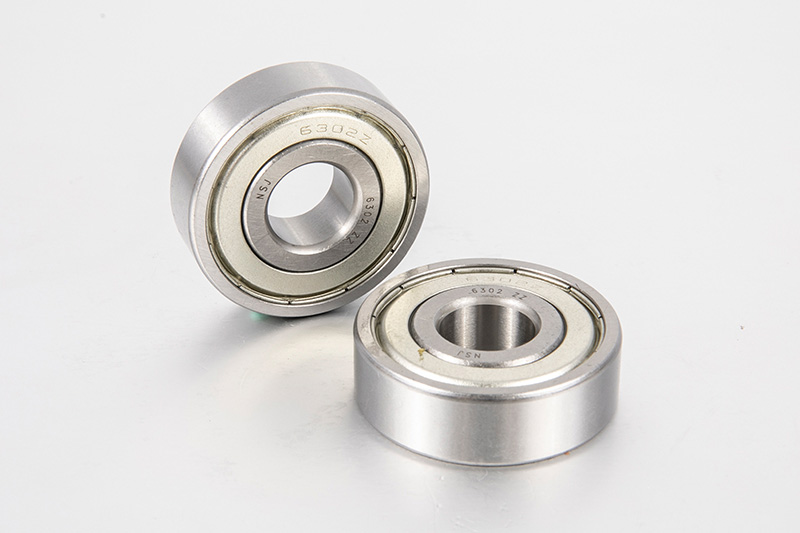
Core Differentiators: Enhanced Load Capacity: Unl...
Core Technical Advantages: Maximum Space Efficien...