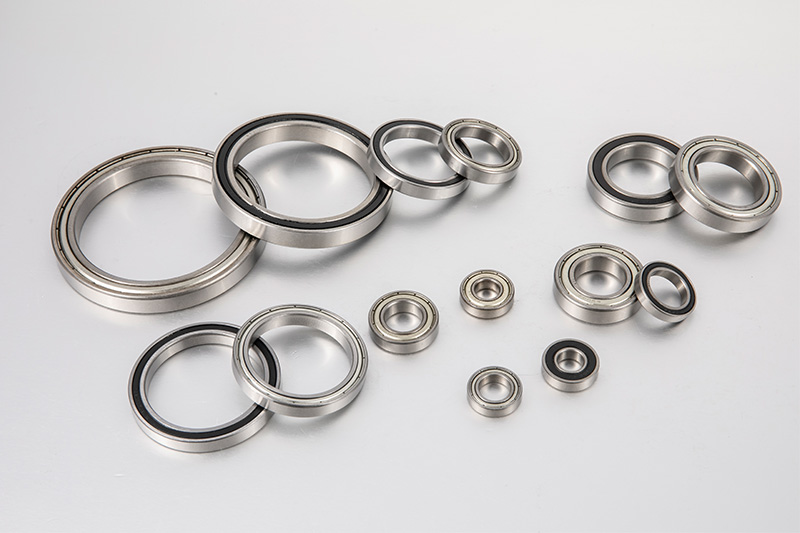
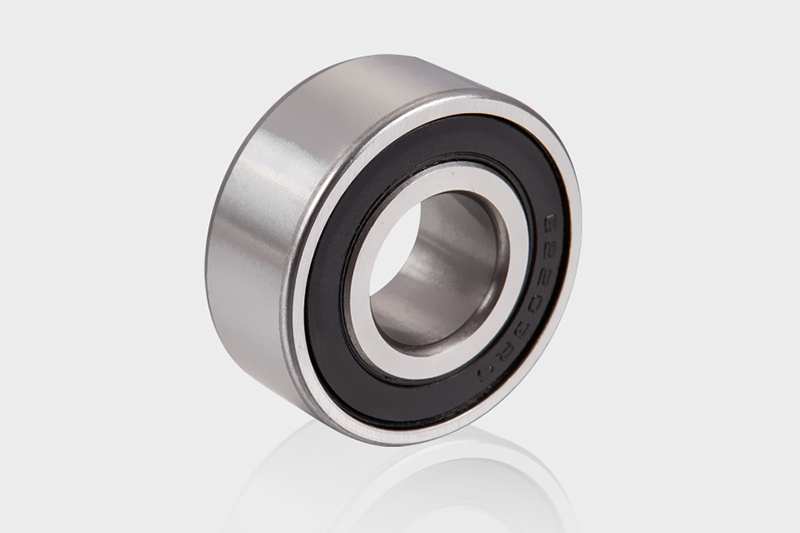
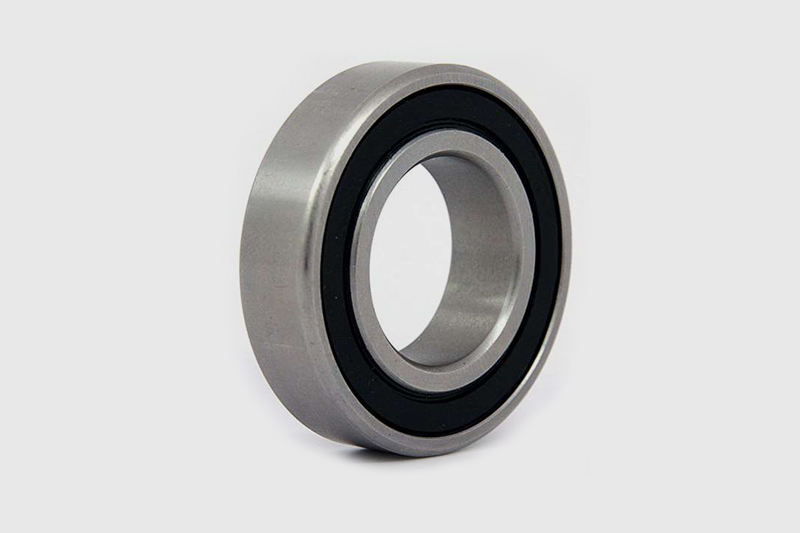
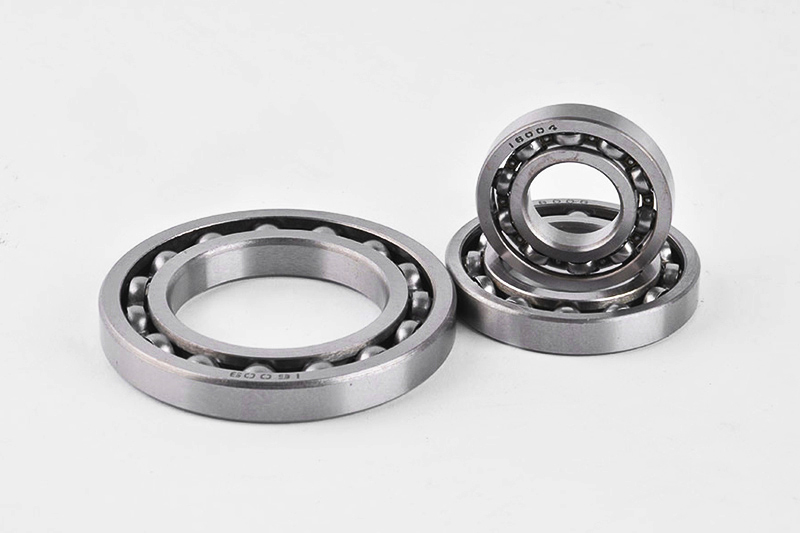
Series 1600 Chrome Steel Deep Groove Ball Bearing
Product Overview The Series 1600 Deep Groove Ball ...




Content
When a gearbox loses a bearing, the symptom is rarely a surprise. The gear whine changes pitch, the housing temperature climbs, and the shaft starts to wobble because the gear mesh has shifted. In most transmission layouts, bearings keep every gear in its correct position under load. Choose the wrong bearing and the gearbox may turn freely when assembled, but under full load it will fail early. The practical conclusion is straightforward: in a transmission, bearing selection is a durability decision, not a secondary detail, and it should be settled before the shaft design is finalized.
Inside a gearbox, bearings perform three jobs at the same time. They support the input shaft, output shaft, and countershaft; they keep the gear mesh centered as torque changes; and they absorb the combined radial and axial forces that helical gears generate. A deep groove ball bearing can handle moderate radial loads and a limited amount of thrust. A tapered roller bearing, by contrast, is designed to carry high radial and axial loads together, which is why it dominates differential and heavy-output positions.
Transmission bearings also control deflection. A shaft that bends more than a few hundredths of a millimeter changes the contact pattern between gear teeth, which increases noise and accelerates wear. The rigidity of the bearing therefore matters as much as its load rating. In every gear-driven machine, conveyors, industrial reducers, agricultural machinery, and wind turbine gearboxes included, the principle is the same: the bearing must hold the gears in mesh while the housing expands from operating heat. That is why gearbox bearings are selected with the housing fit and temperature rise in mind, not just the catalog load rating.
Transmission design rarely relies on a single bearing type. Different shaft positions create different combinations of radial load, axial load, and speed, so a typical gearbox uses two or three types at once. The table below summarizes the main options.
| Bearing type | Radial load capacity | Axial load capacity | Speed potential | Typical transmission position |
|---|---|---|---|---|
| Deep groove ball bearing | Moderate | Low to moderate | High | Input and output shaft support, idler gears |
| Single-row tapered roller bearing | High | High (one direction) | Moderate | Differential pinions, final drive, wheel hubs |
| Needle roller bearing | High in a small section | Very low | Moderate | Gear-on-shaft locations, synchronizer systems |
| Cylindrical roller bearing | Very high | Very low | High | Radial support on heavily loaded shafts |
| Angular contact ball bearing | Moderate | Moderate (one direction) | High | High-speed shafts with predictable thrust |
The table shows the fundamental trade-off. If a position needs both radial and axial capacity, a tapered roller bearing or an angular contact ball bearing is the usual answer. If the axial load is negligible and space is tight, a needle roller bearing offers the highest radial capacity in the smallest diameter. If the shaft simply needs stable support at high speed, a deep groove ball bearing is often sufficient.
Deep groove ball bearings are the most adaptable option in a transmission. They tolerate slight misalignment, run quietly, and handle both radial and light axial loads. They are the usual choice for gearbox input and output shafts, and they also appear in auxiliary drives where the load is steady. A series 6000 deep groove ball bearing with two contact seals keeps grease in and contamination out, which makes it practical for sealed gearbox positions.
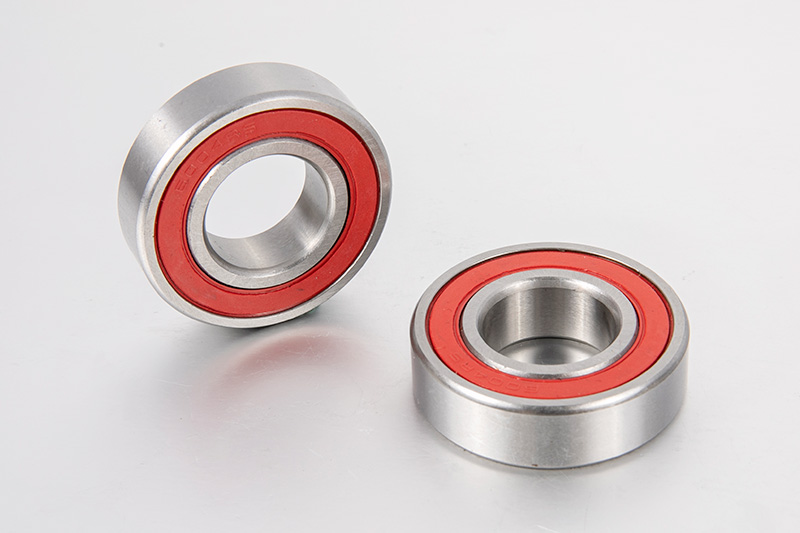 Series 6000 Deep Groove Ball Bearing with Dual Contact SealsThis sealed deep groove ball bearing suits gearbox shafts where steady loads and quiet running matter. Its two contact seals keep grease in and shield the rolling elements from contamination, supporting long maintenance-free service in dusty or damp conditions.View Product →
Single-row tapered roller bearings are engineered for combined loads. The tapered geometry creates a line contact between rollers and raceways, so the bearing absorbs a high radial load and a substantial axial load at the same time. This is why differentials, final drives, and many gearbox outputs rely on them. In these applications, the bearing is usually preloaded to keep the assembly rigid, and the setup clearance has a direct influence on gear noise and bearing life.
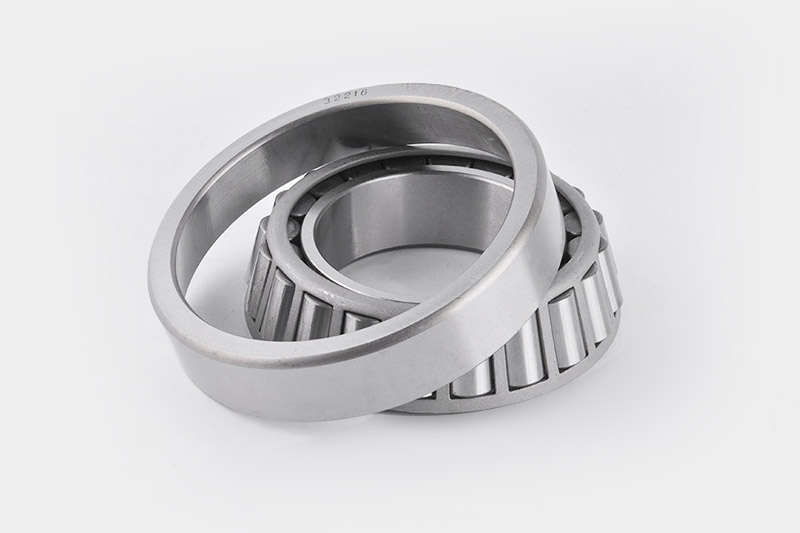 Single Row Taper Roller Bearing for Combined Load ApplicationsDesigned for heavy combined radial and axial loads, this separable bearing offers high rigidity and precise operation. Its line contact and easy installation make it a dependable choice for differentials, final drives, and gearbox outputs where preload and clearance control are essential.View Product →
Needle roller bearings are used where a gear must be mounted on a shaft without taking up the space of a conventional roller bearing. The long, thin rollers provide a high radial load capacity for a given housing bore, but they accept very little axial load. In manual gearboxes they appear between the gear and the shaft, and in synchronizer assemblies where the compact cross-section matters. Drawn-cup needle bearings are a reliable choice for these positions because the hardened shell acts as the outer raceway.
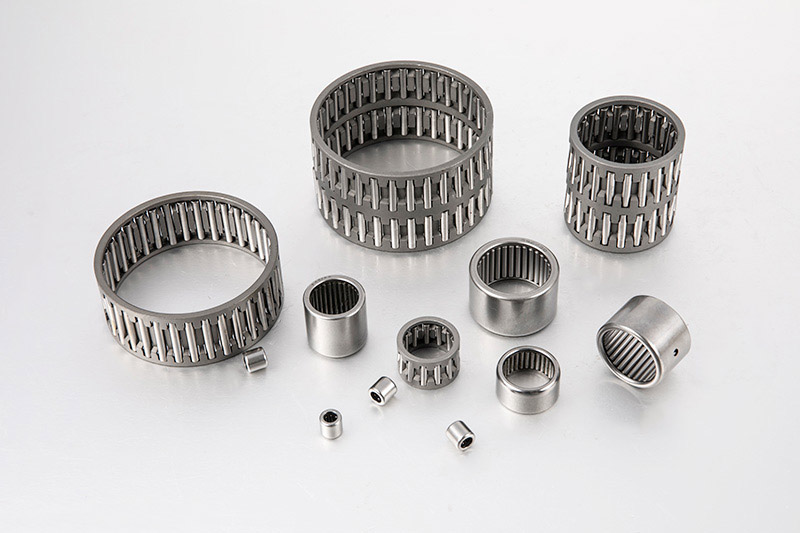 Drawn Cup Stainless Steel Needle Roller BearingThis compact needle roller bearing uses a hardened drawn cup as the outer raceway, providing high radial capacity with a small cross-section. With large grease storage and an interference-fit shell, it suits gear-on-shaft positions in manual gearboxes and synchronizer assemblies with limited space.View Product →
Three specification points deserve attention before you order a transmission bearing: tolerance class, internal clearance, and cage material.
Confirm these details in writing with the supplier. Two bearings with the same bore and outside diameter can behave very differently in service if their tolerance and clearance classes differ.
Transmission bearings live in oil or grease, and the choice of lubricant affects the bearing as much as the gears. In an oil-splash gearbox, the bearing shares the gear oil, so the viscosity must protect both the gear teeth and the rolling contacts. In sealed-for-life positions, a grease-packed bearing with two contact seals is the typical solution, and it simplifies assembly because no separate lubrication path is needed.
Sealing is also a contamination issue. Gear wear particles circulate in the oil and can indent the raceways, after which the bearing develops spalling under repeated load. A well-sealed bearing reduces the entry of debris, but the oil quality and filtration still determine the overall life of the system. In wet or washdown environments, stainless steel races or hybrid ceramic balls add corrosion resistance without changing the bearing envelope.
Failed transmission bearings usually show predictable patterns. Pitting or spalling on the raceway means the contact stress exceeded the material fatigue limit, often accelerated by contaminated oil. Brown or blue discoloration on the rings indicates overheating, which points to insufficient clearance, overfilled grease, or a lubrication interruption. Indentations on the raceway are usually brinelling from static overload during assembly or transport. In needle bearings, skewing of the rollers is often the result of misalignment between the gear and the shaft.
Reading these patterns is useful because it tells you whether the bearing caused the failure or was simply the victim. That distinction matters when you decide whether to change the bearing type, adjust the clearance, or fix the housing alignment. The comparison between roller bearings vs ball bearings is useful in this situation, because the two design families fail at different loads and speeds.
When you source transmission bearings from a manufacturer, the specification sheet should be exact: series, bore diameter, outside diameter, width, tolerance class, radial clearance, cage type, seal configuration, and lubricant. Any one of these can change the fit of the bearing in the housing and on the shaft. Check the quality system as well; a factory certified to ISO 9001 and IATF 16949 will have documentation for material traceability and process control, which matters for production runs.
If the application uses non-standard dimensions or a special seal, confirm that the supplier can produce a custom variant without extending the lead time. For high-volume OEM programs, the consistency of heat treatment and raceway grinding is what separates a bearing that lasts from one that varies in life from batch to batch. The final point is practical: choose the bearing for the worst case, not the normal case. A transmission rarely runs at constant speed and load, so the bearing that survives the first year will be the one specified for the heaviest sustained condition.
Transmission reliability starts at the bearing selection stage. Determine the combined radial and axial loads, choose the bearing family that matches those loads and the available space, then fix the tolerance, clearance, and lubrication before you place the order. The information is not hard to find; the discipline is in asking for it.

Product Overview The Series 1600 Deep Groove Ball ...
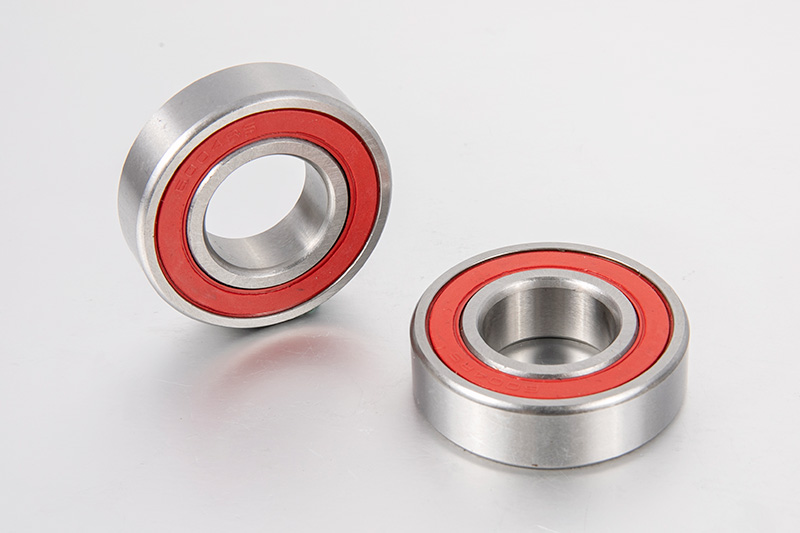
Key Features & Benefits 1. Superior Sealing Pe...

Product Overview:The 6200 Series Deep Groove Ball ...
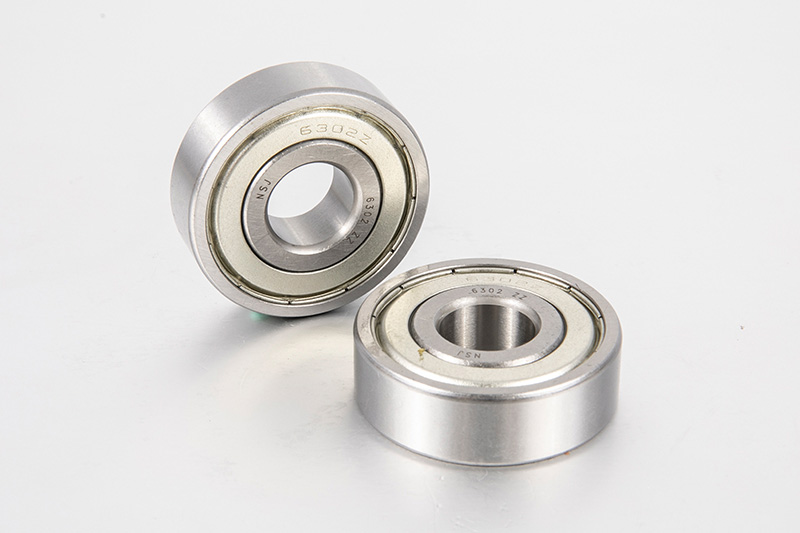
Core Differentiators: Enhanced Load Capacity: Unl...
Core Technical Advantages: Maximum Space Efficien...