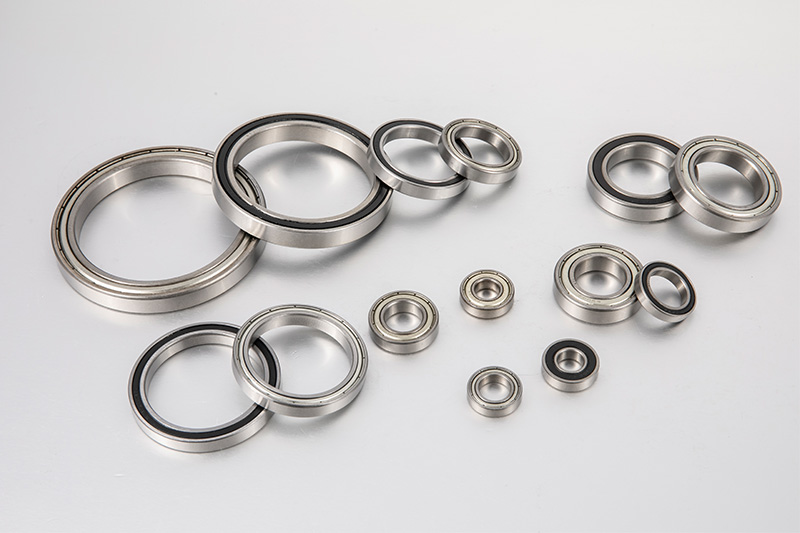
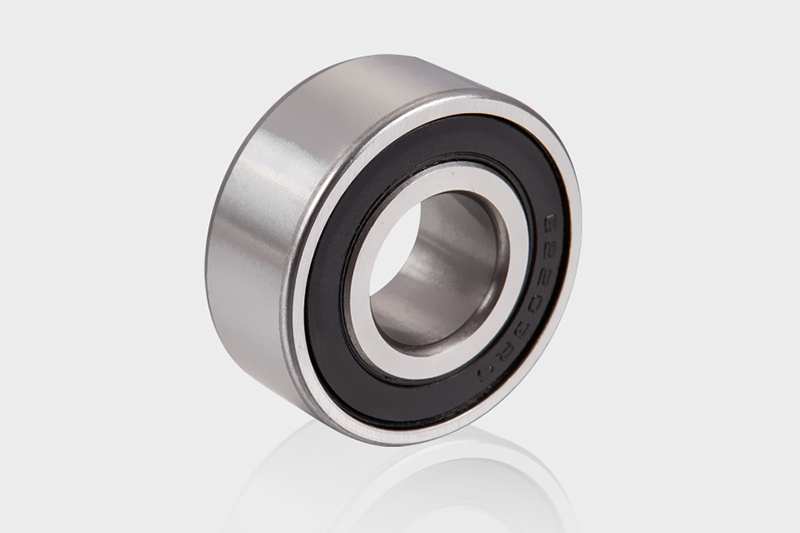
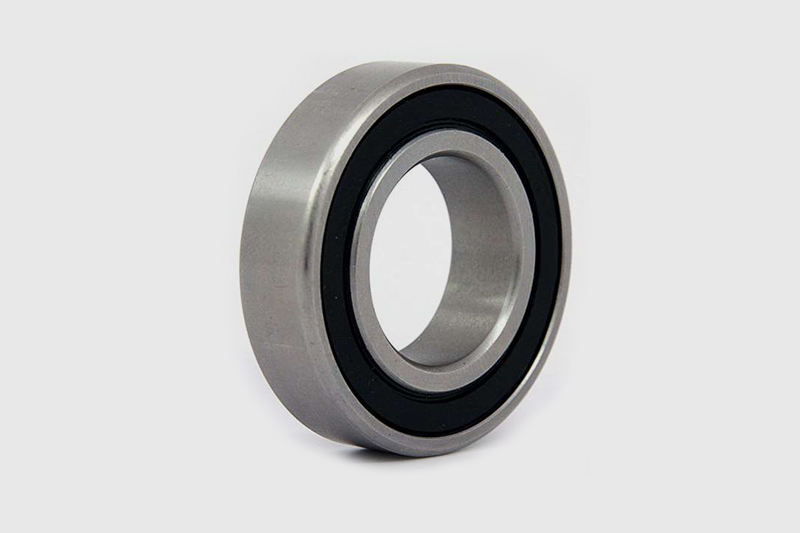
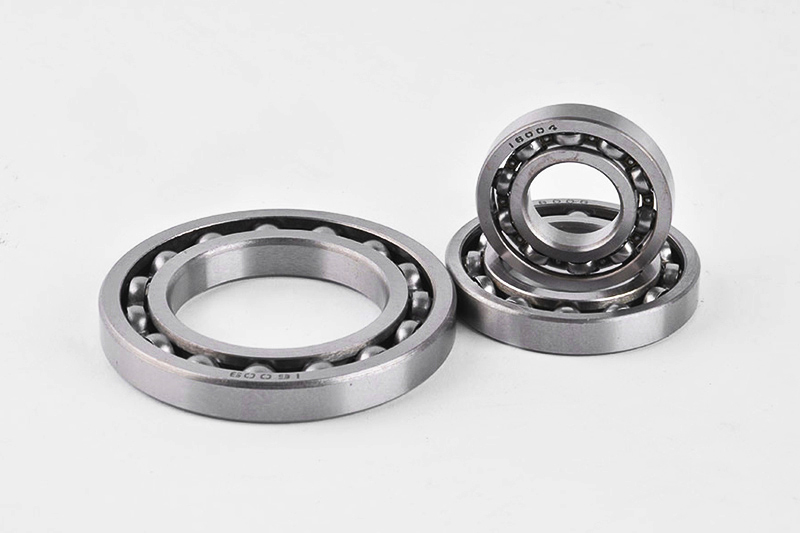
Series 1600 Chrome Steel Deep Groove Ball Bearing
Product Overview The Series 1600 Deep Groove Ball ...




Content
When a flight control actuator bearing fails during final approach, the consequences are not measured in repair costs. They are measured in flight safety. Aerospace bearing load testing exists to prove, before installation, that a bearing can withstand the forces it will face in service. The conclusion is straightforward: load testing is not a formality. It is the only reliable way to confirm that a bearing's design, material, and manufacturing tolerances meet the demands of aviation.
In this guide, we will explain why load testing is critical, the main test types used in aerospace qualification, the standards that govern them, and what engineers and procurement specialists should look for when selecting bearings for flight-critical applications.
Bearings in aerospace applications do not operate under a single, predictable load. A landing gear bearing sees a high static load during touchdown, then a lower dynamic load during taxiing and towing. A gearbox bearing in an engine sees rapid cyclic loading and high temperature gradients. Each scenario stresses the bearing differently.
Standard dimensional checks only verify geometry. They do not prove that the bearing can carry the load. A bearing may pass a dimensional inspection and still fail in service if:
Proof load testing applies a load above the expected operating load and checks the bearing's behavior afterward. This test reveals problems that ordinary inspection methods miss. The cost of a single rejected bearing is negligible compared to the cost of an in-flight failure. That is why the majority of aerospace bearing suppliers incorporate proof load testing into their manufacturing and inspection routines.
Aerospace bearing load testing falls into three main categories. They differ in purpose, load level, and acceptance criteria.
| Test Type | What It Measures | Typical Aerospace Application |
|---|---|---|
| Proof Load | Ability to withstand a load higher than the expected operating load without permanent deformation or damage | Landing gear bearings, actuator pivots |
| Deflection Test | Elastic deformation under load; verifies stiffness and rolling element contact consistency | Precision control surfaces, autopilot linkages |
| Ultimate / Fracture Load | Maximum load before fracture or functional failure | Certification of new bearing designs |
In a proof load test, the bearing is loaded axially or radially to a level that exceeds its maximum expected operating load. Modern machines increase the load at a controlled rate, often around 1% per second, and hold it at the target level for a specified time. The bearing is then checked for permanent deformation, cracks, and changes in running torque. For most aerospace components, the proof load is set at 1.5 to 2 times the maximum expected operating load, depending on the applicable standard.
Deflection testing measures how much the bearing deflects elastically under load. This matters in precision actuation systems, where excessive deflection translates to positioning error. A control surface that deflects under load can cause flutter, reduced authority, and increased pilot workload. Deflection tests also verify the stiffness of a bearing assembly before it is installed.
Ultimate load testing is a destructive test. The bearing is loaded until it fractures or no longer performs its function. The ultimate load is normally calculated as the limit load multiplied by a safety factor, often 1.5 for aircraft structures. The results define the safety margin of the design and are used in certification documents. For bearing manufacturers, this test also provides data that feeds back into product development.
Aerospace bearing load testing is not performed according to a single universal procedure. Several standards define how tests are conducted, what load levels are used, and what the acceptance criteria are.
ARP5483/5 is one of the most relevant standards for rolling element bearings in airframe structures. It outlines a recommended procedure for performing static radial limit and fracture load tests, including test setup, loading rates, and reporting requirements. It is published by SAE International and is widely referenced in aerospace bearing procurement specifications.
NAS0331 is a standard for bearings used in aircraft structures. It includes proof load requirements that a bearing must pass before it is accepted for critical applications. For many procurement departments, NAS0331 is the reference point when evaluating bearing suppliers.
MIL-SPEC covers a broad range of military and aerospace components, including bearings. Military specifications may add requirements such as corrosion protection, special lubricants, and additional tests beyond the commercial standards.
For manufacturers, the quality management system matters as much as the test itself. A bearing supplier that maintains ISO9001 and ISO/TS16949 demonstrates that its processes are consistent, traceable, and audited. These certifications help ensure that the bearing you test today will be the same as the bearing you receive next month.
The same proof load test can produce different results for bearings that look identical from the outside. The difference lies in material, heat treatment, raceway geometry, and manufacturing tolerances.
Material selection determines the base mechanical properties. Chrome steel offers high hardness and good wear resistance, while stainless steel provides corrosion resistance for applications exposed to moisture or chemicals. Hybrid ceramic bearings use ceramic rolling elements, which have a higher elastic modulus and lower density than steel, reducing centrifugal forces at high speeds. When choosing materials for aerospace, you must consider both the load test results and the operating environment.
Deep groove ball bearings are the standard choice for radial loads in actuator mechanisms, flap tracks, and equipment mounts. Their raceway geometry provides a simple, robust load path, but the contact stress under proof load is sensitive to the internal clearance and the ball size. When the proof load approaches the static load rating, the margin becomes critical. Full-size deep groove ball bearings must be selected with a clear understanding of both the applied force and the allowable deformation in the specific aerospace component.
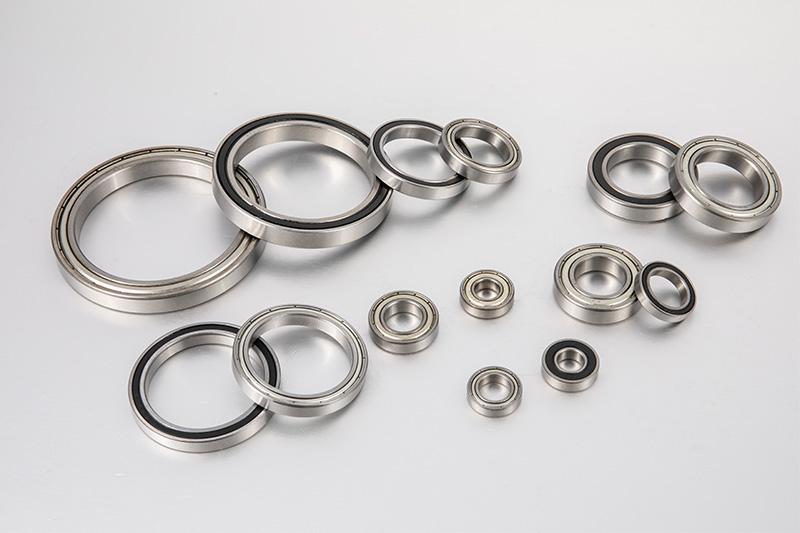 Full-Size Deep Groove Ball Bearing Series 6800 & 6900This full-size deep groove ball bearing is ideal for supporting radial loads in actuator mechanisms and equipment mounts, ensuring reliable performance under proof load conditions.View Product →
Angular contact ball bearings are a common choice when the bearing must carry both radial and axial loads. The contact angle determines how the load is distributed across the balls. A 15-degree contact angle prioritizes speed and low friction, while a 40-degree angle provides higher axial load capacity. For a given proof load test, the contact angle directly influences the contact stress and the deformation of the raceway.
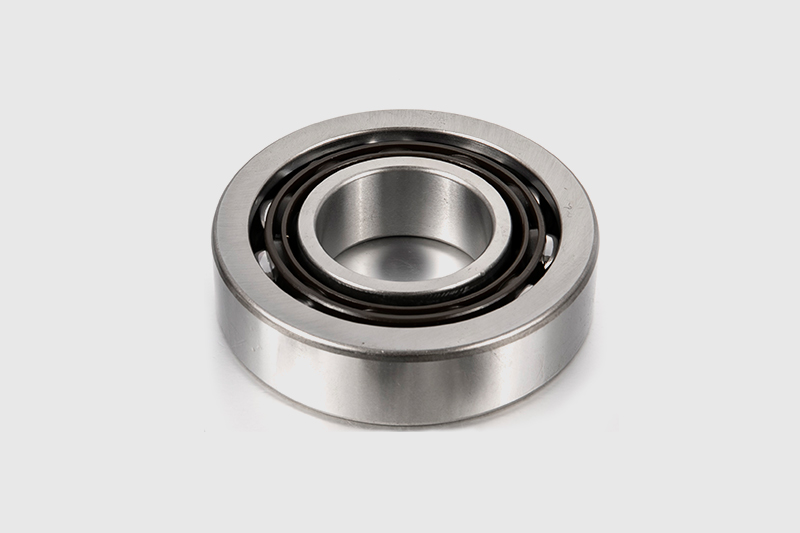 Single Row Angular Contact Ball Bearing for Combined LoadsFeaturing an optimized contact angle, this single row angular contact ball bearing effectively manages combined radial and axial loads, making it a dependable choice for high-speed applications.View Product →
Tapered roller bearings handle combined loads with high radial and axial components, and they are often used in landing gear and wheel assemblies. Their geometry allows the roller and raceway to share the load over a larger contact area. In a proof load test, a tapered roller bearing will typically show less permanent deformation than a ball bearing of the same envelope size, assuming similar material quality.
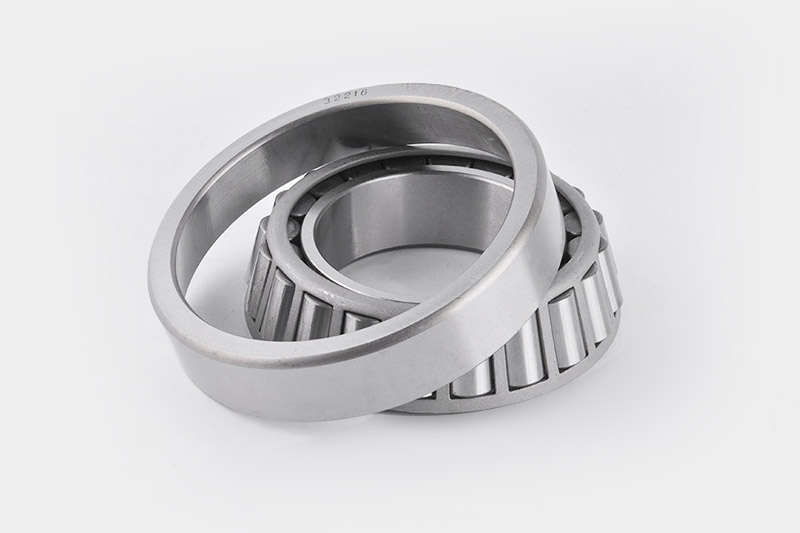 Single Row Tapered Roller Bearing for Heavy-Duty LoadsDesigned to handle high radial and axial loads, this single row tapered roller bearing provides excellent rigidity and minimal deformation, suitable for demanding industrial and automotive uses.View Product →
Heat treatment is another critical variable. Bearings are hardened to a specific hardness range, typically 58-64 HRC for common bearing steels. If the hardness falls below the required range, the raceway may indent under proof load. If it is above, the bearing may be brittle and susceptible to cracking. The heat treatment process must be controlled precisely and documented for each batch.
Tolerance class affects both load test results and running precision. Aerospace bearings are often specified to P5 or P4 tolerance classes. A P0 bearing may pass a dimensional check but still have raceway geometry errors that produce edge loading during the proof load test. The result is a higher local stress and a higher risk of premature failure in service.
The selection process should start with the load conditions, not with the bearing type. For every bearing, you need to know the limit load, the ultimate load, and the proof load. Only then can you match the bearing to the application.
Step 1: Calculate the load. Determine the radial and axial loads the bearing will see in the worst-case scenario. Use the aircraft's load envelope and the actuator or structure's load path.
Step 2: Choose the bearing type. For a purely radial load, a deep groove ball bearing or a cylindrical roller bearing works well. For an axial load, a thrust ball bearing is the logical choice. For combined loads, angular contact ball bearings or tapered roller bearings are more suitable.
Step 3: Verify the static load rating. The static load rating C0 indicates the load that produces a specific permanent deformation, usually defined as 0.0001 times the ball diameter. A proof load that exceeds this value will cause measurable deformation. Ensure the ratio between the proof load and C0 leaves a sufficient margin.
Step 4: Check the tolerance class. A bearing that needs to pass a strict proof load test and operate in a precision actuator should be specified to P5 or P4. If the application is less demanding, P0 may be acceptable.
Step 5: Confirm heat treatment and material. Review the material certificate and heat treatment record. For aerospace, the manufacturer must be able to trace the batch back to the raw steel supplier.
Step 6: Evaluate the supplier. Ask about load testing capabilities, test equipment, and quality management certifications. The supplier should be able to provide load test reports that are traceable and reproducible.
For a deep dive into angular contact bearing performance under different load directions, refer to our article on reducing rolling resistance in angular contact ball bearings. It explains how contact angle selection affects efficiency and load handling.
When purchasing bearings for aerospace applications, the load test data is not just a technical detail. It is part of the procurement documentation. Here are the key questions to ask:
Buyers should also consider the bearing material in relation to the environment. For example, if a bearing will be exposed to moisture and contaminants, stainless steel bearings offer a clear advantage. Our stainless steel bearing range covers applications where corrosion resistance is as important as load capacity.
When a supplier also offers non-standard bearing customization, it can simplify the qualification process. A manufacturer that can modify dimensions, seals, or materials based on the load testing results gives you more flexibility in the design phase.
Aerospace bearing load testing is not an optional extra. It is the difference between a certified component and an unknown risk. When you specify bearings for critical flight applications, the load test data is part of the bearing's identity. Choose a bearing that can pass the proof load, verify the test records, and work with a manufacturer that treats load testing as part of production, not as an afterthought. The right bearing will not only pass the test. It will pass the test every time.

Product Overview The Series 1600 Deep Groove Ball ...
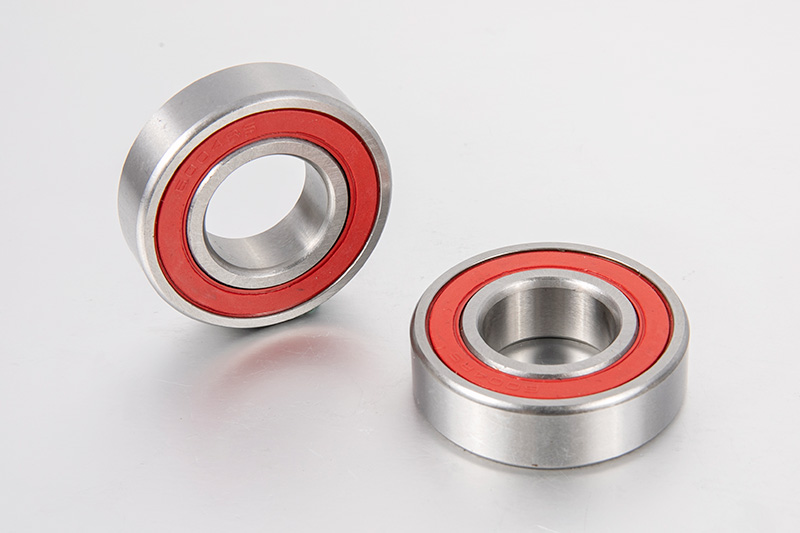
Key Features & Benefits 1. Superior Sealing Pe...

Product Overview:The 6200 Series Deep Groove Ball ...
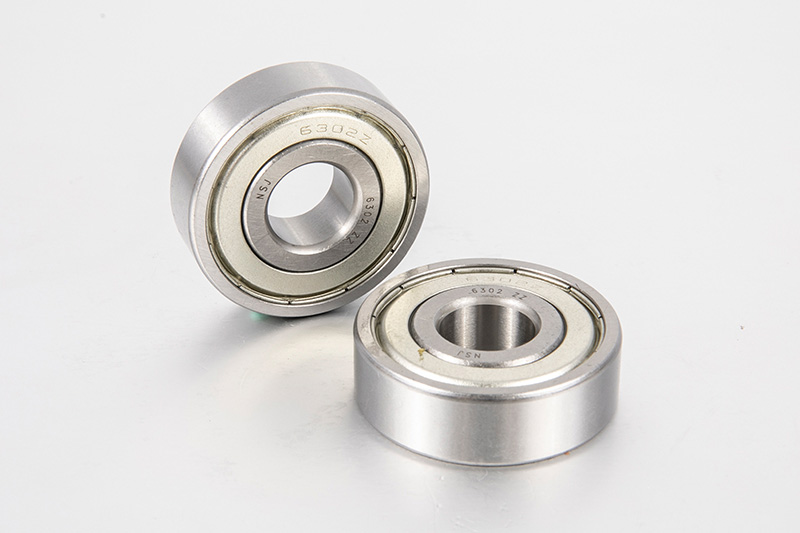
Core Differentiators: Enhanced Load Capacity: Unl...
Core Technical Advantages: Maximum Space Efficien...