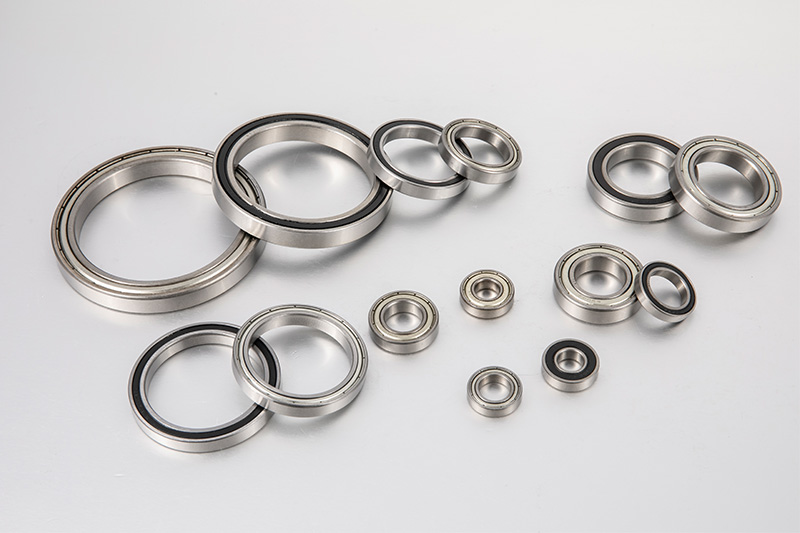
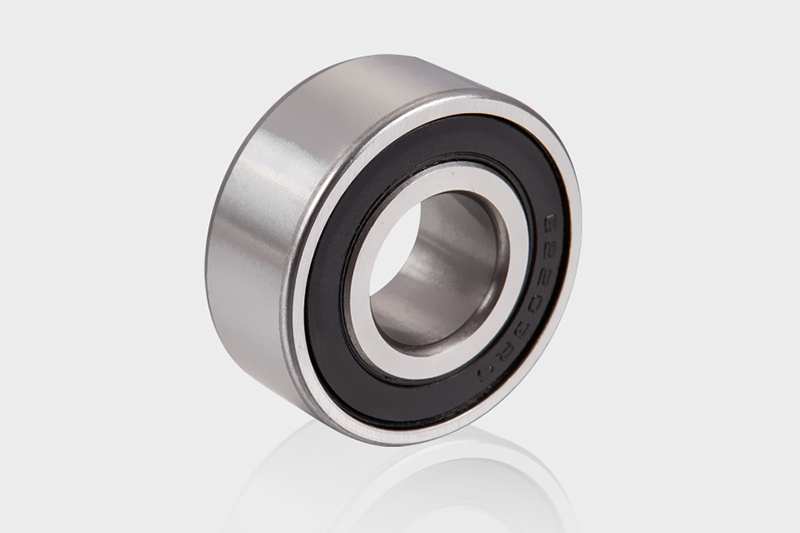
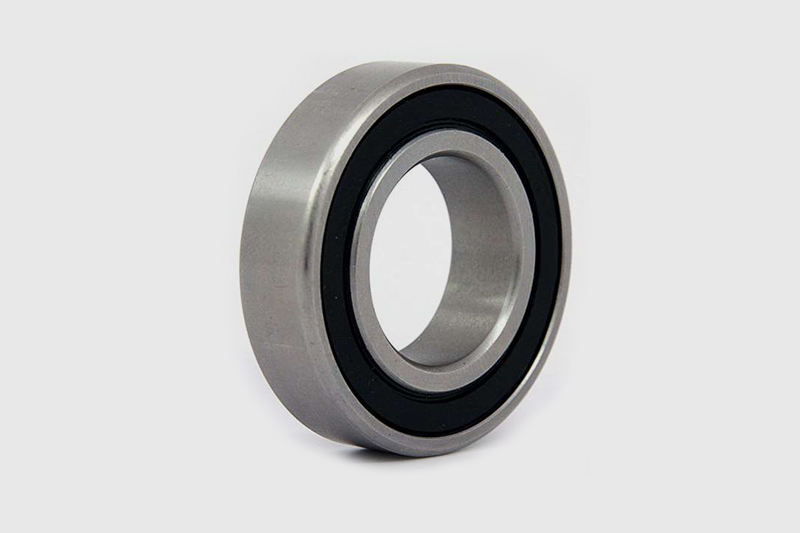
Series 1600 Chrome Steel Deep Groove Ball Bearing
Product Overview The Series 1600 Deep Groove Ball ...




Content
In the intricate world of mechanical engineering, the Deep Groove Ball Bearing (DGBB) is widely recognized as the most versatile and frequently utilized bearing type across every industrial sector. Often described as the “workhorse” of modern machinery, these components represent a masterclass in balancing design simplicity with high-performance output. From the microscopic motors within a smartphone’s haptic engine to the massive, high-torque turbines in hydroelectric power stations, the DGBB provides the critical low-friction rotation necessary for motion. The primary architecture—consisting of an inner ring, an outer ring, a set of high-precision balls, and a cage—is engineered to manage both substantial radial loads and a significant degree of axial (thrust) loads in both directions.
The “Deep Groove” nomenclature refers to the specific geometry of the raceway arc, which is designed to be slightly larger than the radius of the balls. This allows the balls to settle deeply into the groove, providing a large contact area that can withstand high stress while maintaining incredibly low friction torque. This characteristic is why Deep Groove Ball Bearings are the preferred choice for high-speed applications. By minimizing heat generation and energy loss during rotation, they directly improve the operational efficiency of the machines they inhabit. For industrial stakeholders, this translates into reduced wear and tear, longer service intervals, and a lower total cost of ownership (TCO) compared to more complex bearing designs.
A key reason for the DGBB’s dominance is its strict adherence to international standards like ISO and DIN. Because these bearings are standardized globally, a procurement manager in North America can easily source a replacement for a machine manufactured in Germany or Japan. This universal interchangeability reduces the risk of long-term downtime and makes the DGBB a safe, reliable investment for any facility manager. As industries move toward more automated and interconnected “Smart Factories,” the predictable performance and ease of sourcing these bearings ensure they remain a cornerstone of industrial infrastructure.
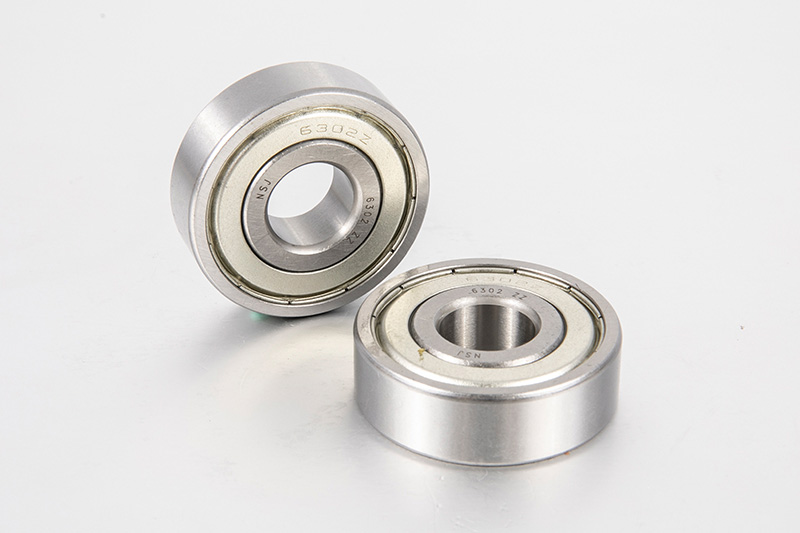
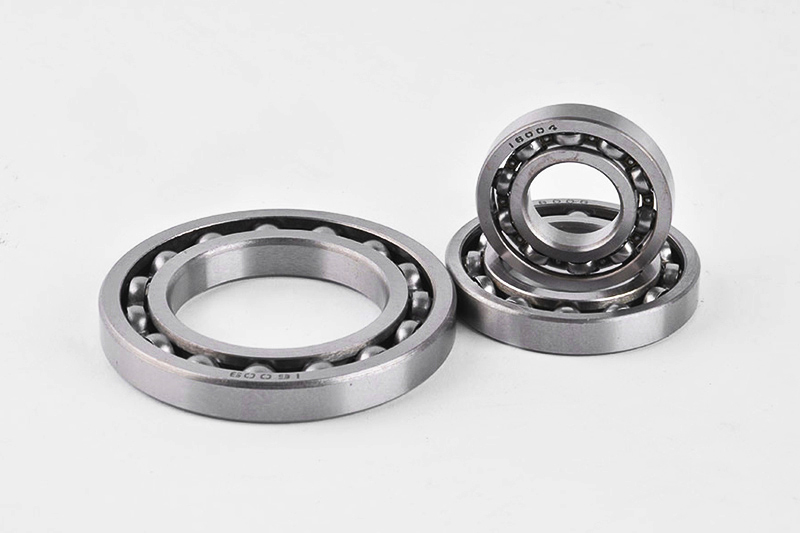
The true competitive advantage of the Deep Groove Ball Bearing lies in its extraordinary adaptability. While specialized bearings, such as tapered or cylindrical roller bearings, are engineered for niche, high-load scenarios, the DGBB excels in almost any environment where rotation is required. This adaptability is further enhanced by a vast array of available configurations. Buyers can choose from “Open” designs for oil-bath lubrication, “Shielded” (ZZ) versions for basic dust protection, or “Sealed” (2RS/DDU) variants for maximum protection against moisture and contaminants.
In the consumer goods sector, DGBBs are the primary reason why household appliances like washing machines, air conditioners, and ceiling fans operate quietly and reliably for decades. However, in the industrial landscape, their impact is even more profound:
| Technical Metric | Deep Groove Ball Bearing | Cylindrical Roller Bearing | Angular Contact Bearing |
|---|---|---|---|
| Primary Load Direction | Radial & Axial (Bi-directional) | Radial (Heavy) | Radial & Axial (Uni-directional) |
| Speed Capability | Extremely High | Moderate | High |
| Friction Torque | Lowest in Category | Moderate | Moderate |
| Maintenance Profile | Low (Available Sealed-for-Life) | Moderate | Moderate |
| Noise & Vibration | Very Low | Moderate | Low |
| Common Use Case | Electric Motors / Household Appliances | Heavy Gearboxes | Pump Impellers / Machine Spindles |
As we progress through 2026, the global manufacturing sector is undergoing a massive shift toward “Green Engineering” and carbon neutrality. The Deep Groove Ball Bearing is a quiet hero in this transition. Because these bearings offer the lowest friction torque of any rolling-element bearing, they play a direct role in reducing the energy consumption of industrial equipment. Even a 1% or 2% reduction in mechanical friction across an entire factory can result in significant annual energy savings and a smaller carbon footprint.
In the rapidly expanding EV sector, energy density and range are paramount. Automotive engineers are now specifying high-precision Deep Groove Ball Bearings equipped with specialized low-friction seals and, increasingly, ceramic balls (Hybrid Bearings).
High-quality DGBBs are now being designed with longevity and recyclability in mind. By using high-purity steel and advanced synthetic lubricants, manufacturers are producing “Maintenance-Free” bearings that last the entire lifecycle of the machine. This “fit-and-forget” philosophy reduces the need for replacement parts and minimizes the waste associated with used grease and discarded components, aligning perfectly with corporate sustainability goals.
While the fundamental geometry of the Deep Groove Ball Bearing has remained consistent for decades, the materials used to construct them have evolved significantly. In 2026, a “standard” bearing is rarely just a piece of steel. Material science now allows these bearings to survive in extreme environments that were previously considered “bearing killers,” such as cryogenic temperatures, vacuum environments, or corrosive chemical baths.
Modern industrial applications often require bearings to do more than just rotate. They must resist corrosion, provide electrical insulation, or operate at extreme temperatures:
Contamination is the leading cause of bearing failure. To combat this, modern DGBBs utilize sophisticated “labyrinth” or “triple-lip” seals. These seals keep moisture and dust out while retaining the internal lubricant. When paired with high-performance synthetic greases, these bearings become Greased-for-Life, eliminating the need for manual relubrication. This is a massive operational advantage for facility managers, as it reduces maintenance labor and eliminates the risk of over-greasing—a common cause of bearing overheating.
In the world of 24/7 manufacturing, reliability is the ultimate currency. A single bearing failure in a critical production line can cost a company thousands of dollars per minute in lost productivity. The Deep Groove Ball Bearing offers a high degree of predictability. Using the standardized $L_{10}$ life calculation formula, engineers can estimate with extreme accuracy exactly how many millions of revolutions a bearing will last under specific load and speed conditions.
By 2026, the integration of Industry 4.0 has changed how we maintain these components. Because the DGBB has a very distinct and well-understood acoustic and vibration signature, AI-driven monitoring systems can now detect the earliest signs of wear, such as “spalling” or “pitting” on the raceways.
What is the difference between ZZ shields and 2RS seals?
ZZ refers to non-contact metal shields that protect the bearing from large debris while offering the lowest friction for high-speed use. 2RS (or DDU) refers to contact rubber seals that offer a tighter closure, protecting the bearing from moisture and fine dust, though they add a small amount of friction.
Can Deep Groove Ball Bearings handle axial (thrust) loads?
Yes. While primarily designed for radial loads, the “deep” raceways allow these bearings to handle moderate axial loads in both directions. For extremely heavy axial loads, an angular contact bearing might be more appropriate.
Why is my bearing overheating during operation?
Overheating is typically caused by three factors: over-greasing (which causes internal friction), excessive load beyond the bearing’s rating, or improper internal clearance (not enough room for the metal to expand as it gets warm).
When should I specify C3 internal clearance?
C3 clearance provides more internal “play” than normal (CN). It is required for high-speed applications or environments where the shaft gets hot, as the extra space allows the inner ring to expand without seizing the bearing.

Product Overview The Series 1600 Deep Groove Ball ...
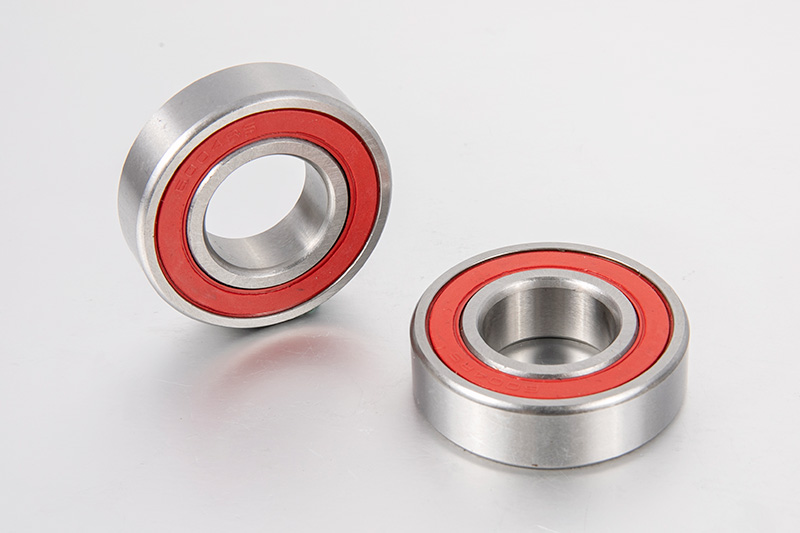
Key Features & Benefits 1. Superior Sealing Pe...

Product Overview:The 6200 Series Deep Groove Ball ...
Core Differentiators: Enhanced Load Capacity: Unl...
Core Technical Advantages: Maximum Space Efficien...