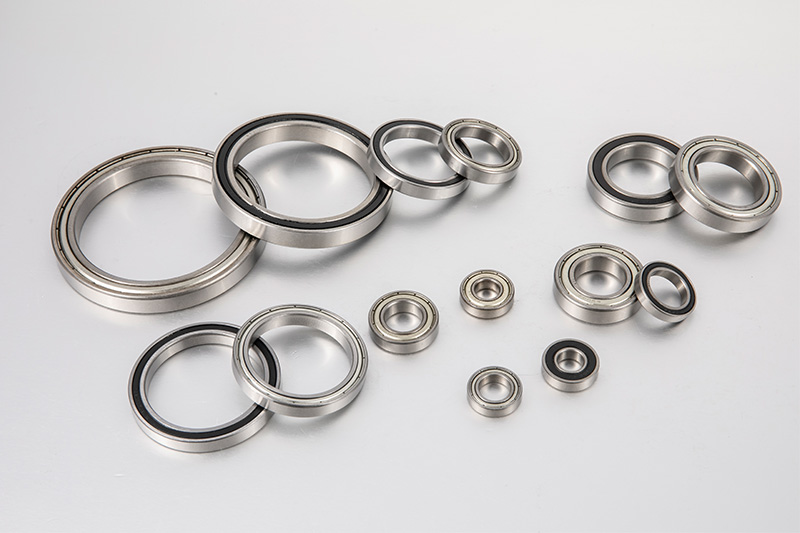
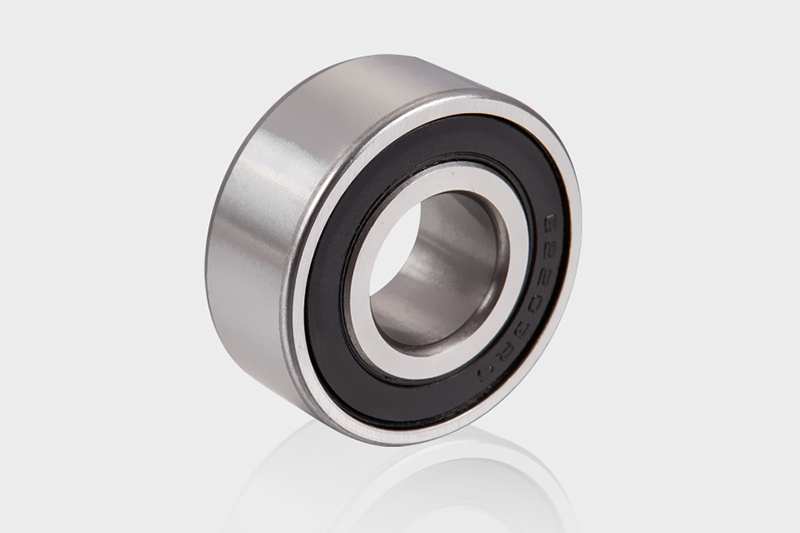
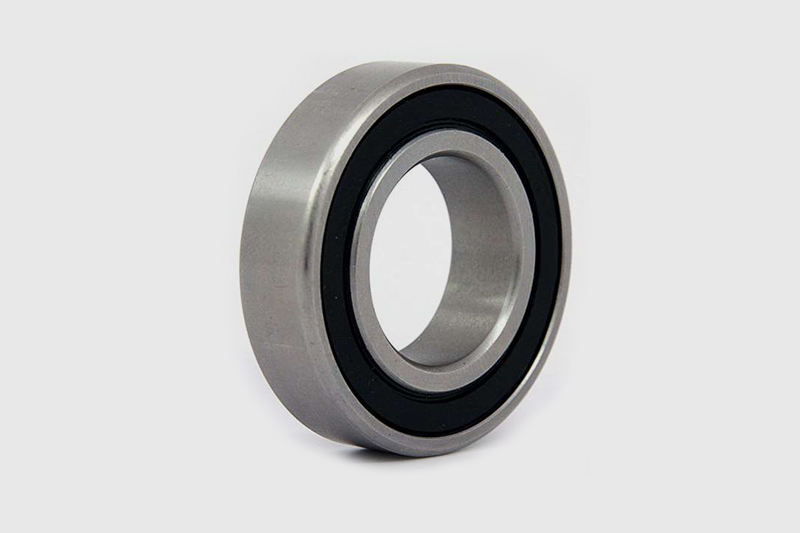
Series 1600 Chrome Steel Deep Groove Ball Bearing
Product Overview The Series 1600 Deep Groove Ball ...




Content
The core answer: each bearing type is unique because of how it manages load direction, motion type, speed, and friction. Ball bearings excel at high-speed, low-load applications; roller bearings handle heavy radial loads; thrust bearings manage axial forces; and plain bearings offer simplicity and durability in slow, heavily-loaded conditions. Choosing the wrong bearing can reduce machine life by up to 80% — making bearing selection one of the most consequential decisions in mechanical engineering.
In mechanical engineering, a bearing is a machine element that constrains relative motion between moving parts to only the desired motion and reduces friction between them. The purpose of a bearing is threefold: to support loads transmitted between rotating or sliding components, to reduce energy loss caused by friction, and to extend the service life of the machinery in which it operates.
At its most fundamental level, a bearing works by substituting sliding friction — which is highly energy-intensive — with rolling or fluid-film friction, which can be orders of magnitude smaller. A standard deep-groove ball bearing, for example, has a coefficient of friction as low as 0.001, compared to dry sliding contact values that can reach 0.3 to 0.5.
The function of a bearing is not limited to simply "reducing friction." Bearings also:
Without bearings, modern machinery — from jet engines rotating at 15,000 RPM to your car's wheel hubs — would be impossible to build at the required efficiency and longevity. The global bearings market is valued at over $45 billion, reflecting how central these components are to all of engineering.
To understand bearing types, you first need to understand what is inside a bearing and what each part contributes. The bearing components vary by type, but most rolling-element bearings share a consistent set of parts:
The outer ring is the stationary component of most bearing assemblies. It is a bearing that is assembled around a shaft indirectly — the outer ring seats in a housing bore, providing a hardened, precisely ground raceway for the rolling elements. Outer rings are typically made from AISI 52100 chrome steel, through-hardened to 58–65 HRC for wear resistance.
The inner ring fits directly onto the shaft and rotates with it in most configurations. Its raceway geometry — whether deep-groove, angular, or tapered — determines the load direction the bearing can handle. The inner ring is machined to tolerances as tight as ±2 microns in precision bearings.
The rolling elements — balls, cylindrical rollers, tapered rollers, needle rollers, or spherical rollers — are the parts of a bearing that transmit load while enabling low-friction relative motion. Ball bearings use spherical elements that make point contact with raceways; roller bearings use cylindrical or tapered shapes that make line contact, allowing them to carry substantially heavier loads. A standard 6205 deep-groove ball bearing contains 9 steel balls of 7.938 mm diameter.
The cage maintains uniform spacing between rolling elements, preventing contact between adjacent balls or rollers that would cause catastrophic friction and heat buildup. Cages are made from stamped steel, machined brass, or moulded polymers depending on speed and temperature requirements. At very high speeds (above 1 million DN), lightweight phenolic or PEEK cages are used to reduce centrifugal stress.
Seals (rubber-contact lip seals) and shields (non-contact metal deflectors) are bearing components that retain lubricant and exclude contaminants. A sealed bearing is designated with the suffix "2RS" (two rubber seals), while a shielded bearing uses "ZZ." Contact seals increase friction slightly but provide superior contamination resistance — critical in automotive wheel hubs, food processing equipment, and outdoor applications.
| Bearing Component | Material Options | Key Function |
|---|---|---|
| Outer Ring | 52100 chrome steel, stainless, ceramic | Provide stationary raceway, seat in housing |
| Inner Ring | 52100 chrome steel, stainless, ceramic | Rotate with shaft, provide inner raceway |
| Rolling Elements | Steel, ceramic (Si₃N₄), tungsten carbide | Transmit load with minimal friction |
| Cage / Retainer | Stamped steel, brass, nylon, PEEK | Space rolling elements uniformly |
| Seals / Shields | NBR rubber, PTFE, stamped steel | Retain grease, exclude contamination |
| Lubricant | Grease (lithium, synthetic), oil | Reduce metal-to-metal contact, cool bearing |
Before examining specific designs, it helps to categorize bearings at the highest level. The 3 main types of bearings are:
Within these categories, the answer to "what are the 4 types of bearings" most commonly referenced in engineering practice are: ball bearings, roller bearings, thrust bearings, and plain (sleeve) bearings. These four categories cover the vast majority of industrial, automotive, and precision applications.
Ball bearings are the most widely produced bearing type in the world — SKF alone manufactures over 1 billion ball bearings per year. Their versatility comes from the spherical rolling elements, which allow them to handle both radial loads (perpendicular to the shaft) and moderate axial loads (parallel to the shaft) simultaneously.
The deep-groove ball bearing (DGBB) is the archetypal rolling-element bearing. Its deep, continuous raceways allow it to handle radial loads, bidirectional axial loads, and combined loads — all in one compact unit. The 6200 and 6300 series are the most commonly specified bearings in general machinery. A 6206 bearing, for example, has a dynamic load rating of 19.5 kN and is rated to speeds of 13,000 RPM with grease lubrication.
Deep-groove ball bearings are found in electric motors, gearboxes, pumps, fans, and household appliances. They are the default choice when no specific load or speed condition demands a more specialized design.
Angular contact ball bearings are engineered to handle combined radial and axial loads by orienting the contact angle between ball and raceway — typically 15°, 25°, or 40°. A steeper contact angle increases axial load capacity at the cost of radial capacity. These bearings are universally found in machine tool spindles, where they must simultaneously resist cutting forces and maintain shaft runout below 1 micron.
They are typically mounted in pairs — either back-to-back (DB arrangement) for moment load resistance, or face-to-face (DF arrangement) for misalignment tolerance.
Self-aligning ball bearings contain two rows of balls running on a common spherical outer raceway. This design allows the inner ring to tilt up to ±3° relative to the outer ring, accommodating shaft deflection and housing misalignment that would cause premature failure in rigid bearings. They are ideal for long shafts in textile machines, paper mills, and agricultural equipment where structural deflection is unavoidable.
Plain Bearing vs Ball Bearing: Plain bearings outperform ball bearings under very heavy, slow loads where a thick oil film can form (like main bearings in large diesel engines). Ball bearings win for high speeds, light-to-moderate loads, and applications where lubricant replenishment is difficult or impossible.
Where ball bearings make point contact with their raceways, roller bearings make line contact — spreading load over a larger area and enabling dramatically higher load capacity. A cylindrical roller bearing of the same bore diameter as a comparable ball bearing can carry 3 to 5 times the radial load. This is why roller bearings dominate heavy industry, mining, steel mills, and powertrain applications.
Cylindrical roller bearings use rollers whose length-to-diameter ratio is between 1:1 and 3:1. They provide very high radial load capacity and excellent rigidity, making them the standard choice for electric motor drive ends, machine tool spindle supports, and rolling mill work rolls. The NU, NJ, NUP, and N series differ in flange configuration, determining whether they can accept axial loads or float freely.
High-precision cylindrical roller bearings (P4 or P2 tolerance class) achieve radial runout below 2.5 microns, enabling the accuracy required in grinding spindles.
Tapered roller bearings are one of the most important bearing types in automotive and heavy-equipment engineering. The tapered geometry of both rollers and raceways causes the contact lines to converge at a single point on the bearing axis — this geometry simultaneously handles heavy radial loads and large axial (thrust) loads in one direction. Their most prominent application is automotive wheel hubs, where they must handle cornering forces, vehicle weight, and braking loads simultaneously.
The Timken Company pioneered tapered roller bearing design in 1898, and today these bearings are specified in sizes from 10 mm bore to over 2 meters for wind turbine main shafts. They must be mounted in opposing pairs (or as a matched set) to constrain both axial directions.
Spherical roller bearings contain two rows of barrel-shaped rollers running in a common spherical outer raceway — the same self-aligning principle as self-aligning ball bearings, but with enormously greater load capacity. They are the preferred choice for mining conveyors, paper mill rolls, crushers, and vibrating screens where shafts are long, heavily loaded, and subject to significant misalignment.
A large spherical roller bearing (e.g., 23940 series, 200 mm bore) can carry radial dynamic loads exceeding 1,000 kN. The self-aligning capability allows up to ±2.5° of angular misalignment without load concentration.
Needle rollers have a length-to-diameter ratio exceeding 4:1, giving needle bearings an exceptionally high load capacity relative to their cross-section. This makes them ideal where radial space is severely constrained — as in planetary gearboxes, universal joints, rocker arms, and two-stroke engine connecting rods. Some needle bearings dispense with an inner ring entirely, using the hardened shaft surface as the inner raceway to save even more space.
| Roller Bearing Type | Load Direction | Key Advantage | Typical Application |
|---|---|---|---|
| Cylindrical Roller | Radial only (mostly) | Very high radial capacity, low friction | Electric motors, gearboxes |
| Tapered Roller | Radial + unidirectional axial | Combined load handling, rigidity | Wheel hubs, differentials, axle boxes |
| Spherical Roller | Radial + bidirectional axial | Self-aligning, very high load | Conveyors, mining, paper mills |
| Needle Roller | Radial only | Ultra-compact cross-section | Planetary gears, U-joints |
Thrust bearings are a specialized category engineered to carry loads acting parallel to the shaft axis rather than perpendicular to it. They are the answer when an engineer must prevent a shaft from moving axially while still allowing rotation. Understanding this distinction is central to any bearing selection guide.
Thrust ball bearings consist of two washers (raceways) and a ball-and-cage assembly. They handle purely axial loads in one direction and are designed for low-to-moderate speed, high axial load conditions. Common uses include lazy susans, rotary tables, vertical pump shafts, and crane hooks. They cannot accept radial loads — any radial force on a thrust ball bearing will cause rapid failure, making correct installation critical.
Roller thrust bearings bring the line-contact advantage of roller bearings to axial loading. Cylindrical roller thrust bearings are used in machine tool tables and presses. Spherical roller thrust bearings — which also self-align — are the choice for large vertical shaft applications like hydroelectric generators and vertical agitators, where axial loads can reach hundreds of tonnes and some misalignment is unavoidable.
These bearings handle very large axial loads combined with radial loads and are commonly found in automotive transmissions, differentials, and industrial gearboxes. Their tapered geometry creates a wedging action that provides exceptional rigidity and load distribution, making them indispensable in high-torque drivetrain applications.
Plain bearings are the oldest and simplest bearing type, yet remain indispensable across engineering. A plain bearing operates on a sliding interface between two surfaces — typically a shaft journal rotating within a bore — lubricated by oil, grease, or solid film. There are no rolling elements; the load is carried directly by the fluid film or bearing surface material.
Journal bearings are plain cylindrical bores into which a shaft rotates. Under adequate lubrication speed, a hydrodynamic oil wedge forms between shaft and bore, completely separating the metal surfaces — the coefficient of friction falls to as low as 0.001, comparable to rolling bearings. These are the main bearings in large diesel and gasoline engines (the crankshaft main bearings), turbine journal bearings, and large pump bearings.
Main bearings in automotive engines, for example, are precision-cast from aluminum-tin or copper-lead alloys and must withstand peak combustion loads exceeding 50 MPa while the engine is running. Their load capacity exceeds what any rolling bearing of equivalent size could provide.
Adding a flange to a sleeve bearing allows it to handle axial loads as well as radial, combining the journal and thrust function in one component. These are used extensively in gearboxes, pumps, and automotive camshaft supports.
Modern plain bearing technology includes sintered bronze bearings impregnated with oil, PTFE-lined bearings, and composite bearings using PEEK or carbon-graphite. These are bearing components designed to operate with minimal or no external lubrication — essential for food processing equipment, medical devices, and aerospace mechanisms where oil contamination is unacceptable. IGUS iglide bearings, for example, are rated for continuous dry operation at loads up to 140 MPa.
The plain bearing vs ball bearing choice comes down to application specifics: plain bearings win on load capacity per unit size, shock tolerance, quiet operation, and simplicity; ball bearings win on starting friction, precision, and applicability across a broad speed range without requiring pressurized lubrication systems.
Not all bearings support rotational motion. Guide bearings and linear bearings are engineered to allow precise, low-friction linear motion — translation along a straight axis rather than rotation about one. This category represents a distinct and growing segment of bearing uses and types in modern automation.
A guide bearing is a bearing designed to constrain and guide the linear movement of a component — a tool slide, a column, a piston rod — along a defined straight path. The guide bearing's purpose is to ensure that axial motion is precise and free of lateral deflection or rotational play. In hydraulic cylinders, guide bearings support the piston rod against side loads that would otherwise cause seal failure and rod wear.
Linear ball bearings (linear bushings) contain recirculating balls running in longitudinal raceways within a cylindrical housing. They provide exceptionally low friction and high precision for bearings straight-line motion along hardened shafts. Standard INA/Thomson linear bushings are rated for dynamic load capacities from 75 N to over 10,000 N and are ubiquitous in 3D printers, CNC machines, laser cutters, and laboratory automation equipment.
For higher loads and greater rigidity, linear roller bearings and profile rail (linear guideway) systems replace balls with rollers or use profiled rail tracks with recirculating ball or roller carriages. Hiwin and THK profile rail guides are the standard in modern CNC machining centers — a 35 mm rail section can carry dynamic loads exceeding 50 kN with positional repeatability of ±3 microns.
A horizontal bearing refers to a bearing mounted such that the shaft axis is horizontal. This is the most common orientation in industrial machinery — motors, gearboxes, pumps, and conveyors all typically use horizontal bearing arrangements. In a horizontal bearing, gravity acts radially on the shaft, which must be fully supported by the bearing's radial load capacity. Contrast this with vertical shaft arrangements, which require thrust bearings to carry the shaft weight axially.
Beyond the standard categories, engineering bearings include a range of specialized designs created to meet specific application requirements that standard bearings cannot satisfy.
These single-row ball bearings use a gothic-arch raceway profile that creates four contact points between each ball and the raceways. This geometry allows them to carry bidirectional axial loads, radial loads, and moment loads — all in one compact row of balls. They are widely used as slewing rings in wind turbine pitch and yaw drives, excavator turntables, and radar antenna pedestals.
Active magnetic bearings (AMBs) suspend a rotor using controlled electromagnetic forces, achieving completely contact-free operation. With zero mechanical wear and the ability to operate at over 100,000 RPM, AMBs are used in high-speed machining spindles, compressors, flywheel energy storage, and vacuum turbomolecular pumps. Air bearings use a pressurized air film similarly and are the standard in semiconductor manufacturing equipment requiring nanometer-level precision.
Crossed roller bearings arrange cylindrical rollers alternately at 90° angles within a single, thin ring assembly. This configuration provides very high rigidity against moment loads, radial loads, and axial loads simultaneously, with an exceptionally compact cross-section. They are the preferred choice for robotic joint actuators, rotary tables, medical CT scanner gantries, and telescope mounts.
Thin-section bearings (also called slim-line bearings) maintain a constant cross-section regardless of bore diameter. A 200 mm bore thin-section bearing may have only a 12 mm cross-section height — compared to 27 mm for a standard series bearing. They are used in aerospace actuators, medical imaging equipment, and robotic joints where minimizing weight and envelope is critical.
Understanding bearing types and applications in context reveals why bearing selection is so consequential. Here is how different types of bearings map to major industries:
| Industry | Bearing Type Used | Reason for Selection |
|---|---|---|
| Automotive (wheel hub) | Tapered roller or angular contact ball | Combined radial + axial loads, compact package |
| Automotive (engine main) | Plain (journal) bearings | Very high loads, hydrodynamic lubrication available |
| Electric motors | Deep-groove ball bearings | High speed, moderate radial + axial load, low cost |
| Wind turbine (main shaft) | Spherical roller bearings | Very heavy loads, misalignment, low speed |
| CNC machine tool spindle | Angular contact ball bearings (pairs) | High precision, combined loads, high speed |
| Mining conveyor | Spherical roller, mounted units | Heavy radial load, misalignment, harsh environment |
| Gearboxes (industrial) | Cylindrical roller + thrust bearings | High radial + separate thrust load management |
| Pumps (centrifugal) | Deep-groove ball or angular contact | Radial and axial loads, high speed, various sizes |
| Robotics joints | Crossed roller, thin-section ball | Compact, high rigidity, moment load resistance |
| Hydraulic cylinders | Guide bearings (plain polymer) | Radial support on rod, no rotation, compact |
Bearing design is a multivariable engineering problem. Selecting the right bearing requires evaluating a number of interdependent parameters. A proper bearing selection guide always addresses the following:
The most fundamental design input is the load the bearing must carry. Radial loads act perpendicular to the shaft; axial (thrust) loads act parallel to it; combined loads have both components; moment loads act to tip the bearing. Each bearing type handles these differently. A spherical roller bearing that can carry 500 kN radially may only handle 150 kN axially — the ratio matters as much as the magnitude.
Every bearing has a speed limit governed by heat generation, lubrication film integrity, and centrifugal stresses on rolling elements. Ball bearings can operate at higher speeds than roller bearings of the same size — a 6206 ball bearing has a grease speed limit of 13,000 RPM, while a comparable cylindrical roller bearing is limited to 10,000 RPM. Ultra-high-speed applications above 1 million DN require ceramic hybrid bearings, precision-ground raceways, and oil-air lubrication.
Standard bearing life is calculated using the ISO 281 L10 method: the operating hours at which 90% of a group of identical bearings will still be running (10% failure probability). The formula L10 = (C/P)^p × (10^6 / 60n) where C is dynamic load rating, P is equivalent dynamic load, p is the exponent (3 for ball bearings, 10/3 for roller bearings), and n is speed in RPM. Modern modified life calculations (ISO 281:2007) also account for lubrication conditions, contamination level, and material properties — and can revise bearing life by factors of 0.1 to 50× depending on conditions.
Lubrication is perhaps the single most important factor in bearing longevity. Over 50% of all premature bearing failures are lubrication-related — either insufficient quantity, wrong viscosity, contamination, or incorrect relubrication intervals. The viscosity ratio κ (actual viscosity ÷ required viscosity at operating temperature) should be between 1 and 4 for optimal film formation. Contamination, measured by the ISO cleanliness factor eC, can reduce bearing life by up to 90% if oil cleanliness is not maintained.
Shaft deflection, housing bore misalignment, and thermal expansion can all cause angular misalignment between inner and outer ring. Deep-groove ball bearings tolerate only ±2 to 10 arc-minutes of misalignment before edge loading occurs. Self-aligning ball bearings handle ±3°, and spherical roller bearings up to ±2.5° — making them far more forgiving in real-world installations where perfect alignment is not achievable.
Standard bearing steels are stabilized to 120°C; high-temperature stabilized variants (suffix /S1, /S2, etc.) are rated to 200°C or 250°C. Above 300°C, standard grease is unsuitable and high-temperature ceramic or graphite-based lubricants must be used. At the other extreme, cryogenic bearings for liquid nitrogen or oxygen service require austenitic stainless steel or full ceramic construction to avoid embrittlement and corrosion.
A bearing is never just a standalone component — it performs as part of a system that includes the shaft, housing, lubricant, sealing arrangement, and surrounding structure. Getting this system right is as important as selecting the correct bearing type.
Interference fits between the bearing inner ring and shaft prevent ring creep under rotating load — a phenomenon where the ring slowly rotates relative to the shaft, destroying both surfaces. The required interference depends on the load: heavy loads require tighter fits. A typical recommendation is k5 shaft tolerance for rotating inner ring loads in electric motors, providing 0 to 18 microns of interference depending on bearing bore size.
The bearing that is assembled around a shaft incorrectly — with too loose a fit — will suffer fretting corrosion and premature failure. Oversized interference, conversely, reduces internal clearance and can preload the bearing excessively, raising operating temperature.
Internal radial clearance — the total freedom of movement between inner and outer rings before load — must be carefully selected. Standard clearance group CN is suitable for most applications. Increased clearance (C3 or C4) is needed when the bearing will run hot and thermally expand the inner ring. Preloaded bearings, conversely, have negative clearance — the rolling elements are pressed into the raceways — which increases rigidity and reduces vibration at the cost of higher operating temperature. Angular contact pairs in machine tool spindles are typically preloaded to 100–2000 N to achieve the required stiffness.
Most shafts use a two-bearing arrangement: one locating bearing that constrains the shaft axially (typically an angular contact ball bearing or a deep-groove ball bearing with a retained outer ring), and one non-locating (floating) bearing that allows axial displacement to accommodate thermal expansion. Without this arrangement, thermal growth of the shaft would generate massive axial preload forces — potentially exceeding the axial load capacity of either bearing.
A structured bearing selection guide narrows down the best bearing type for any application by working through the key parameters in sequence. Here is the process that practicing engineers follow:
Following this sequence ensures that bearing selection is driven by engineering requirements rather than habit or convenience — the single most effective step an engineer can take to maximize machinery reliability and minimize lifecycle cost.
To consolidate the full range of different types of bearings covered in this guide, the table below provides a direct comparison of bearing types against the key performance dimensions:
| Bearing Type | Radial Load | Axial Load | Max Speed | Misalignment | Primary Use Case |
|---|---|---|---|---|---|
| Deep-Groove Ball | Medium | Medium (both) | Very High | Low (±10') | General machinery, motors |
| Angular Contact Ball | Medium-High | High (one dir.) | High | Very Low | Spindles, pumps, gearboxes |
| Self-Aligning Ball | Medium | Low | High | High (±3°) | Long shafts, textile machinery |
| Cylindrical Roller | Very High | Low-None | High | Very Low | Motors, gearboxes, heavy machinery |
| Tapered Roller | High | High (one dir.) | Medium | Very Low | Wheel hubs, axles, gearboxes |
| Spherical Roller | Very High | Medium (both) | Medium | High (±2.5°) | Mining, conveyors, wind turbines |
| Needle Roller | Very High | None | Medium | Very Low | Planetary gears, U-joints |
| Thrust Ball | None | High (one dir.) | Low-Medium | Very Low | Vertical shafts, crane hooks |
| Plain (Journal) | Very High | Depends on design | Medium (hydrodynamic) | Low | Engine crankshafts, large turbines |
| Linear Ball Bushing | — | — | — (linear motion) | Low | CNC axes, 3D printers, automation |
| Crossed Roller | High | High (both) | Medium | Very Low | Robotics, rotary tables, CT scanners |
Every bearing type listed above exists because a real engineering problem demanded a solution that no existing design could provide. Understanding these distinctions — and the underlying physics that drives them — is what separates a mechanical engineer who selects bearings by habit from one who selects them by engineering judgment. Whether you are designing a 50,000 RPM dental drill or a 10 MW wind turbine gearbox, the right bearing, correctly specified and properly applied, is one of the most reliable components in your machine.

Product Overview The Series 1600 Deep Groove Ball ...
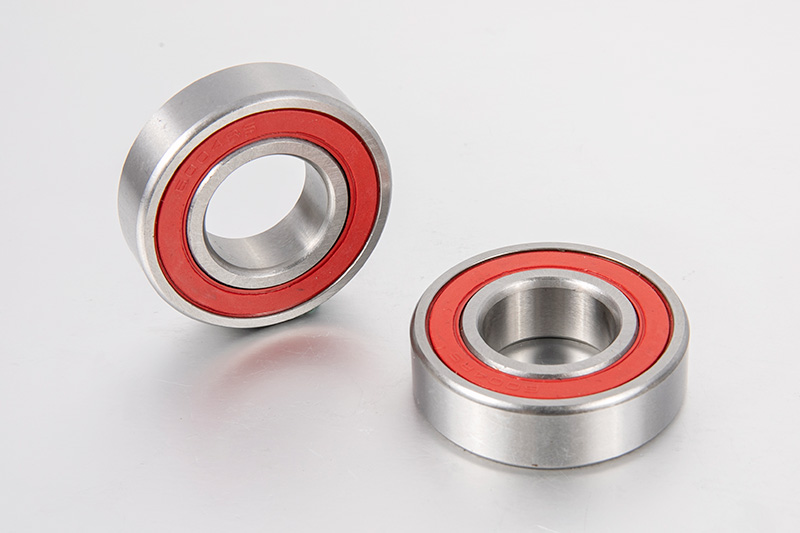
Key Features & Benefits 1. Superior Sealing Pe...

Product Overview:The 6200 Series Deep Groove Ball ...
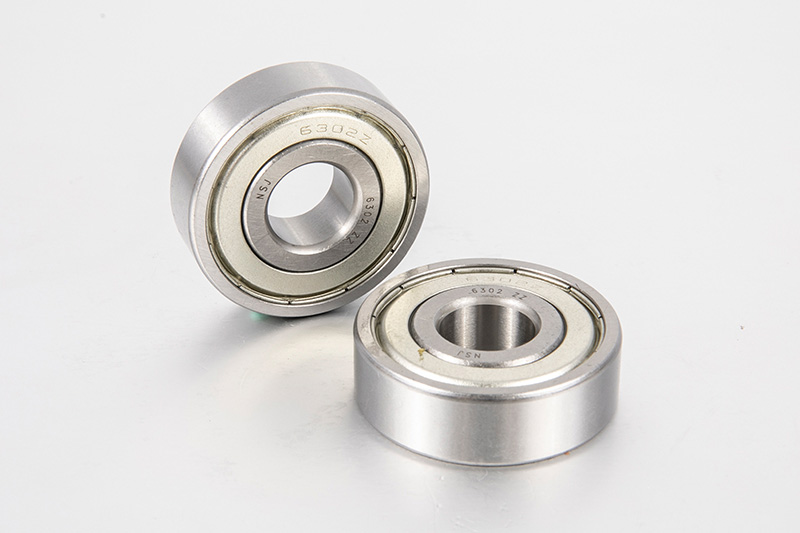
Core Differentiators: Enhanced Load Capacity: Unl...
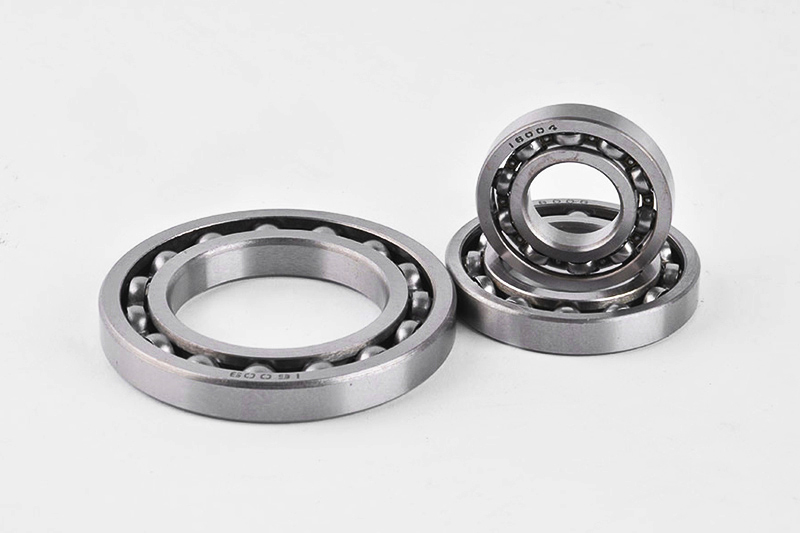
Core Technical Advantages: Maximum Space Efficien...