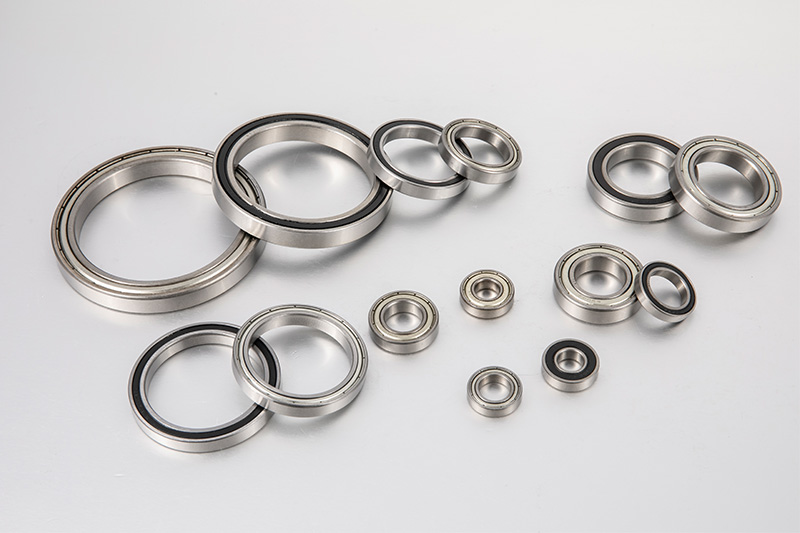
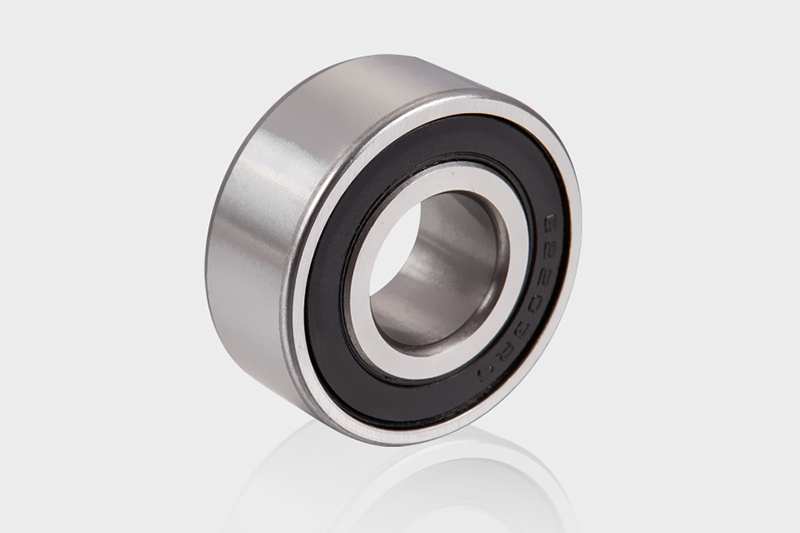
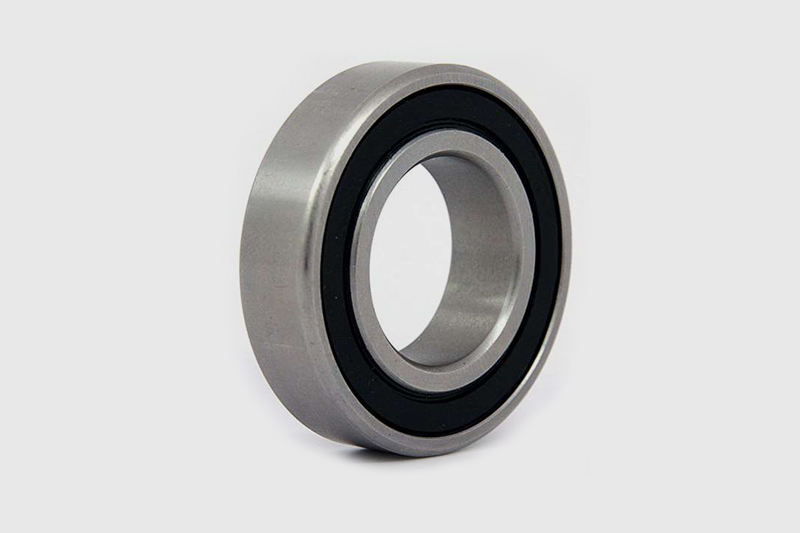
Series 1600 Chrome Steel Deep Groove Ball Bearing
Product Overview The Series 1600 Deep Groove Ball ...




Content
In the world of precision mechanical design, Angular Contact Ball Bearings (ACBBs) are often hailed as the “versatile elites” of the bearing industry. If a standard deep groove ball bearing is a general-purpose tool, then the angular contact ball bearing is a specialized instrument engineered to handle complex stress environments. The core logic behind its superior performance is hidden within a single, critical geometric parameter: the Contact Angle ().
The contact angle is defined as the angle between the line joining the points of contact of the ball and the raceways in the radial plane (a plane perpendicular to the bearing axis) and a line perpendicular to the bearing axis. In standard deep groove ball bearings, this angle is typically close to zero, meaning loads are primarily transmitted as radial forces perpendicular to the shaft.
However, ACBBs incorporate a pre-set angle by shifting the relative positions of the inner and outer ring raceways. This structural modification fundamentally transforms how loads are transmitted within the internal components of the bearing.
The raceways of the inner and outer rings of an ACBB are displaced relative to each other along the bearing axis. This means that when viewing a cross-section of the bearing, the contact points between the ball and the raceways do not sit on a vertical line but rather along a diagonal. This offset design allows the ball to rest firmly against the side walls of the raceways when subjected to axial thrust, preventing the abnormal lateral squeezing and friction that occurs in standard bearings.
Mechanical equipment often operates under extremely complex force conditions. For instance, a centrifugal pump impeller generates both a radial force perpendicular to the shaft and an axial thrust force along the shaft during rotation.
Through the design of the contact angle, ACBBs can merge radial loads and axial loads into a single “composite load.” According to the vector principles of physics, the presence of the contact angle allows this composite load to be transmitted efficiently along the straight line of the contact angle.
This ability to balance forces in two directions allows engineers to simplify mechanical structures and reduce weight, as they do not need to design complex dual-bearing support systems to handle each force separately.
In industrial practice, ACBBs are usually classified into several standard specifications based on the size of the contact angle. The value of this angle directly determines the performance bias of the bearing: is it a “heavy-duty” load carrier or a “high-speed” precision component?
| Contact Angle | Main Performance Characteristics | Typical Application Areas |
|---|---|---|
| 15 Degrees (Code C) | Extremely high limiting speeds, strong radial rigidity | High-precision CNC machine spindles, ultra-high-speed motors |
| 25 Degrees (Code AC) | Balanced performance, considers both speed and axial capacity | Precision instruments, general-speed spindle systems |
| 40 Degrees (Code B) | Greatest axial load capacity, excellent rigidity | Heavy-duty pumps, compressors, vertical conveying equipment |
When selecting bearings, engineers follow a fundamental Rule of Thumb:
To maximize the advantages of the contact angle, ACBBs are rarely used individually. Instead, they are installed in pairs, such as Back-to-Back (DB) or Face-to-Face (DF) arrangements. By applying a specific amount of pressure in the axial direction (preload), all internal clearance is eliminated.
In this state, the balls and raceways maintain a constant, tight angular contact. This not only improves rotational accuracy but also further enhances the ability to resist vibration. This combination of “Preload + Contact Angle” is the core guarantee for the micron-level cutting precision achieved by precision machining tools.
In summary, the irreplaceable position of angular contact ball bearings in the industrial world is entirely due to their unique contact angle design. It organically unifies the previously contradictory requirements of high rotational speed and multi-directional load handling.
By adjusting the size of the contact angle, these bearings can span from extremely delicate medical devices to heavy-duty mining machinery. For mechanical designers, a deep understanding of the mechanical changes brought by the contact angle is the first step toward achieving long-life, high-precision equipment operation.
In the heart of modern industry—whether it is the high-speed CNC machine tool spindle or the high-efficiency Electric Vehicle (EV) drive motor—you will always find Angular Contact Ball Bearings (ACBBs). Compared to standard deep groove ball bearings, ACBBs are regarded as the “performance multipliers” of precision machinery. Their dominance in these cutting-edge fields is driven by two core factors: unparalleled rigidity and low friction characteristics.
In precision machining, even a micron-level vibration can lead to a scrapped workpiece. Standard bearings often have physical internal clearance (play), which allows for subtle displacements when under stress. ACBBs solve this problem entirely through a specialized technique known as Preloading.
Preload refers to the application of a permanent axial load to the bearing during installation, usually via an axial locknut or springs. Because of the inclined contact angle of an ACBB, this axial force forces the balls and the raceways of the inner and outer rings into tight, constant contact.
This design completely eliminates the original internal clearance of the bearing. When the spindle starts to rotate or encounters cutting forces, there is no extra space within the bearing for the balls to wobble. This “tight fit” state provides the drive shaft with incredible geometric stability.
Angular contact ball bearings rarely work alone. By combining two or more bearings in specific configurations, the rigidity increases exponentially:
In environments where speeds reach tens of thousands of Revolutions Per Minute (RPM), heat is the greatest enemy of a bearing. If internal friction is too high, the resulting thermal expansion can lead to bearing seizure or a total loss of precision.
In standard bearings, when speeds are extremely high and loads are light, the balls are prone to “skidding” within the raceways. This non-rolling friction generates intense heat instantly. The contact angle design of an ACBB ensures that the centrifugal force acting on the balls at high speeds is effectively constrained by the raceway sidewalls.
This load structure ensures that the balls remain in a pure rolling state, significantly lowering the coefficient of rolling friction. Lower friction translates to lower heat generation—the exact key that allows EV motors to maintain high efficiency over long durations.
In ultra-high-speed applications, the centrifugal force of the balls themselves can actually alter the contact angle. The design of ACBBs allows engineers to predict and compensate for these changes, ensuring that the bearing maintains an optimal contact track even under dynamic, high-speed conditions.
To visualize why ACBBs hold the advantage in speed and precision, refer to the table below:
| Performance Metric | Standard Deep Groove Ball Bearing | Angular Contact Ball Bearing |
|---|---|---|
| Rotational Accuracy | Moderate, heavily affected by clearance | Extremely high, preload eliminates runout |
| Maximum Speed | Medium, rapid temperature rise at high speed | Extremely high, supports high-speed cutting |
| System Rigidity | Lower, prone to vibration | Extremely high, supports heavy precision work |
| Application Cost | Low, suitable for general equipment | Higher, suitable for precision mechatronics |
Machine tool spindles require constant precision over thousands of hours of cutting tasks. Using paired ACBBs ensures that the tool tip does not deflect when facing high-hardness materials. This high rigidity directly determines the surface finish and dimensional tolerances of the machined parts.
EV motors often exceed 15,000 RPM. In this environment, bearings must not only handle radial forces but also cope with complex vibrational loads. The low friction characteristics of ACBBs not only extend battery range but also reduce NVH (Noise, Vibration, and Harshness) levels by minimizing vibration.
The “superiority” of angular contact ball bearings is no accident. They eliminate uncertainty in mechanical structures through preloading technology and reduce energy loss through optimized geometry. In the modern engineering pursuit of lighter, faster, and more precise machines, ACBBs remain the ultimate solution for high-speed rotation and complex loading challenges.
One of the most fascinating characteristics of Angular Contact Ball Bearings is their inherent unidirectional nature. While a single bearing can only support axial loads in one direction, they reveal extraordinary adaptability and functional diversity when teamed up in pairs or sets. This ability to transform mechanical properties through different arrangements is why they maintain a superior position in complex mechanical systems.
In most industrial applications, axial thrust is rarely constant. Machines often generate bidirectional axial loads during startup or reverse rotation. Because the raceway design of a single bearing is offset in one direction, a reverse force would cause the balls to quickly move out of their intended track. Therefore, engineers typically use two or more bearings in combination. This teamwork solves the problem of bidirectional loading and enhances the vibration resistance of the system.
Depending on the mounting direction, the most common combination methods are divided into three types.
In a back to back arrangement, the load lines diverge toward the outside of the bearing axis.
The face to face arrangement is the opposite of back to back; its load lines converge toward the center of the bearing axis.
In a tandem arrangement, the contact angles of both bearings face the same direction.
| Arrangement | Radial Rigidity | Moment Resistance | Misalignment Capability | Axial Load Direction |
|---|---|---|---|---|
| Back to Back | Extremely High | Strongest | Lower | Bidirectional Loading |
| Face to Face | High | Moderate | Higher | Bidirectional Loading |
| Tandem | Moderate | Weak | Low | Unidirectional Heavy Load |
Regardless of the arrangement chosen, preload is the prerequisite for unlocking potential. First is the rigidity boost; by applying an axial load during installation, all internal clearance is eliminated. Second is the prevention of skidding; preload ensures the balls immediately enter a rolling state to prevent surface damage. Finally, correct pairing ensures that the load is distributed evenly among each bearing.
These bearings are versatile because they are not just independent parts but modules that can be flexibly combined. Back to back arrangements offer rigidity, face to face arrangements offer adaptability, and tandem arrangements offer load capacity. Understanding these differences helps engineers lay a solid foundation for their equipment.
After exploring the mechanical principles, speed advantages, and the art of arrangement for Angular Contact Ball Bearings, we must return to a core conclusion. The superiority of these bearings is not universal but rather specific to certain applications. In the world of mechanical engineering, there is no such thing as an absolutely perfect part, only the most suitable solution for a specific working condition.
If a standard deep groove ball bearing is compared to an economical and durable tire for a family car, then an Angular Contact Ball Bearing is the Formula 1 racing tire of the industrial world. They are expensive, extremely sensitive to their mounting environment, and require precise tuning. However, once they enter their intended operating state, they deliver high performance levels that no other bearing can match.
When designing mechanical systems, engineers must find the balance point between performance requirements and economic costs. These bearings are a focal point in any detailed guide because their complexity directly determines the entry barrier for their use.
The manufacturing process for these bearings is highly demanding. To ensure stability at high speeds, the ball roundness, raceway smoothness, and cage materials must meet aerospace or precision machine tool standards. Furthermore, because they usually need to be used in pairs and require precise preloading, this increases both the part count and the labor hours required for installation.
This is the most defining characteristic of these bearings as the racing tires of the industry. If the alignment during installation deviates slightly, or if the preload torque is not controlled properly, the internal stress distribution will deteriorate rapidly. In contrast, a deep groove ball bearing can tolerate a certain degree of mounting error, whereas an Angular Contact Ball Bearing might fail within hours of high speed operation due to thermal runaway.
In detailed engineering design, simply knowing that a bearing can carry a load is not enough. We must accurately predict its service life. For these bearings, the core of life prediction lies in handling combined loads.
When a bearing simultaneously bears loads from the radial direction and the axial direction, we must convert these forces into a single value known as the equivalent dynamic load.
In engineering practice, specialists use specific mathematical logic to measure this integrated influence. This logic considers two key variables: the radial load and the axial load. To integrate these two forces from different directions, the calculation introduces two factors, commonly referred to as the radial load factor and the axial load factor.
To help you make decisions in actual projects, the table below summarizes the performance of Angular Contact Ball Bearings compared to standard bearings across different dimensions:
| Application Dimension | Deep Groove Ball Bearing Performance | Angular Contact Ball Bearing Performance | Decision Advice |
|---|---|---|---|
| Pure Radial Load | Excellent performance and low cost | Overqualified and easily damaged | Select Deep Groove |
| Pure Axial Load | Poor performance and prone to failure | Excellent but requires paired mounting | Select Angular Contact |
| High Speed Precision | Higher vibration and limited accuracy | Extremely smooth and high precision | Select Angular Contact |
| Ease of Maintenance | Simple to replace and high tolerance | Requires professional tools and tuning | Select Deep Groove |
| Heavy Thrust Loads | Not applicable at all | Handled easily via tandem arrangements | Select Angular Contact |
When reviewing a project, we can summarize three decisive moments for choosing these bearings.
If your equipment is a machine tool used for processing micron level parts, or a dental drill running at ultra high speeds, there is no alternative. The zero clearance and high rotational accuracy provided by these bearings are the foundation of product quality.
In compact mechanical designs, if you do not have enough space to install a radial bearing and a thrust bearing separately, the two in one characteristic of this bearing is extremely valuable. It can lock both the radial and axial positions of the shaft within a very small volume.
By choosing an appropriate small contact angle and a precision cage, these bearings effectively reduce internal friction. For motor systems with high operating frequencies and limited cooling conditions, they are the last line of defense against system collapse due to overheating.
The detail within an Angular Contact Ball Bearing lies not only in its performance but also in its rigor. Every choice of contact angle represents a precise balance of speed, load, and service life.
As shown in this guide, they are not just mechanical supports but precision mechanical converters. As an engineer or a purchasing professional, understanding the specificity of their superiority means you are not just buying a bearing, but investing in the long term stability of the entire mechanical system.
Answer: Because a single bearing can only withstand axial force in one direction. If the shaft encounters reverse thrust during operation, the balls will lose the support of the raceway, leading to rapid heat generation and damage. Therefore, they are almost always installed in pairs.
Answer: * Back to Back Arrangement: The shaft feels extremely rigid with almost no room for wobbling. This is ideal for machine tool spindles that require high precision.
Answer: Yes, increasing the contact angle, such as moving from 15 degrees to 40 degrees, significantly improves the ability of the bearing to handle axial thrust. However, the trade-off is that friction increases slightly, which causes a decrease in the maximum speed limit of the bearing.
Answer: Preload is the application of pressure to the bearing by mechanical means before it starts working. It eliminates all internal clearance within the bearing, ensuring that the spindle does not shift when the tool cuts into metal, thereby guaranteeing the dimensional accuracy of the parts.
Answer: The most common signs include abnormal sharp noises, intense vibration during operation, and an unusual rise in the temperature of the bearing housing. Since these bearings are often used in high speed applications, a rapid temperature spike usually indicates lubrication failure or excessive preload.
When writing technical documents or selecting bearings, the following standards and documents are recognized worldwide as authoritative references:

Product Overview The Series 1600 Deep Groove Ball ...
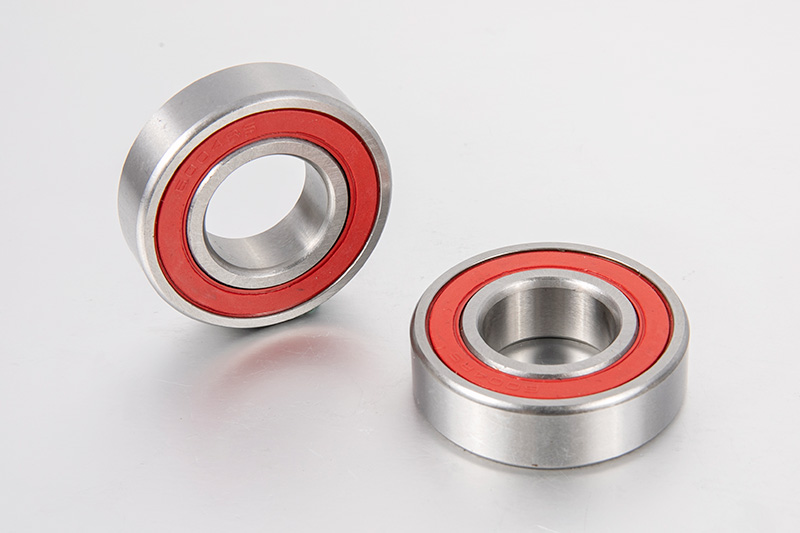
Key Features & Benefits 1. Superior Sealing Pe...

Product Overview:The 6200 Series Deep Groove Ball ...
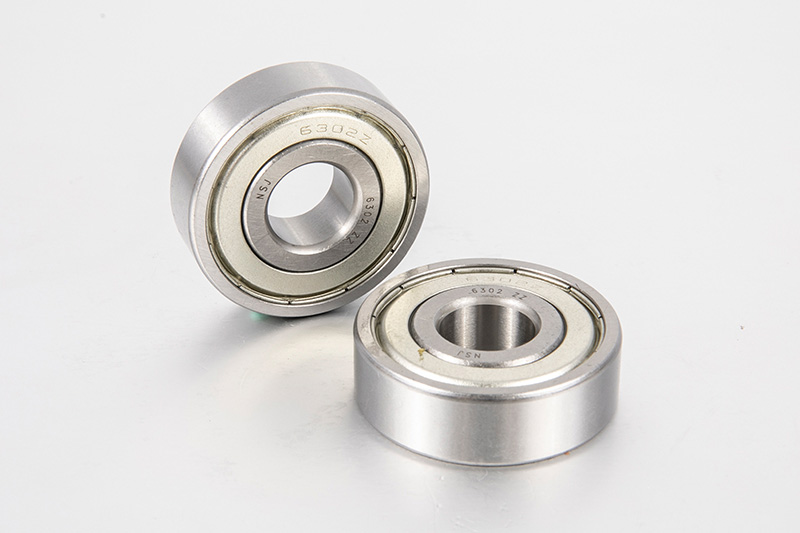
Core Differentiators: Enhanced Load Capacity: Unl...
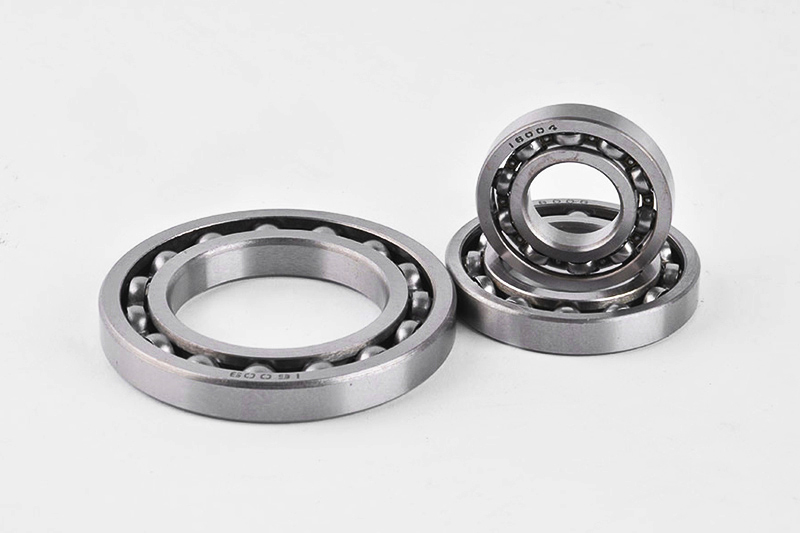
Core Technical Advantages: Maximum Space Efficien...