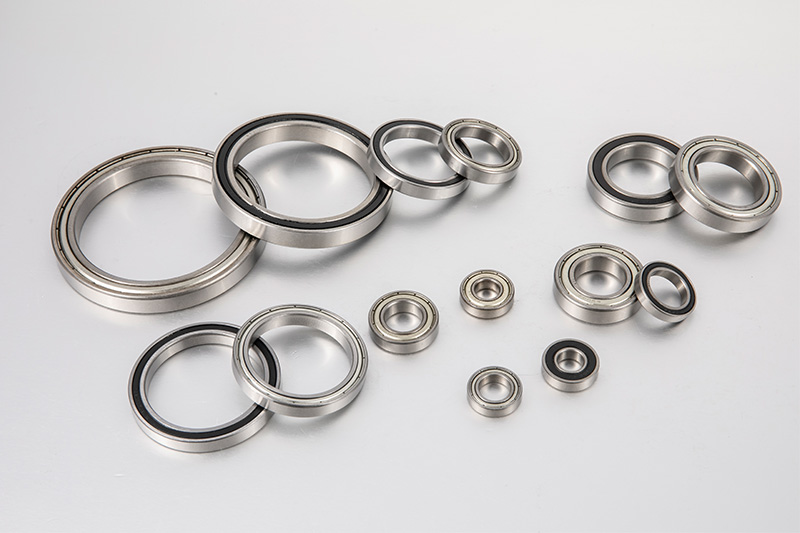
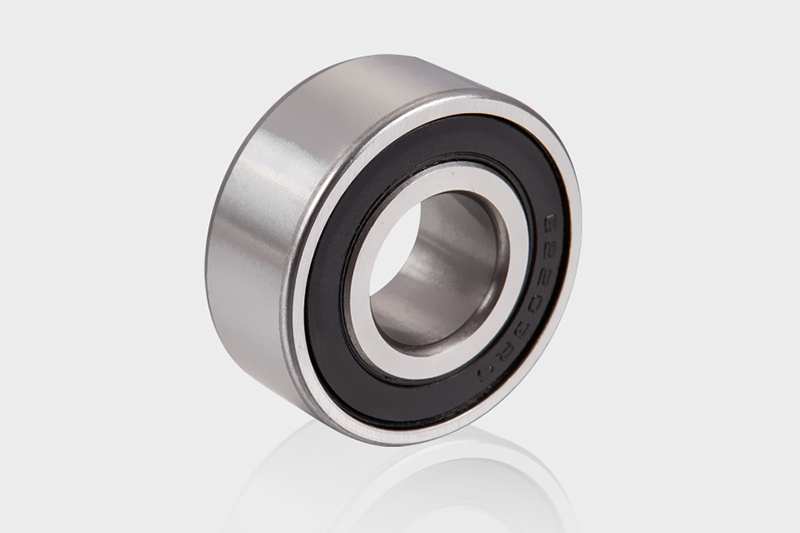
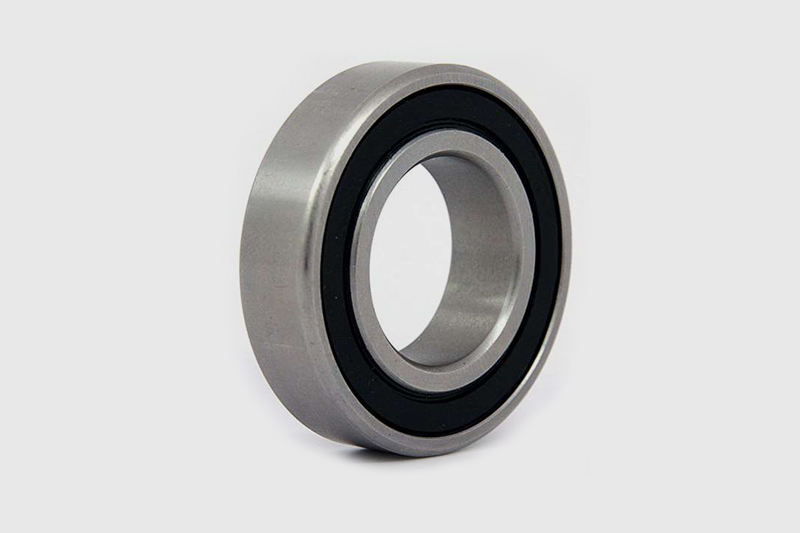
Series 1600 Chrome Steel Deep Groove Ball Bearing
Product Overview The Series 1600 Deep Groove Ball ...




Content
In deep groove ball bearings, radial load capacity refers to forces perpendicular to the shaft axis, while axial (thrust) load capacity refers to forces parallel to the shaft axis. Deep groove ball bearings are primarily designed for radial loads but can handle moderate axial loads — typically up to 50% of the static radial load rating (C₀) under combined loading conditions. Balancing both requires understanding your load ratio, selecting the right internal clearance, and applying proper preload or housing fit.
Radial load is the dominant load type for deep groove ball bearings. It acts perpendicular to the shaft — think of the weight of a belt-driven pulley pressing down on a shaft. The bearing's dynamic radial load rating (C) is the benchmark: it represents the load under which a bearing achieves a rated life of 1 million revolutions (L₁₀ life).
For example, a 6206 deep groove ball bearing has a dynamic radial load rating of approximately C = 19.5 kN and a static load rating of C₀ = 11.2 kN. Under pure radial load at moderate speed, this bearing can serve reliably for thousands of operating hours.
Key factors affecting radial capacity include:
Axial (thrust) load acts along the shaft axis — for instance, the force generated by a helical gear pushing the shaft lengthwise. Deep groove ball bearings can accommodate axial loads in both directions due to their symmetric groove geometry, which distinguishes them from angular contact or cylindrical bearings.
However, axial capacity is more limited. As a practical rule, pure axial load should not exceed 50% of C₀ for lightly loaded bearings and drops proportionally as radial load increases. At high axial-to-radial ratios, stress concentrates on a small number of balls, accelerating raceway fatigue.
For the same 6206 bearing (C₀ = 11.2 kN), the maximum recommended pure axial load is roughly 5.6 kN under standard conditions — and less when significant radial load is simultaneously present.
When both radial and axial loads exist simultaneously, engineers use the equivalent dynamic bearing load (P) to assess real-world demand against the bearing's rated capacity:
P = X · Fr + Y · Fa
Where Fr = radial load, Fa = axial load, and X, Y are load factors determined by the ratio Fa/C₀ and Fa/Fr. These values come from bearing manufacturer tables. When Fa/Fr is small, X = 1 and Y = 0 (axial load is ignored). Once the ratio crosses a threshold — typically around Fa/Fr > 0.44 for a 6206 — the Y factor kicks in, increasing equivalent load P significantly.
| Fa/C₀ | e (threshold) | X (if Fa/Fr ≤ e) | Y (if Fa/Fr ≤ e) | X (if Fa/Fr > e) | Y (if Fa/Fr > e) |
|---|---|---|---|---|---|
| 0.025 | 0.22 | 1 | 0 | 0.56 | 2.0 |
| 0.04 | 0.24 | 1 | 0 | 0.56 | 1.8 |
| 0.07 | 0.27 | 1 | 0 | 0.56 | 1.6 |
| 0.13 | 0.31 | 1 | 0 | 0.56 | 1.4 |
| 0.25 | 0.37 | 1 | 0 | 0.56 | 1.2 |
| 0.50 | 0.44 | 1 | 0 | 0.56 | 1.0 |
Internal clearance determines how much free play exists between balls and raceways before loading. It directly affects load distribution — and therefore both radial and axial capacity under real operating conditions.
A bearing with too little operating clearance concentrates load on fewer balls, reducing both radial life and axial tolerance. A bearing with too much clearance allows balls to orbit erratically, increasing vibration and reducing effective load zone width.
When axial load exceeds ~30% of radial load consistently, consider mounting two deep groove ball bearings in tandem or using a matched angular contact bearing pair. A back-to-back (DB) arrangement provides maximum moment rigidity and bidirectional axial support, which is often preferable in gearbox output shafts or spindle assemblies.
Light axial preload eliminates internal clearance and ensures all balls are in contact simultaneously, improving axial rigidity and reducing vibration. Typical preload for a 6206-class bearing ranges from 20–80 N depending on speed and stiffness requirements. Excessive preload, however, dramatically reduces bearing life — a preload 10× too high can cut L₁₀ life by up to 50%.
Never size a bearing based on radial load alone when axial forces are present. Always compute P using the X/Y factor method and compare P against C to calculate actual L₁₀ life:
L₁₀ = (C/P)³ × 10⁶ revolutions
For example, if a 6206 bearing (C = 19.5 kN) sees Fr = 8 kN radially and Fa = 4 kN axially, and Fa/Fr = 0.5 exceeds the threshold e = 0.44, then P = 0.56 × 8 + 1.0 × 4 = 8.48 kN. L₁₀ = (19.5/8.48)³ × 10⁶ ≈ 12.2 million revolutions — significantly lower than the pure radial calculation would suggest.
Interference fit on the rotating ring increases effective load capacity but reduces internal clearance. For radially loaded applications, a shaft tolerance of k5 or m5 is common. When axial loads dominate or the outer ring rotates (e.g., wheel hub applications), interference fit shifts to the outer ring instead. Mismatched fits can cause one side to slip under axial loads, leading to fretting corrosion on the bore or OD surface.
Deep groove ball bearings are versatile, but they have load capacity limits that should prompt a bearing type change in certain scenarios:
| Parameter | Radial Load | Axial Load |
|---|---|---|
| Load direction | Perpendicular to shaft axis | Parallel to shaft axis |
| Primary rating used | Dynamic load rating C | Static load rating C₀ |
| 6206 capacity (example) | 19.5 kN (dynamic) | ≤ 5.6 kN (pure axial) |
| Design suitability | Primary function | Secondary, moderate only |
| Load zone affected by | Internal clearance, fit | Fa/Fr ratio, contact angle |
| Improvement strategy | Larger bore, more balls | Preload, angular contact bearings |

Product Overview The Series 1600 Deep Groove Ball ...
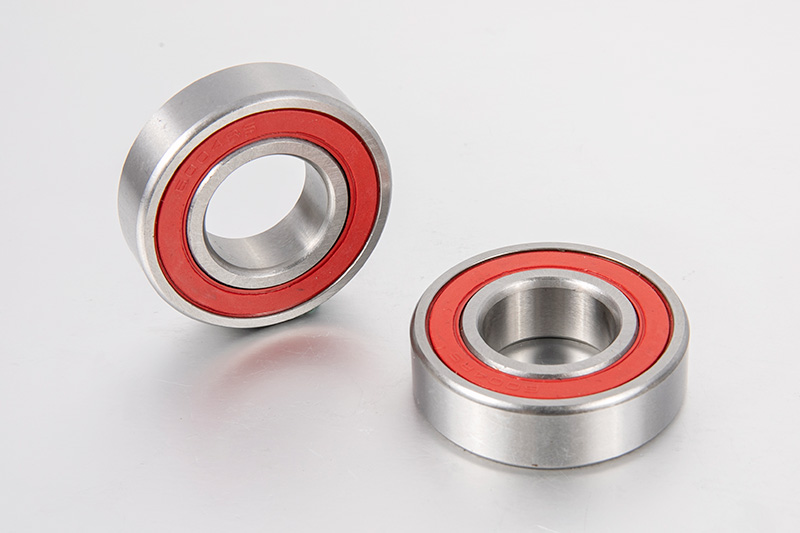
Key Features & Benefits 1. Superior Sealing Pe...

Product Overview:The 6200 Series Deep Groove Ball ...
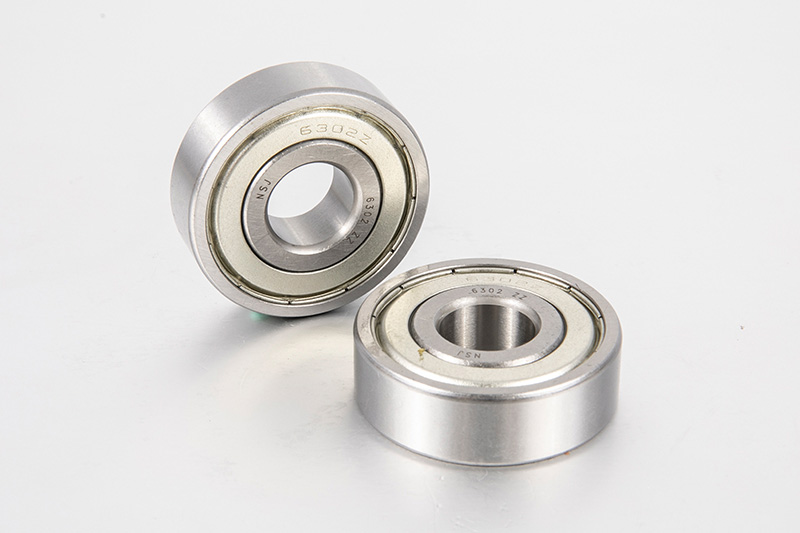
Core Differentiators: Enhanced Load Capacity: Unl...
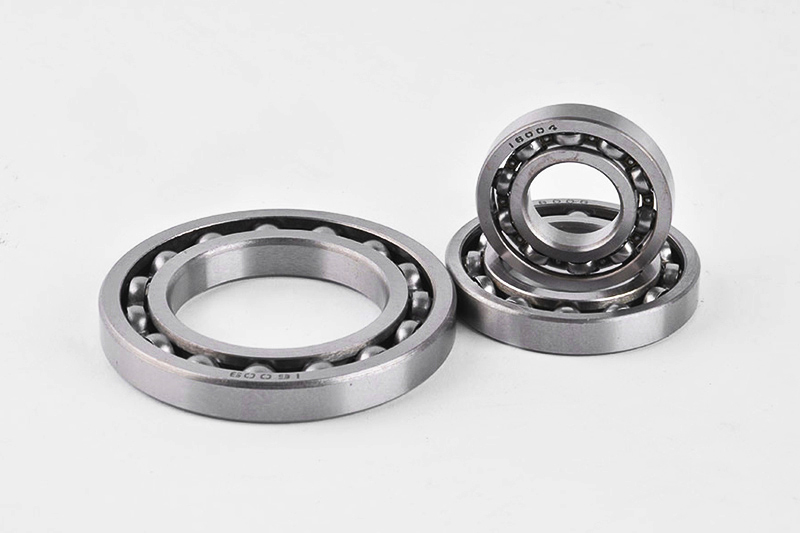
Core Technical Advantages: Maximum Space Efficien...