The Direct Answer: Three Designs, Three Different Contamination and Lubrication Tradeoffs
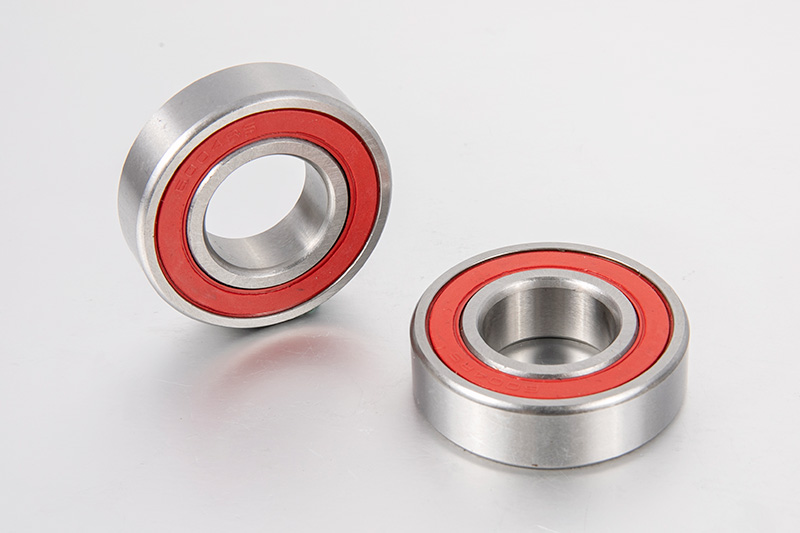
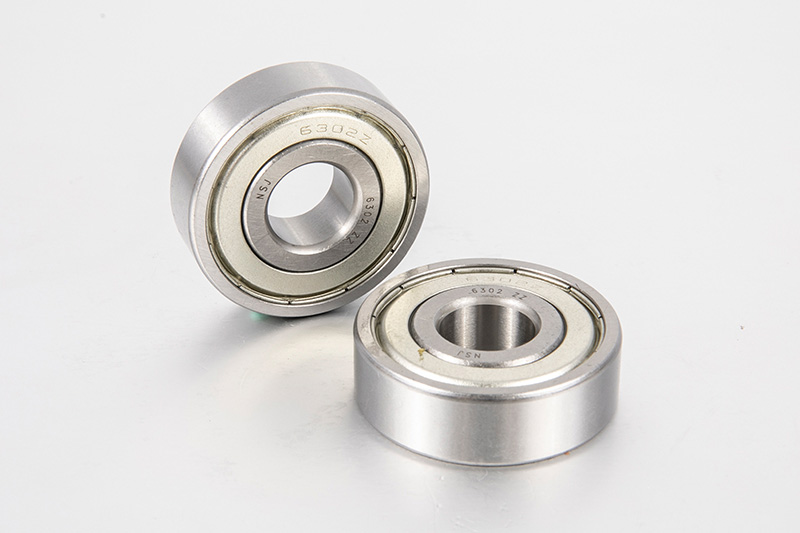
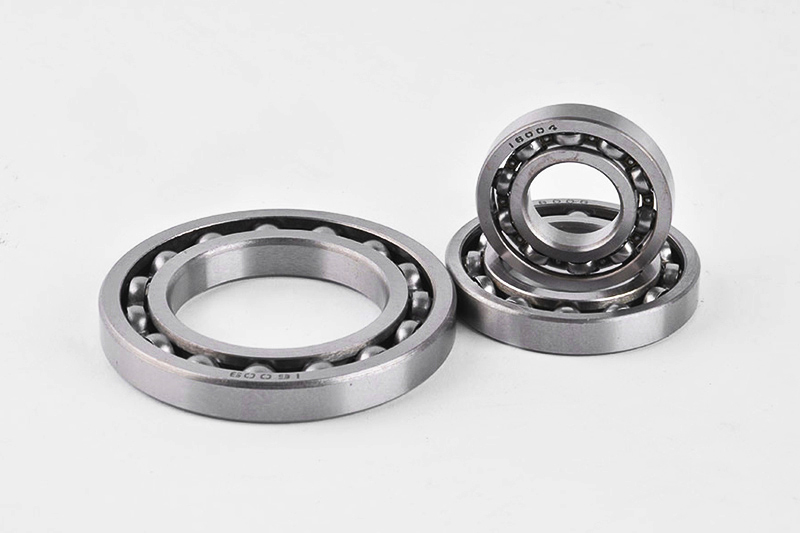
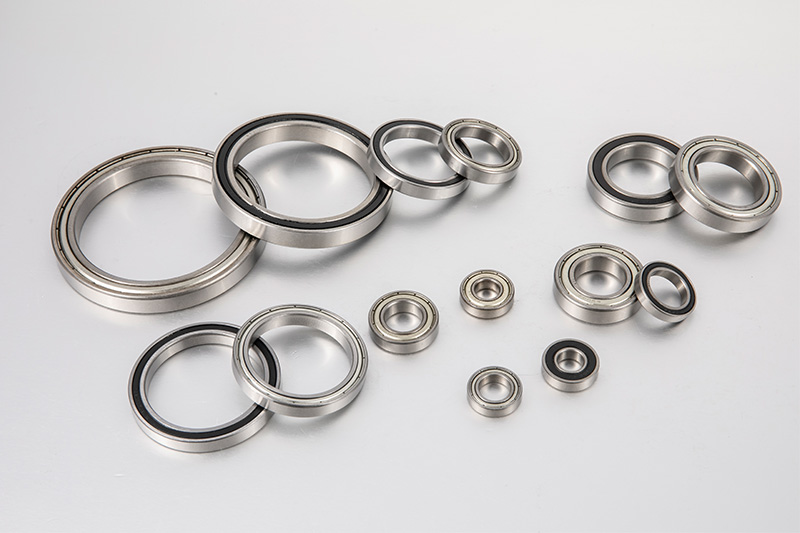
Open, shielded, and sealed deep groove ball bearings are the same core bearing — the same races, the same ball complement, the same load ratings — differentiated only by what covers the sides of the bearing cavity. Open bearings have no side covers, allowing free access to the raceway for external lubrication but offering no contamination protection. Shielded bearings (suffix Z or ZZ) use a metal plate fixed to the outer ring with a small running clearance at the inner ring — they block large particle contamination but are not dust- or moisture-tight. Sealed bearings (suffix RS or 2RS) use a rubber or PTFE contact lip pressed against the inner ring — they are effectively closed systems, pre-greased at the factory and requiring no further lubrication in most service lives.
The choice between them is not primarily about cost — a 6205-2RS sealed bearing costs only 10–25% more than a 6205 open bearing of the same quality grade. The choice is about matching the bearing's lubrication access and contamination resistance to the actual operating environment. Specifying an open bearing in a dusty or wet environment is one of the most common and most preventable causes of premature bearing failure in industrial equipment.
Open Deep Groove Ball Bearings: Maximum Lubrication Access, Zero Protection
An open bearing has no shields or seals on either side of the bearing cavity. The balls, cage, and raceways are fully exposed to the surrounding environment.
What open bearings do well
- High-speed operation: no contact or even near-contact seal means zero additional friction from side covers. Open bearings achieve the lowest operating temperature of the three types at equivalent speeds — critical in spindle bearings and precision machine tools running above 70% of the bearing's limiting speed
- Re-lubrication flexibility: grease or oil can be introduced directly to the raceway during scheduled maintenance. This makes open bearings the correct choice in centralized oil lubrication systems, oil bath sumps, and oil mist systems where the lubricant delivery is external to the bearing
- High-temperature applications: rubber seals on 2RS bearings are typically rated to 120°C (248°F) continuous for NBR rubber or 150°C (302°F) for HNBR or PTFE lip variants. Above these thresholds, open bearings with high-temperature grease or circulating oil are the only option
- Washdown and purge applications: in food processing equipment where bearings must be purged with fresh grease to expel contamination during cleaning cycles, open bearings allow the old grease and contaminants to be flushed out completely — sealed bearings trap contaminants inside
Where open bearings fail
- Any environment with airborne dust, metal particles, moisture, or process contamination. Studies by SKF and NSK consistently show that contamination accounts for 14–16% of all premature bearing failures — the majority of these occur in open bearings that should have been specified as shielded or sealed
- Applications where re-lubrication intervals are long or maintenance access is difficult — without periodic re-greasing, open bearings run dry faster than sealed types because the grease migrates out of the raceway zone with no barrier to retain it
Shielded Deep Groove Ball Bearings (Z / ZZ): Partial Protection at Minimal Speed Penalty
A shielded bearing has one (Z suffix) or two (ZZ suffix) stamped steel plates fixed to the outer ring. The shield extends inward toward the inner ring but does not contact it — there is a small running clearance of approximately 0.1–0.3 mm between the shield edge and the inner ring shoulder.
What the running clearance means in practice
- Solid particles larger than the clearance gap are blocked — typically anything above 0.1–0.3 mm in diameter. This handles most metallic wear debris, large dust particles, and fibrous contamination common in textile, woodworking, and light manufacturing environments
- Fine particles — silica dust, carbon black, fine metal fines from grinding operations — pass through the clearance gap and enter the raceway. Shielded bearings are not suitable for environments with fine abrasive dust
- Liquid contamination passes freely through the gap — shielded bearings provide essentially no water or coolant resistance
Speed and temperature advantages over sealed bearings
- Because the shield does not contact the inner ring, there is no seal friction — the speed rating of a ZZ shielded bearing is essentially the same as the equivalent open bearing, typically 15–25% higher than the same bearing in 2RS sealed configuration
- Operating temperature rise due to the shield is negligible — less than 2–3°C above an open bearing at equivalent speed and load, compared to a 5–15°C rise for contact-sealed 2RS bearings at high speeds
- Shielded bearings can be re-greased through the shield clearance gap in some configurations, though this is less effective than re-greasing an open bearing — the shield limits grease volume and distribution
Sealed Deep Groove Ball Bearings (RS / 2RS): Factory-Greased, Contamination-Resistant, Maintenance-Free
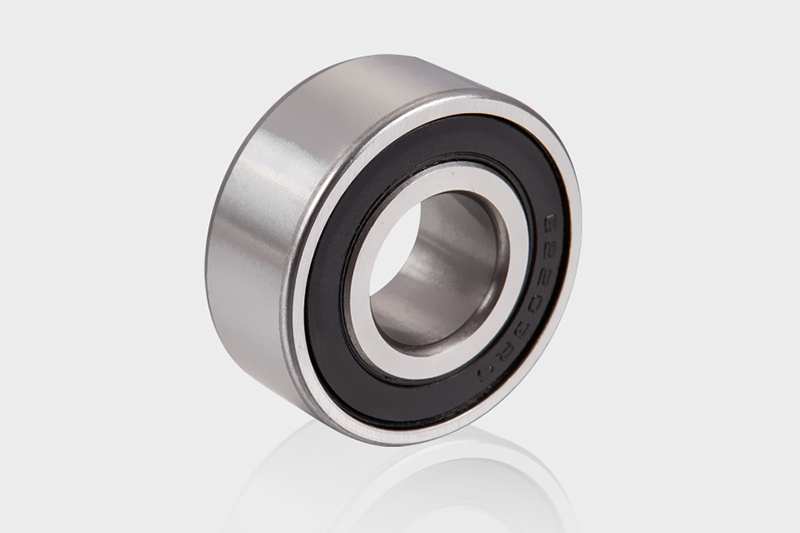
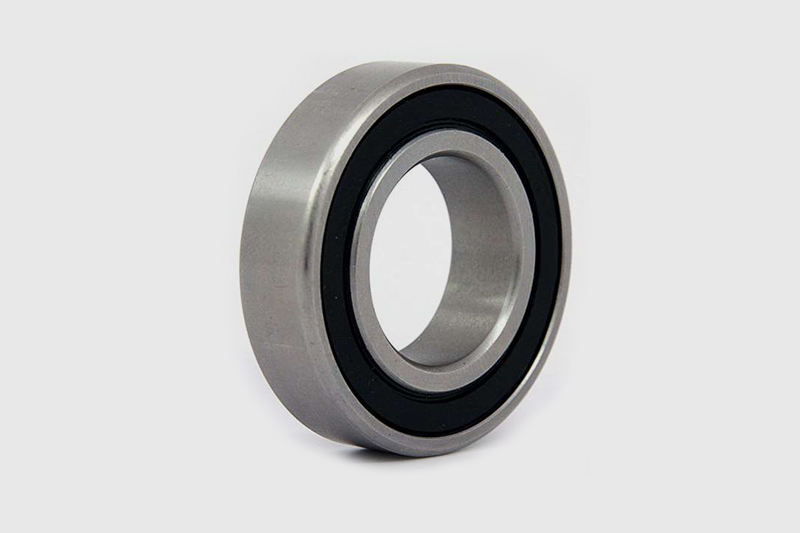
A sealed bearing uses a rubber seal — typically NBR (nitrile butadiene rubber), HNBR, or PTFE — with a lip that contacts or runs in close proximity to the inner ring. The RS suffix denotes one seal; 2RS denotes seals on both sides.
Contact vs. low-contact seals
- Contact seal (standard 2RS): the rubber lip presses against the inner ring with light contact pressure. This provides the best contamination exclusion — effective against fine dust, water spray, and light coolant splash — but generates measurable friction. A 6205-2RS bearing has approximately 20–30% lower speed rating than a 6205 open bearing of the same dimensions
- Low-friction or non-contact seal (RZ, LLB suffix depending on manufacturer): the lip runs with a very small clearance rather than contact — closer to a shielded bearing in friction characteristics but with much better fine-particle exclusion than a metal shield. The speed rating falls between a ZZ and a 2RS bearing. SKF designates this as RZ; FAG uses the suffix RSR; NTN uses LLB
Factory grease fill and maintenance-free service life
- Standard 2RS bearings are filled with lithium-based grease to approximately 25–35% of the free internal volume at the factory. Over-filling causes churning losses and temperature rise; under-filling causes early lubrication starvation — the factory fill is calibrated to the bearing's internal geometry and is not easily replicated in the field
- Under normal operating conditions (below 80°C, moderate speeds, no severe contamination), a 2RS bearing's grease fill provides a calculated grease life of 20,000–50,000 hours for small to medium frame sizes — effectively the bearing's entire L10 design life in many applications
- Sealed bearings cannot be re-greased in service without removing the seal — doing so voids the contamination protection and risks introducing contaminants. They are designed to be replaced as a unit when the grease life is exhausted or the bearing reaches its calculated service life
Side-by-Side Specification Comparison
Comparative performance characteristics of open, shielded, and sealed deep groove ball bearings across key specification parameters
| Parameter |
Open |
Shielded (ZZ) |
Sealed (2RS) |
| Speed rating vs. open |
100% (baseline) |
95–100% |
70–80% |
| Large particle exclusion |
None |
Good (>0.2 mm) |
Excellent |
| Fine dust exclusion |
None |
Poor |
Good to excellent |
| Water/moisture resistance |
None |
None |
Good (splash) |
| Re-lubrication in service |
Full access |
Limited |
Not practical |
| Max continuous temp. |
Limited by grease only |
Limited by grease only |
120°C (NBR) / 150°C (HNBR) |
| Friction torque vs. open |
Baseline |
+2–5% |
+15–30% |
| Typical cost premium |
Baseline |
+5–15% |
+10–25% |
| Maintenance requirement |
Regular re-lubrication |
Periodic re-greasing |
Replace at end of life |
Which to Specify: A Decision Framework by Application Type
Specify open bearings when:
- The bearing operates in an oil bath, oil mist, or circulating oil lubrication system where external lubricant supply is continuous and controlled
- Operating speed exceeds 80% of the bearing's limiting speed and the temperature budget is tight — electric motor spindles, high-speed gearboxes, precision grinding spindles
- Operating temperature exceeds 150°C continuously and no suitable high-temperature seal material is available
- The application requires grease purging during cleaning cycles — food processing, pharmaceutical, and clean-in-place (CIP) equipment
Specify shielded (ZZ) bearings when:
- The environment contains large solid particles (metal chips, fibrous debris, large dust) but not fine abrasive dust or liquid contamination — light manufacturing, conveyor systems, textile machinery
- Speed requirements are near the open bearing's limiting speed and a contact seal's friction penalty is unacceptable, but some contamination protection is needed
- The bearing is housed in a well-sealed gearbox or enclosure where the external housing seal handles primary contamination exclusion and the bearing shield is a secondary barrier only
Specify sealed (2RS) bearings when:
- The environment has fine dust, moisture, coolant splash, or any liquid contamination risk — this covers the majority of general industrial, agricultural, construction, and HVAC applications
- Maintenance access is difficult or intervals are long — electric motors, pumps, fans, and appliance motors where bearing re-greasing is not part of the maintenance program
- The application is a consumer or light-commercial product where maintenance-free operation for the product's design life is a requirement — household appliances, power tools, bicycles, small motors
- Operating speed is below 70% of the open bearing's limiting speed — the sealed bearing's speed rating is comfortably within range and the contamination protection benefit outweighs the friction penalty
Suffix Codes by Major Manufacturer: Reading the Bearing Designation Correctly
Suffix codes for shields and seals are not fully standardized across manufacturers. A bearing specified as 6205-2RS from one supplier may use a different seal material or geometry than a 6205-2RS from another. Always verify the suffix meaning in the manufacturer's catalog when cross-referencing between brands.
Shield and seal suffix codes for open, shielded, and sealed variants across major deep groove ball bearing manufacturers
| Configuration |
SKF |
FAG / Schaeffler |
NSK |
NTN |
Timken |
| One metal shield |
Z |
Z |
Z |
Z |
Z |
| Two metal shields |
2Z |
ZZ |
ZZ |
ZZ |
ZZ |
| One contact rubber seal |
RS1 |
RSR |
VV |
LLU |
RS |
| Two contact rubber seals |
2RS1 |
2RSR |
VV (both sides) |
LLU (both) |
2RS |
| Low-friction non-contact seal |
RZ / 2RZ |
RSH / 2RSH |
DDU |
LLB |
LRS |
Common Specification Mistakes to Avoid
- Specifying open bearings to save cost in contaminated environments: the price difference between a 6205 open and a 6205-2RS sealed bearing from the same manufacturer is typically less than $3–5 for a standard metric bearing. The cost of a premature failure — unplanned downtime, labor, consequential damage — is orders of magnitude larger
- Using 2RS sealed bearings above their seal temperature rating: NBR rubber seals begin to harden and crack above 120°C, allowing contamination ingress while still appearing intact visually. In high-temperature applications, specify HNBR seals (rated to 150°C) or PTFE variants explicitly — do not assume a 2RS bearing is suitable for high-temperature service without checking the seal material specification
- Assuming shielded bearings are waterproof: the running clearance at the inner ring allows water ingress under any meaningful splash or condensation exposure. Shielded bearings in humid or washdown environments corrode from the inside — specify 2RS with stainless steel shields or a stainless steel bearing for these conditions
- Adding external grease to a 2RS sealed bearing: applying a grease gun to a sealed bearing forces grease into the seal lip from the outside. This distorts the lip geometry, breaks the seal contact, and introduces whatever contamination was on the grease fitting or nipple directly into the bearing cavity — the opposite of the intended effect
- Cross-referencing only by bearing number without checking the suffix: a 6205 and a 6205-2RS have identical load ratings and dimensions but completely different service requirements. Specifying the base number without the suffix in a purchase order frequently results in receiving open bearings when sealed were intended — always include the full designation including suffix in procurement documents