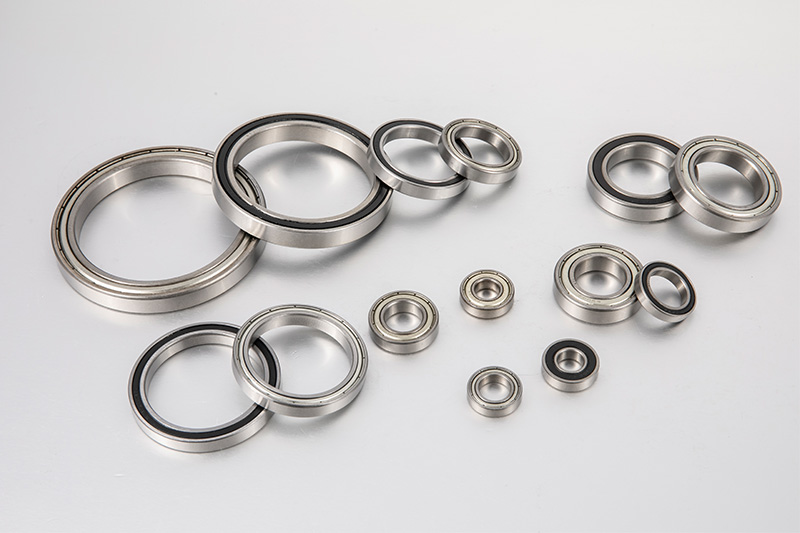
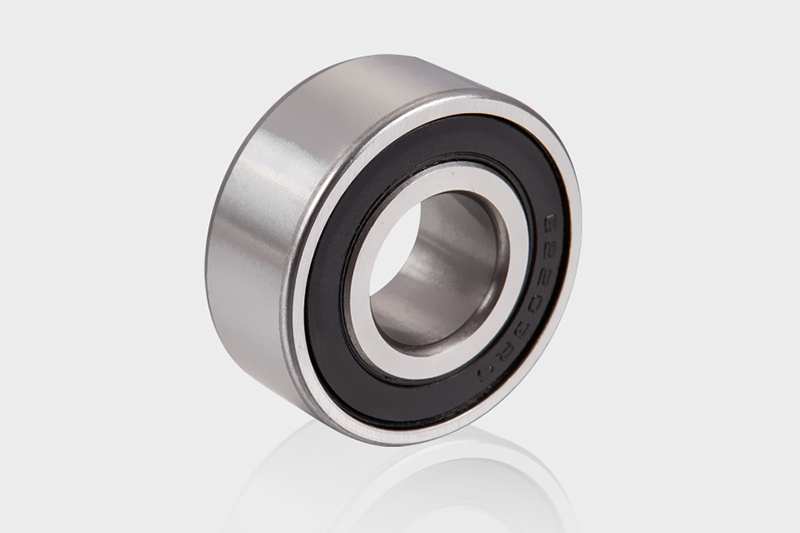
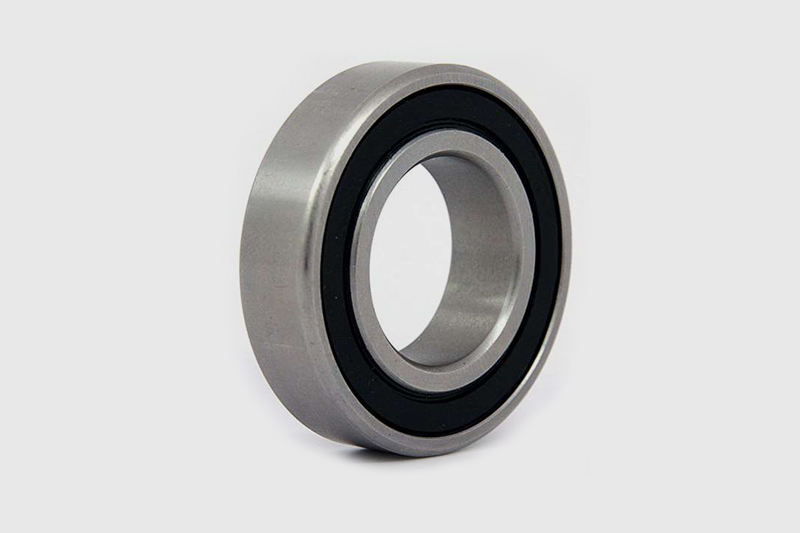
Series 1600 Chrome Steel Deep Groove Ball Bearing
Product Overview The Series 1600 Deep Groove Ball ...




Content
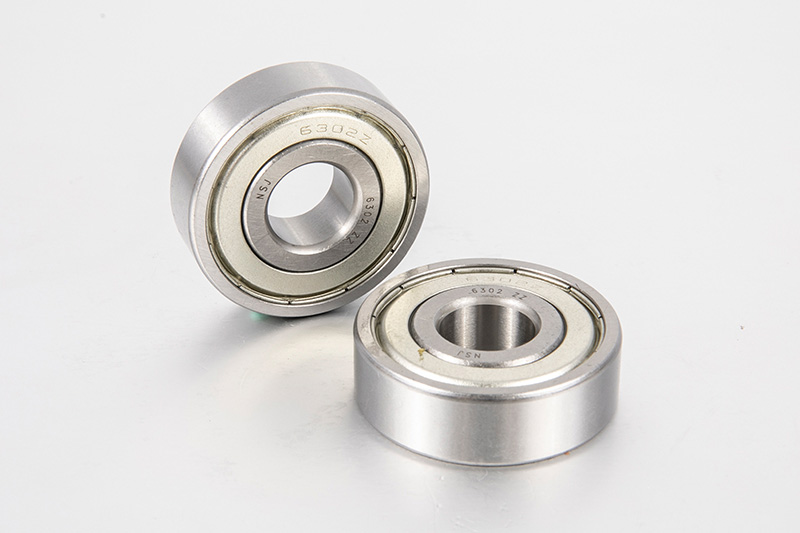
The short answer: every digit and letter in a deep groove ball bearing part number encodes specific, standardized information about the bearing's dimensions, internal design, and sealing configuration. Once you understand the system, you can decode any standard bearing number in seconds—without a catalog. For example, a 6205ZZ bearing tells you: it's a deep groove ball bearing (6), medium series (2), 25mm bore (05), with metal shields on both sides (ZZ). That's four pieces of critical information packed into six characters.
This guide decodes the ISO and ABMA bearing numbering system from first principles, walks through real-world examples including the 6310 bearing, 6210 bearing, 6002Z bearing, and 6205ZZ bearing, and explains every suffix and prefix you're likely to encounter when specifying or sourcing bearings for industrial, automotive, or mechanical applications.
Standard deep groove ball bearing numbers follow a globally recognized system established by the International Organization for Standardization (ISO 15). The full designation consists of three parts arranged in sequence: a prefix (optional), a basic number (always present), and a suffix (optional but common). Understanding each section independently is the key to reading any bearing number with confidence.
| Position | Component | What It Encodes | Example |
|---|---|---|---|
| Before basic number | Prefix | Special design variations, manufacturer codes | L, R, K, GE |
| First digit(s) | Bearing type code | Type of bearing (deep groove, angular contact, etc.) | 6205ZZ |
| Second digit | Dimension series | Width and outer diameter series (load capacity class) | 6205ZZ |
| Last two digits of basic number | Bore size code | Inner diameter (bore) of the bearing | 6205ZZ |
| After basic number | Suffix | Seals, shields, clearance, tolerance, cage material | 6205ZZ |
Let's now examine each section in depth, starting with the bearing type code—the first digit that tells you immediately what kind of bearing you're dealing with.
The first digit (or digits) of the basic number identifies the bearing type. For the vast majority of standard deep groove ball bearings, this number is 6. This single digit is the most important character in the designation because it immediately classifies the entire bearing family. Here's how common bearing type codes compare:
| Type Code | Bearing Type | Typical Load Direction | Common Application |
|---|---|---|---|
| 6 | Deep Groove Ball Bearing | Radial + moderate axial | Electric motors, gearboxes, pumps |
| 7 | Angular Contact Ball Bearing | Combined radial + axial | Machine tool spindles, wheel hubs |
| N | Cylindrical Roller Bearing | Heavy radial | Heavy machinery, conveyor systems |
| 3 | Tapered Roller Bearing | Heavy radial + axial | Automotive differentials, axles |
| 2 / 1 | Self-Aligning Ball Bearing | Radial, misalignment tolerant | Agricultural equipment, fans |
| 5 | Thrust Ball Bearing | Axial only | Vertical shaft applications, cranes |
Since all four bearing examples in this guide—the 6310 bearing, 6210 bearing, 6002Z bearing, and 6205ZZ bearing—begin with 6, they are all confirmed deep groove ball bearings. The number 6 is by far the most common type code encountered in general industrial and commercial applications, which is why deep groove ball bearings account for roughly 80% of all ball bearing sales worldwide.
The second digit of the basic number defines the dimension series—a coded combination of the bearing's width series and diameter series. For deep groove ball bearings, the most common dimension series codes are 0, 2, 3, and 4. This digit directly controls how large and heavy-duty the bearing is for a given bore size.
Think of it this way: two bearings can have identical bore sizes (same last two digits) but completely different outer diameters, widths, and load ratings depending on the dimension series. A higher series number generally means a physically larger bearing with greater load capacity.
| Series Code | Common Name | Relative Size | Typical Use |
|---|---|---|---|
| 0 | Extra Light | Smallest OD for given bore | Instruments, small motors |
| 2 | Light | Medium-small | Electric motors, pumps, fans |
| 3 | Medium | Medium-large | Gearboxes, compressors, conveyors |
| 4 | Heavy | Largest OD for given bore | Heavy industrial, mining equipment |
This explains a key difference between the 6210 bearing and the 6310 bearing: both have the same bore size (50mm), but the 6310 is a medium series bearing with a significantly larger outer diameter and higher load rating. We'll examine that contrast in detail in the next section.
The final two digits of the basic number encode the bore (inner diameter) of the bearing. This is the dimension that determines whether a bearing will fit your shaft. The coding system has two distinct rules depending on the bore size range:
For bearings with bore codes 04 and above, the bore diameter in millimeters equals the last two digits multiplied by 5. This is the most commonly used range in industrial applications:
For smaller bearings, the multiply-by-5 rule does not apply. Instead, bore codes 00 through 03 correspond to fixed dimensions:
For very small bearings with bores below 10mm (common in miniature applications like dental tools, RC motors, and precision instruments), the bore size is typically written directly in the designation as a fraction or decimal rather than using the coded system—for example, a bearing with a 5mm bore may be designated 625 or 605 where the last digit directly represents millimeters.
The 6205ZZ bearing is one of the most widely used bearings in the world, appearing in electric motors, household appliances, power tools, HVAC fans, and light industrial equipment. Let's decode it character by character:
The full dimensional specification of the 6205ZZ bearing is: 25mm bore × 52mm outer diameter × 15mm width. Dynamic load rating: approximately 14.0 kN. Static load rating: approximately 7.8 kN. Maximum speed: approximately 13,000 RPM (grease lubricated). This bearing is the default choice for a 25mm shaft in any standard-duty rotating application.
| Parameter | 6205ZZ Value |
|---|---|
| Bore (d) | 25 mm |
| Outer Diameter (D) | 52 mm |
| Width (B) | 15 mm |
| Dynamic Load Rating (C) | 14.0 kN |
| Static Load Rating (C₀) | 7.8 kN |
| Max Speed (grease) | 13,000 RPM |
| Sealing | Metal shields both sides |
| Weight | ~92 g |
The 6002Z bearing is a small, lightweight bearing commonly found in household appliances, small electric motors, power tools, skateboards, and inline skates. Decoding it:
The 6002Z bearing has a 15mm bore × 32mm outer diameter × 9mm width. It is notably narrow and compact, which is why it's chosen for space-constrained applications. Its single-shield (Z) configuration means one side is open, allowing for relubrication or use in applications where the open side faces an oil bath or mist lubrication environment. Dynamic load rating is approximately 5.6 kN—substantially lower than the 6205ZZ, reflecting its smaller size.
A common point of confusion: the 6002Z (one shield) and 6002ZZ (two shields) are both available. The single-Z variant is often used when one side of the bearing is exposed to a controlled lubrication environment, while the double-Z is preferred for sealed, maintenance-free applications. Always verify which variant your application requires before ordering.
The comparison between the 6210 bearing and the 6310 bearing perfectly illustrates how the dimension series digit changes everything about a bearing's physical size and performance—even when the bore size is identical. Both bearings have a 50mm bore, yet they are far from interchangeable.
The 6210 bearing dimensions are: 50mm bore × 90mm OD × 20mm width. Dynamic load rating: 35.1 kN. Maximum speed (grease): approximately 7,500 RPM.
The 6310 bearing dimensions are: 50mm bore × 110mm OD × 27mm width. Dynamic load rating: 61.8 kN. Maximum speed (grease): approximately 6,300 RPM.
| Parameter | 6210 Bearing | 6310 Bearing | Difference |
|---|---|---|---|
| Bore (d) | 50 mm | 50 mm | Identical |
| Outer Diameter (D) | 90 mm | 110 mm | +20 mm larger |
| Width (B) | 20 mm | 27 mm | +7 mm wider |
| Dynamic Load Rating (C) | 35.1 kN | 61.8 kN | +76% higher |
| Static Load Rating (C₀) | 19.8 kN | 38.0 kN | +92% higher |
| Max Speed (grease) | 7,500 RPM | 6,300 RPM | 6210 faster |
| Weight (approx.) | ~390 g | ~680 g | 6310 is 74% heavier |
The key takeaway: if you need a 50mm shaft bearing for a high-speed light-duty application (like a centrifugal pump or fan), the 6210 bearing is the right choice—it's lighter, runs faster, and fits in a more compact housing. If you need a 50mm shaft bearing for a heavy-duty, high-load application (like a gearbox output shaft, compressor, or conveyor drive), the 6310 bearing with its 76% higher dynamic load rating is the correct specification. Never substitute one for the other simply because the bore matches.
Suffixes are appended after the basic number and can dramatically affect how a bearing performs, how it's lubricated, and where it can be used. The suffix is not optional engineering jargon—it encodes critical operational parameters. Ordering a bearing without understanding its suffix can result in premature failure, contamination, or incompatibility with your housing or shaft tolerances.
These are the most commonly encountered suffixes in everyday bearing selection:
| Suffix | Meaning | Contact Type | Best For |
|---|---|---|---|
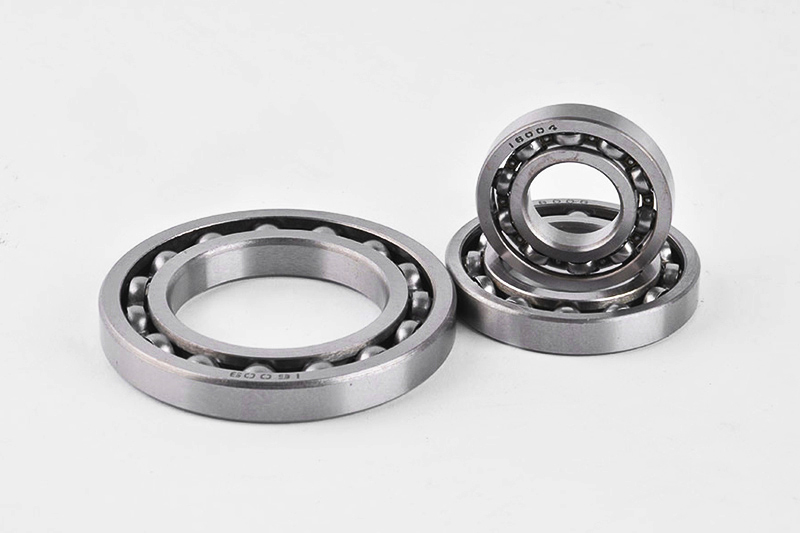
| (none) | Open bearing, no seals | N/A | Oil bath / mist lube, external seals |
| Z | One metal shield | Non-contact | Semi-open environments, one-side lube access |
| ZZ | Two metal shields (both sides) | Non-contact | General purpose, dusty environments, motors |
| RS / RZ | One rubber seal | Contact (RS) / Low-contact (RZ) | Wet or contaminated environments |
| 2RS / 2RZ | Two rubber seals (both sides) | Contact (2RS) / Low-contact (2RZ) | Wash-down environments, food processing, outdoor |
Metal shields (Z/ZZ) are non-contact, meaning they do not touch the inner ring. This results in lower friction and higher speed capability—a ZZ bearing can typically run 15–20% faster than the same bearing with rubber seals. However, metal shields are not waterproof; they protect against solid contaminants (dust, metal particles) but not liquid ingress.
Rubber seals (RS/2RS) make contact with the inner ring and provide superior protection against moisture and liquid contamination. The trade-off is slightly higher friction (typically 1–3 N·m additional drag at low speeds) and a lower maximum speed rating—usually 10–20% below the equivalent shielded version. For applications in wet, washdown, or outdoor environments, 2RS is almost always the correct choice.
Internal clearance refers to the total internal free movement of the bearing's balls between the inner and outer rings. Standard clearance (CN or no suffix) is correct for most applications. But operating conditions sometimes require deviation:
The C3 clearance specification is extremely common in electric motor bearings because motors generate significant heat during operation. A bearing specified as 6205ZZC3 or 6205-2RSC3 has the same basic dimensions as the standard 6205ZZ but with larger internal clearance to accommodate thermal expansion—and this distinction matters enormously for motor bearing life.
Precision tolerance classes define how closely the bearing's dimensions conform to their nominal values—tighter tolerances mean higher precision and higher cost:
A P5 or P4 bearing costs significantly more than a P0 equivalent—often 3–10× the price depending on size—because of the additional grinding, measurement, and sorting steps required in manufacturing. Never specify a higher precision class than the application requires; you'll pay a premium for tolerance you don't need.
While the ISO numbering system is standardized, individual bearing manufacturers sometimes add their own prefix codes or use slightly different suffix conventions for the same underlying specifications. Understanding this helps you cross-reference bearings between brands accurately.
The same bearing might be listed differently across catalogs from SKF, NSK, FAG, Timken, NTN, and Koyo. For the standard 6205ZZ as an example:
The basic dimensions (bore, OD, width) are standardized and will be identical across all manufacturers for the same basic number. Where variations can occur is in internal design details—ball complement (number and size of balls), cage material, grease type, and seal geometry. For critical applications, always specify the brand if a particular manufacturer's design has been validated for your use case.
For general-purpose applications—electric motors, fans, pumps, conveyor systems—a bearing from any reputable manufacturer meeting the ISO basic number specification will perform equivalently. The dimensional interchangeability is guaranteed by ISO standards. However, for high-speed spindles, aerospace, medical equipment, or applications with extreme temperature or contamination requirements, the specific manufacturer and their proprietary design details can make a meaningful difference in bearing life and reliability.
Armed with everything covered in this guide, you can now decode any standard deep groove ball bearing designation quickly and confidently. Here's a step-by-step method you can apply immediately:
| Designation | Type | Series | Bore | OD | Width | Sealing | Dynamic C |
|---|---|---|---|---|---|---|---|
| 6002Z | DGBB | Extra Light (0) | 15 mm | 32 mm | 9 mm | 1 metal shield | 5.6 kN |
| 6205ZZ | DGBB | Light (2) | 25 mm | 52 mm | 15 mm | 2 metal shields | 14.0 kN |
| 6210 | DGBB | Light (2) | 50 mm | 90 mm | 20 mm | Open | 35.1 kN |
| 6310 | DGBB | Medium (3) | 50 mm | 110 mm | 27 mm | Open | 61.8 kN |
Even experienced technicians make selection errors that lead to premature bearing failure, system downtime, and unnecessary replacement costs. Here are the most frequent mistakes and how to avoid them:
The bearing market—particularly online marketplace channels—has a significant counterfeit problem. Counterfeit bearings from major brands like SKF, FAG, and NSK are widely sold with convincing packaging but inferior materials, incorrect heat treatment, and substandard geometric tolerances. A counterfeit bearing can fail in hours rather than years, and in critical applications this can cause equipment damage or safety incidents. Purchase bearings from authorized distributors, verify authenticity codes where available, and be skeptical of prices significantly below market rate for name-brand products.
Deep groove ball bearing part numbers are a compact, internationally standardized language. Once you learn to read it, every number on a bearing box tells you exactly what you're holding—its family, its load capacity class, its bore size, its sealing configuration, its internal clearance, and its precision level. No catalog required.
The four real-world examples in this guide—the 6310 bearing, 6210 bearing, 6002Z bearing, and 6205ZZ bearing—cover the full range of situations you're likely to encounter: from compact small-bore applications to heavy-duty 50mm shaft installations, from single-shielded semi-open designs to fully double-shielded maintenance-free units. Each digit and letter carries meaning, and understanding that meaning is the difference between a confident, correct bearing selection and a costly substitution error.
When in doubt: verify the bore, confirm the OD and width against your housing, check the suffix for sealing and clearance, and purchase from a reputable distributor. These four steps will protect your equipment and your budget on every bearing selection decision.

Product Overview The Series 1600 Deep Groove Ball ...
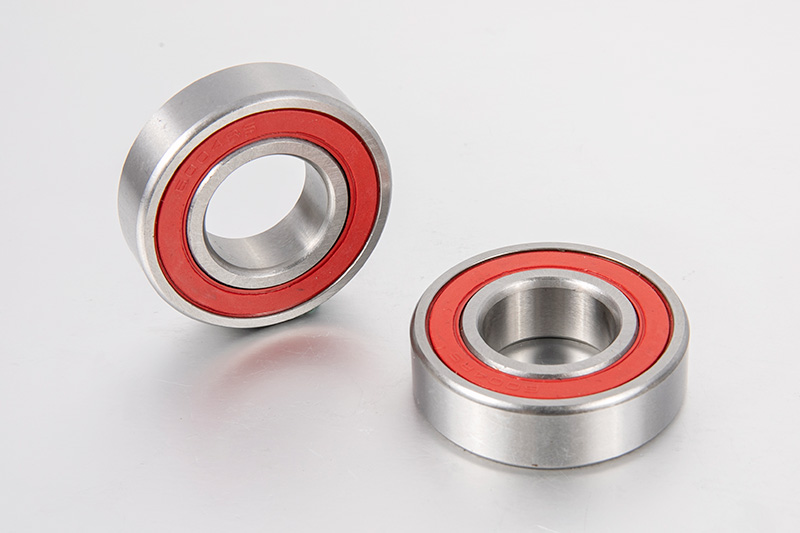
Key Features & Benefits 1. Superior Sealing Pe...

Product Overview:The 6200 Series Deep Groove Ball ...
Core Differentiators: Enhanced Load Capacity: Unl...
Core Technical Advantages: Maximum Space Efficien...