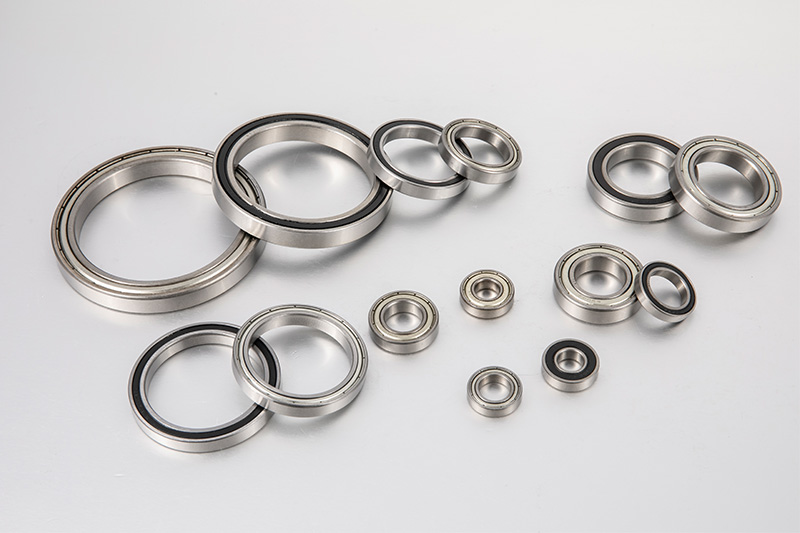
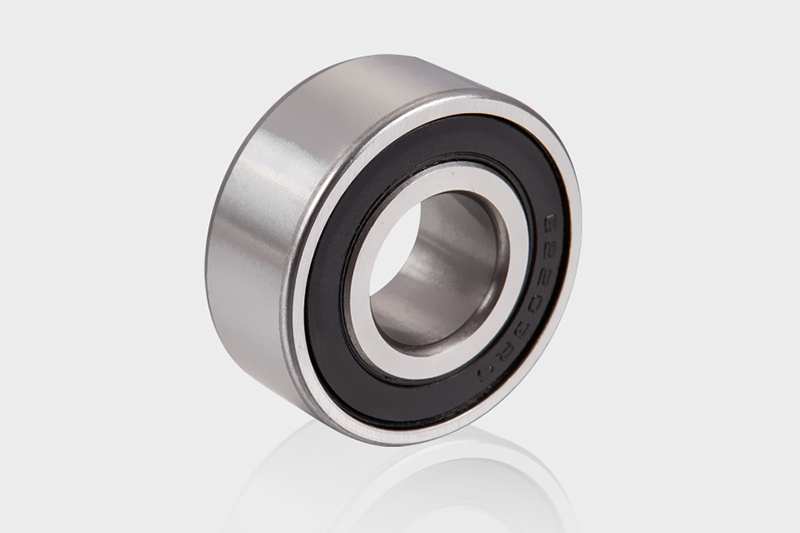
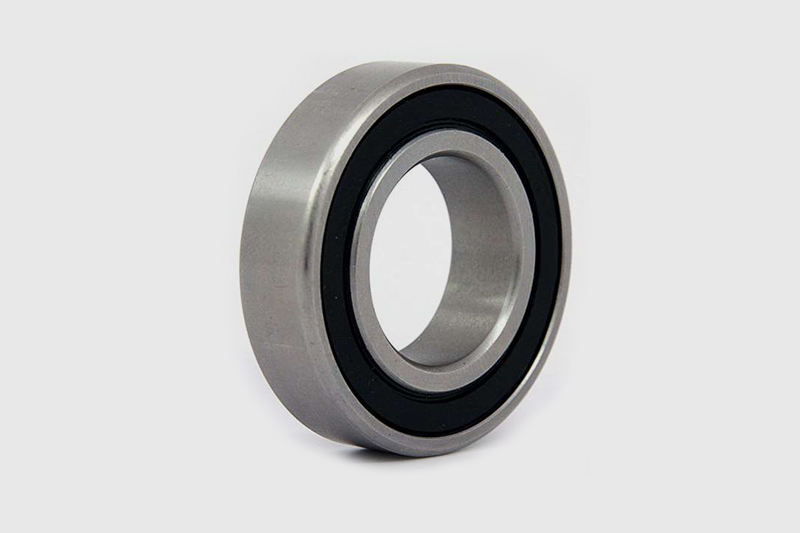
Series 1600 Chrome Steel Deep Groove Ball Bearing
Product Overview The Series 1600 Deep Groove Ball ...




Content
In the world of mechanical engineering, the term Roller Bearing represents a critical evolution in friction reduction technology. At its most fundamental level, a roller bearing is a precision-engineered rolling-element bearing designed to facilitate smooth rotational movement between machine components.
While the basic concept—minimizing friction by placing rolling elements between two moving surfaces—remains consistent across all bearings, the “Roller” variant is specifically engineered for environments where standard ball bearings would fail. By utilizing cylindrical, tapered, or barrel-shaped rollers instead of spherical balls, these components provide the backbone for heavy-duty industrial machinery, automotive drivetrains, and aerospace infrastructure.
The most significant technical distinction of a roller bearing lies in its contact geometry. To understand why roller bearings are the preferred choice for heavy industry, we must examine the physics of how they distribute weight.
In a standard ball bearing, the spherical ball touches the inner and outer raceways at a single, microscopic point. This is known as “Point Contact.” While this minimizes friction and allows for extremely high speeds, it limits the amount of weight the bearing can support before the metal begins to deform.
In contrast, Roller Bearings utilize “Line Contact.” Because the rolling element is a cylinder or a cone, it contacts the raceway along a continuous linear path.
When a heavy radial load is applied to a roller bearing, the force is spread across the entire length of the roller. This creates a much lower Hertzian contact stress compared to a ball bearing of the same size.
To help your procurement and engineering teams make an informed decision, the following table highlights the key performance metrics indexed by Semrush for industrial searches.
| Feature | Roller Bearings (Line Contact) | Ball Bearings (Point Contact) |
|---|---|---|
| Load Capacity | Extremely High (Radial & Axial) | Moderate to Low |
| Speed Capability | Moderate | Very High |
| Friction Levels | Higher due to surface area | Lowest possible |
| Durability | High impact resistance | Sensitive to shock loads |
| Common Use Case | Mining, Gearboxes, Turbines | Electric motors, Handheld tools |
One of the primary reasons engineers search for specific roller bearing types is to solve challenges related to Load Directionality.
Most industrial applications involve Radial Loads, which are forces acting perpendicular to the shaft (think of a heavy pulley pulling down on a motor shaft). Because of their wide contact area, cylindrical roller bearings are the industry standard for managing these forces. They provide the stability required to keep shafts aligned even under the weight of several tons.
Not all roller bearings are created equal when it comes to Axial Loads (forces acting parallel to the shaft).
The “Everything you need to know” aspect of this guide wouldn’t be complete without looking at the internal infrastructure. For a bearing to perform at or at , its material composition must be flawless.
Most premium roller bearings are manufactured from AISI 52100 steel (or equivalent). This material is through-hardened to achieve a Rockwell hardness (HRC) of 58-65, ensuring the “line contact” surfaces do not pit or flake under cyclic loading.
The cage is the unsung hero of the roller bearing. It keeps the rollers separated so they don’t rub against each other, which would cause catastrophic heat buildup.
From the infrastructure under our feet to the energy systems powering our cities, roller bearings are omnipresent.
To understand how a bearing functions under extreme industrial stress, one must look beyond the surface. The “infrastructure” of a roller bearing is a masterclass in precision engineering, where every micron counts. For engineers and procurement specialists searching for mounted bearing units or specific bearing housing types, understanding these internal and external components is the first step toward optimizing machine performance.
The anatomy of a bearing is generally divided into four internal elements and, in many high-demand sectors, an external housing system that creates a complete mounted roller bearing assembly.
Every roller bearing, from the smallest small flange bearings to massive industrial units, relies on a four-part internal architecture.
The Inner Race is the component mounted directly onto the rotating shaft. Its primary job is to provide a hardened, precision-ground track for the rollers to travel upon.
The Outer Race remains stationary within the machine’s housing. It acts as the “track” that contains the rolling elements. In flange mounted bearings, the outer race is held firmly by the housing to ensure that any radial or axial loads are transferred safely from the shaft to the machine frame.
The rolling elements are what distinguish a roller bearing from a mounted steel ball bearing with cast iron housing. Depending on the application, these can be:
Often overlooked, the Cage (or separator) is vital for high-speed stability. Its role is to:
In many industrial scenarios, a bearing isn’t just a stand-alone component; it is part of a pre-assembled system. This is where mounted bearing units come into play. These units simplify installation and are a major driver of SEO traffic.
When searching for types of pillow block bearings, most users are looking for a reliable way to support a rotating shaft parallel to a mounting surface.
If the shaft passes through a machine wall or a vertical frame, a flange bearing unit is required. These are characterized by their mounting “wings” or flanges.
To help you identify the right flange block bearings, consider this breakdown of popular styles:
Choosing the right housing is as important as choosing the bearing itself. Below is a comparison table designed to capture keywords related to bearing housing types and flange mounted bearings.
| Housing Type | Common Name | Best For | Key SEO Keyword |
|---|---|---|---|
| Two-Bolt Flange | UCFL Series | Vertical mounting, limited space | Flange block bearing |
| Four-Bolt Flange | UCF Series | Heavy-duty industrial frames | Flange mounted bearings |
| Pillow Block | UCP Series | Horizontal shafts, conveyor belts | Types of pillow block bearings |
| Small Flange | Miniature Series | Precision instruments, 3D printers | Small flange bearings |
When selecting a mounted steel ball bearing with cast iron housing, the material of both the bearing and the housing determines the environment it can survive in.
For high-tech medical devices or robotics, a small flange bearing is often utilized. These tiny components provide the same “infrastructure” as their larger cousins but are engineered for sub-millimeter precision. Even in these small sizes, the presence of a flange pillow block bearing design allows for easier mounting on thin sheet metal frames.
To ensure your flange block bearings and pillow block bearing types reach their maximum L10 life, a maintenance schedule is mandatory.
Selecting the right bearing is the most critical decision in mechanical design. It is not just about the size of the shaft, but about understanding the load dynamics—whether the force is radial, axial, or a combination of both. When engineers search for mountable bearings, they aren’t just looking for a part; they are looking for a performance solution.
Cylindrical roller bearings are the go-to choice for applications requiring high-speed rotation combined with heavy radial loads. Unlike other designs, the rollers in these units are precision-ground cylinders that maintain a linear contact with the raceways.
Because of the “line contact,” cylindrical roller bearings can handle significantly more weight than ball bearings of the same size. However, their standard design offers almost zero thrust (axial) capability.
In many heavy industrial setups, cylindrical rollers are integrated into block bearings. This configuration is frequently seen in:
If your machinery operates in harsh environments like mining, construction, or paper mills, Spherical Roller Bearings are indispensable. These feature two rows of barrel-shaped rollers that run within a common spherical outer raceway.
The unique geometry of spherical rollers allows them to be “self-aligning.” This means they can compensate for several degrees of shaft deflection or mounting errors without increasing friction or heat.
To maximize their utility, spherical rollers are often housed in a bearing flange housing. This allows for:
Perhaps the most versatile of all, Tapered Roller Bearings use rollers shaped like truncated cones. This design allows the bearing to handle combined loads—heavy radial and heavy axial forces simultaneously.
The ability of a tapered bearing to handle thrust loads is determined by the “contact angle.” The steeper the angle, the higher the axial load capacity. This makes them the industry standard for:
When purchasing mounted bearing units, you will often have to choose between ball, roller, or plain elements. The table below compares these types of mounted bearings to help you decide.
| Bearing Element Type | Load Type | Speed | Maintenance | Best Keywords for Search |
|---|---|---|---|---|
| Ball Bearing Units | Light/Moderate | Very High | Low | ball bearing units |
| Roller Bearing Units | Very Heavy | Moderate | Medium | mounted bearing units |
| Mounted Plain Bearings | High (Shock) | Low | High/Self-lubricating | mounted plain bearings |
When your design has a “low profile” requirement—meaning there is very little radial space between the shaft and the housing—Needle Roller Bearings are the only solution. They use long, thin rollers (needles) whose length is at least three times their diameter.
Despite their small cross-section, needle bearings have a surprisingly high load-carrying capacity. They are commonly used in:
For vertical mounting in tight spaces, engineers often search for specialized flange bearing types that utilize needle rollers. This ensures that the bearing housing flange remains compact while supporting the high torque of the internal components.
The performance of any roller bearing is only as good as the housing that supports it. In the B2B world, searching for types of mounted bearings is just as common as searching for the bearings themselves.
A bearing flange housing is essential when the mounting surface is perpendicular to the shaft. These units, often referred to as flange bearing types, provide a secure “face-mount” that prevents the bearing from shifting during high-axial-load operations.
While we have focused on rollers, it is important to note that many ball bearing units share the same housing dimensions as roller units. However, if your application involves vibration or heavy impact, you must upgrade to a roller-based block bearings system to avoid premature failure.
To help your engineering team and to boost our rankings for mountable bearings and mounted bearing types, refer to this quick-selection guide:
| Technical Requirement | Recommended Bearing Type | Recommended Housing | Primary Keyword |
|---|---|---|---|
| High Radial Load + High Speed | Cylindrical Roller | Split Block | block bearings |
| Heavy Load + Misalignment | Spherical Roller | Flange or Pillow Block | bearing housing flange |
| Axial + Radial Combined | Tapered Roller | Custom Cast Iron Housing | mounted bearing units |
| Limited Space + High Torque | Needle Roller | Small flange bearing types | flange bearing types |
The versatility of roller bearings makes them the silent engine of modern civilization. From the microscopic precision required in medical robotics to the massive load-bearing capacity needed for offshore wind turbines, the choice of bearing can determine the success or failure of an entire operation.
When businesses search for bearings with housings or specific block bearing types, they are usually looking for a solution that balances durability with ease of installation. In this section, we explore how different industries leverage the unique infrastructures of roller bearings to achieve peak operational efficiency.
In the manufacturing sector, “uptime” is the only metric that matters. This industry relies heavily on cylindrical roller bearings and ball bearing units to maintain continuous production lines.
A significant portion of modern manufacturing involves precise linear movement. This has led to a surge in searches for pillow block linear ball bearings and pillow block linear plain bearings.
Conveyor systems are the backbone of logistics. Engineers frequently specify flange mount bearings for these systems because they allow for easy mounting on the side of machine frames, ensuring that rollers stay aligned even under high-speed package sorting.
The mining and construction industries are perhaps the most demanding environments for any mechanical component. Here, spherical roller bearings are the undisputed champions.
Mining equipment, such as rock crushers and vibrating screens, is subject to extreme shaft deflection and constant dust. Spherical rollers are designed to be self-aligning, meaning they can function even when the shaft isn’t perfectly straight.
In these sectors, the “housing” is just as important as the bearing. To protect the internal components, heavy-duty types of bearing housing are used:
Every time a vehicle turns a corner, its bearings are subjected to a complex mix of radial loads (the weight of the car) and axial loads (the centrifugal force of the turn).
Tapered roller bearings are the standard for automotive wheel hubs because their conical shape can handle these combined loads simultaneously. Without the high-load capacity of tapered rollers, modern heavy-duty trucks and trailers would require much larger, less efficient axles.
For off-road and agricultural vehicles, bearings with housings are often used to simplify the replacement process in the field. These pre-assembled units ensure that seals are factory-set, preventing grease leakage in muddy or dusty conditions.
To assist in your procurement process and to provide the data search engines crave, the following table breaks down the relationship between industry needs and block bearing types.
| Industry Sector | Primary Load Challenge | Recommended Bearing | Common Housing Term |
|---|---|---|---|
| Manufacturing | High-Speed Precision | Cylindrical / Ball | Pillow block linear ball bearings |
| Mining | Impact & Misalignment | Spherical Roller | Types of bearing housings |
| Automotive | Combined (Radial/Axial) | Tapered Roller | Integrated Hub Units |
| Aerospace | Weight & Reliability | Needle / Specialized | Flange mount bearings |
| Food Processing | Corrosion & Hygiene | Stainless Steel | Types of bearing housing |
In aerospace, every gram of weight saved equals fuel efficiency. This industry pushes the limits of needle roller bearings and specialized cylindrical designs.
While the term is common in heavy industry, many ask, “What is a pillow block bearing in high-precision engineering?” In aerospace, a pillow block refers to a pedestal-mounted housing that supports a rotating shaft. However, these are often made from lightweight alloys rather than cast iron to meet strict weight requirements.
For aircraft control surfaces (like flaps and rudders), flange mount bearings are used to provide high-torque support within the thin profile of a wing. These are often “life-of-type” components, meaning they are designed to never fail throughout the aircraft’s operational life.
The rise of wind energy has created a massive demand for oversized mounted bearing units.
Wind turbines use some of the largest spherical roller bearings ever manufactured. These bearings must handle the immense, slow-moving weight of the turbine blades while resisting the corrosive effects of salt air in offshore installations.
Solar panels that follow the sun require pillow block linear plain bearings or linear ball bearings to adjust their tilt smoothly throughout the day. Because these move slowly but are exposed to the elements 24/7, the durability of the types of bearing housing used is paramount.
In the industrial world, a bearing failure is never just about a broken part; it is about the catastrophic cost of unplanned downtime. Whether you are using pillow block roller bearings in a heavy-duty conveyor or flange mounted bearings in a food processing line, the “Total Cost of Ownership” (TCO) is dictated by your maintenance strategy.
Proper care of mounted bearings can extend their service life by up to 300%. To achieve this, engineers and maintenance teams must focus on three critical pillars: precision lubrication, expert installation, and rigorous contamination control.
Statistically, over 36% of premature bearing failures are directly linked to incorrect lubrication. For a housed bearing, the lubricant does more than just reduce friction; it dissipates heat and acts as a barrier against contaminants.
Most mounted bearings come pre-lubricated, but the operating environment dictates the regreasing interval.
A common mistake in maintaining block bearing housing units is over-greasing. Excessive grease causes internal friction, leading to “churning” and a rapid rise in temperature. This can degrade the mounted bearing inserts and lead to seal blowout.
The life of a bearing often ends before it even starts, due to poor installation techniques. When dealing with pillow block bearings and shafts, alignment is everything.
Using a hammer or excessive force during installation can cause “brinelling”—microscopic, permanent indentations on the raceways. When the mountable bearing begins to rotate, these indentations create vibration and noise, leading to rapid fatigue failure.
Misalignment is a silent killer. Even a flange mounted bearing with a self-aligning feature has limits.
In industries like mining, construction, and agriculture, the housed bearing is constantly under attack from dust, water, and chemicals.
The housing is your first line of defense. When selecting bearings with housings, the seal type must match the environment:
The mounted bearing inserts are the heart of the assembly. If the seal fails, particulates enter the raceway, acting as an abrasive paste that grinds down the rolling elements. Regular inspection of the block bearing housing for grease weeping or discoloration is a vital early warning sign.
To help your team optimize their maintenance schedule and to boost our rankings for mounted bearings keywords, refer to this standardized technical table:
| Maintenance Task | Frequency | Target Component | Key SEO Keyword |
|---|---|---|---|
| Vibration Analysis | Monthly | Roller Elements | pillow block roller bearings |
| Regreasing | Per Manufacturer | Mounted Bearing Inserts | mounted bearing inserts |
| Shaft Alignment | Bi-Annually | Pillow Block & Shaft | pillow block bearings and shafts |
| Seal Inspection | Weekly | Flange Mounted Bearing | flange mounted bearing |
| Housing Bolt Torque | Annually | Block Bearing Housing | block bearing housing |
Understanding why a housed bearing fails is the only way to prevent it from happening again.
To understand the value of quality, we must look at the lifecycle of a housed bearing. A high-quality roller bearing is engineered with superior metallurgy and precision, ensuring it reaches its calculated L10 life.
The “sticker price” of a bearing represents only about 15% of its total cost over its lifetime. The remaining 85% is comprised of maintenance labor, lubrication, energy consumption, and—most importantly—lost production during downtime.
Low-quality bearings often suffer from inconsistent internal clearances. This can lead to excessive vibration, which doesn’t just destroy the bearing, but also causes “fretting corrosion” on the expensive pillow bearings and shafts. Replacing a shaft is significantly more expensive and time-consuming than investing in a premium bearing from the start.
One of the hallmarks of high-quality manufacturers is their adherence to strict global standards for bearing housing sizes. When a component is “off-spec” by even a few microns, the entire assembly is compromised.
Whether you are installing flangette bearings in a light-duty conveyor or heavy-duty units in a mill, the compatibility between the housing for bearing and the internal insert is crucial.
For high-tech automation, quality is even more critical. Flange-mount linear plain bearings require extreme surface smoothness to prevent stiction. Cheaper alternatives often use inferior polymers or uneven coatings, leading to jerky movements and precision errors in CNC or medical equipment.
To help your financial team understand the ROI of quality, we have compiled a comparison table focusing on key performance indicators (KPIs) relevant to bearings pillow block applications.
| Feature | Premium Roller Bearings | Budget/Generic Bearings | Long-term Business Impact |
|---|---|---|---|
| Material Grade | High-Purity AISI 52100 Steel | Recycled or Low-Grade Steel | Fatigue resistance vs. premature flaking |
| Dimensional Accuracy | Micron-level precision | Variable tolerances | Fits perfectly in bearing housing sizes |
| Sealing Technology | Multi-lip, high-efficiency seals | Basic single-lip seals | Protection against dust & moisture ingress |
| Friction Coefficient | Optimized for energy saving | Higher internal friction | Lower energy bills & reduced heat |
| Documentation | Full traceability & certs | Minimal to none | Compliance with ISO & safety standards |
A bearing is only as good as the housing for bearing that protects it. High-quality units provide superior structural integrity that cheaper cast-iron versions simply cannot match.
Premium bearings pillow block housings are often made from high-grade ductile iron or cast steel, which offers better shock absorption. In contrast, cheap housings may contain air pockets (voids) in the casting, making them prone to cracking under heavy loads.
For light-duty or space-constrained applications, flangette bearings offer a cost-effective, two-piece pressed steel solution. However, even here, quality matters. Premium flangettes ensure that the two halves align perfectly, preventing the bearing insert from becoming “cocked” or misaligned within the unit.
In large-scale operations, such as mining or power generation, the synergy between pillow blocks and shafts is the foundation of the entire mechanical system.
A: A pillow block bearing (also known as a plummer block) is a mounted bearing unit used to provide support for a rotating shaft with the help of a compatible housing. The main difference lies in its mounting surface: pillow blocks are designed to be bolted to a surface parallel to the shaft axis, whereas flange-mount bearings are designed for perpendicular (vertical) mounting.
A: The choice depends on your environment. Pillow block linear ball bearings offer high precision and low friction for high-speed applications. However, pillow block linear plain bearings are superior in environments with heavy contamination or where vibration dampening is required, as they have no rolling elements to seize.
A: Line contact, found in roller bearings, distributes the load across a larger surface area compared to the point contact in ball bearings. This significantly increases the radial load capacity and prevents elastic deformation, making it essential for mining, construction, and heavy manufacturing.
A: In most cases, you can replace only the mounted bearing inserts if the block bearing housing is not cracked or worn. This is a cost-effective way to maintain bearings with housings, provided the new insert matches the original bearing housing sizes and locking style.
A: The top three causes are:

Product Overview The Series 1600 Deep Groove Ball ...
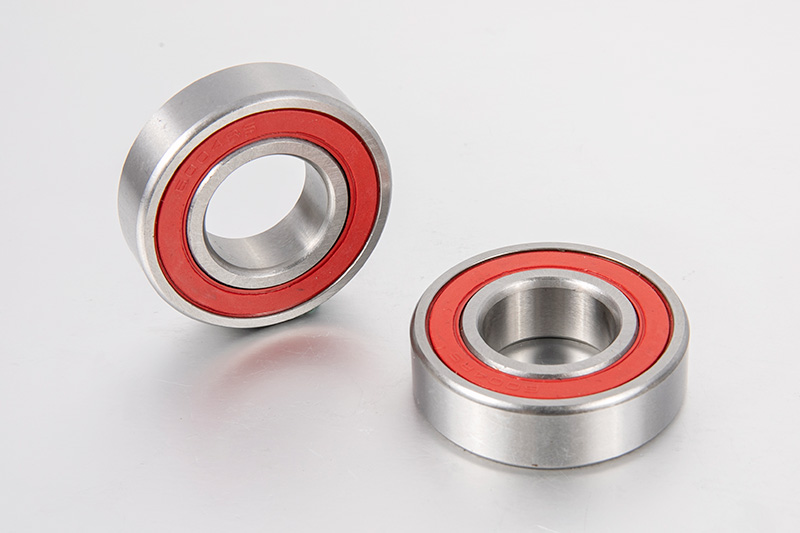
Key Features & Benefits 1. Superior Sealing Pe...

Product Overview:The 6200 Series Deep Groove Ball ...
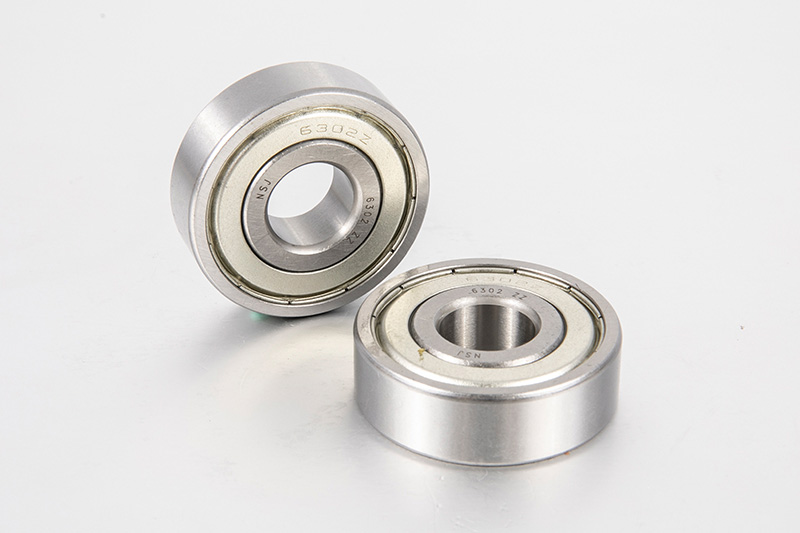
Core Differentiators: Enhanced Load Capacity: Unl...
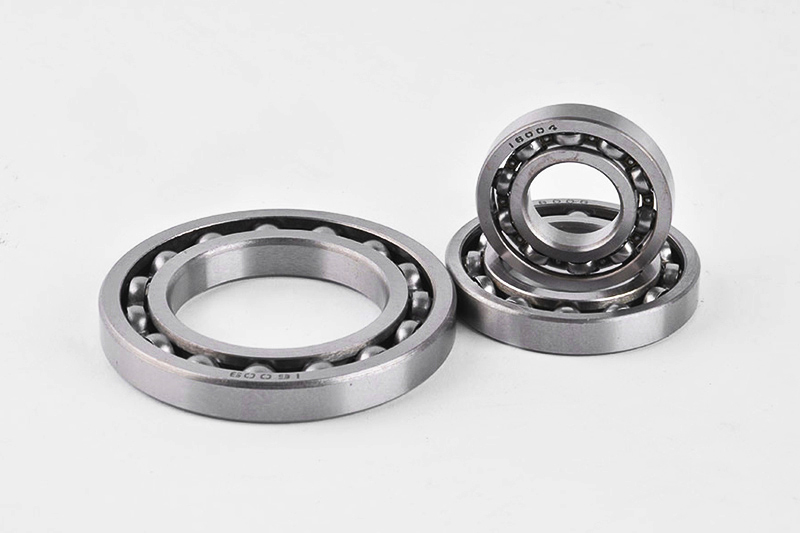
Core Technical Advantages: Maximum Space Efficien...