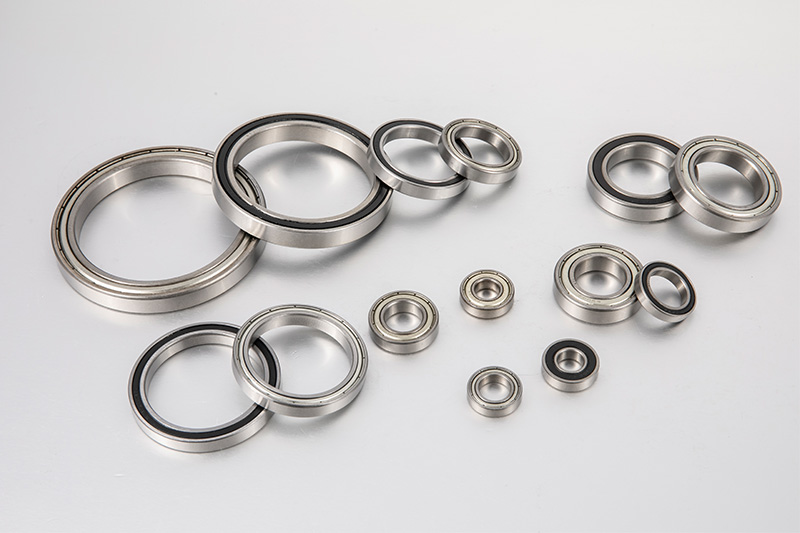
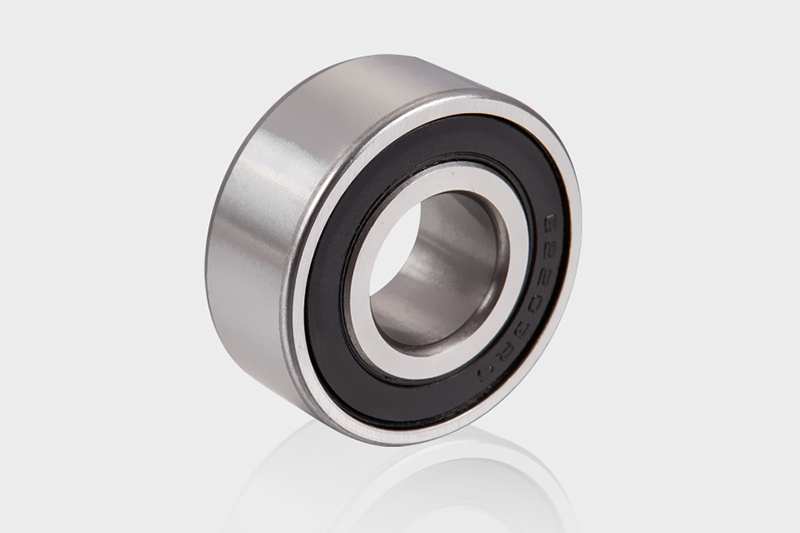
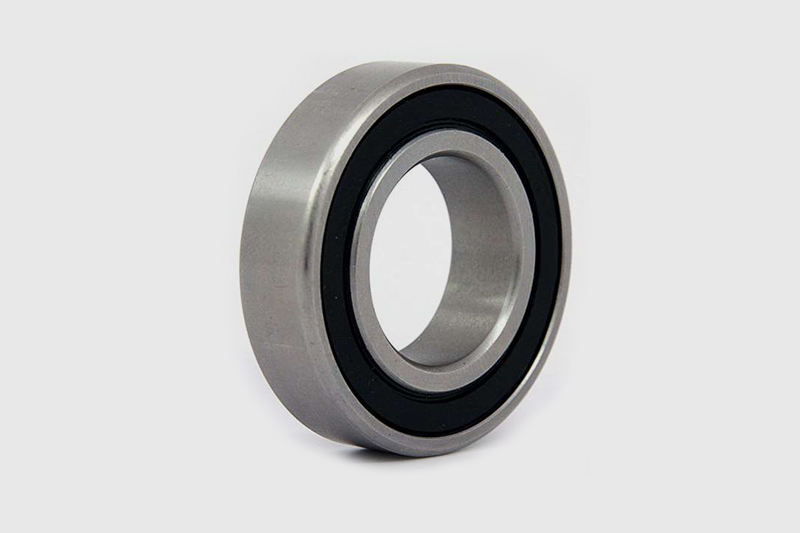
Series 1600 Chrome Steel Deep Groove Ball Bearing
Product Overview The Series 1600 Deep Groove Ball ...




Content
Deep groove ball bearings are the most commonly used rolling-element bearings in the world, designed with an inner ring, outer ring, a set of steel balls, and a cage that keeps the balls evenly spaced. Their defining feature is the deep, continuous raceway grooves on both the inner and outer rings — grooves that are slightly deeper than the ball radius. This geometry allows the bearing to handle radial loads as primary loads, plus moderate axial (thrust) loads in both directions, without requiring a separate thrust bearing.
In plain terms: if a machine spins, there is almost certainly a deep groove ball bearing somewhere inside it. From electric motors and gearboxes to household appliances and medical equipment, this bearing type accounts for more than 30% of all bearing production globally.
The term "deep groove" refers to the raceway depth relative to ball diameter. In a standard deep groove ball bearing, the groove radius is typically 51.5%–53% of the ball diameter, which is noticeably deeper than in angular contact or Conrad-type bearings. This deeper groove is what gives the bearing its ability to sustain axial forces without special modification.
Not all deep groove ball bearings are identical. The primary distinctions lie in sealing configuration and row count.
| Type | Description | Typical Use Case |
|---|---|---|
| Open (no seal) | No sealing element; requires external lubrication | Clean, controlled environments; gearboxes with oil bath |
| Shielded (ZZ) | Metal shields on one or both sides; non-contact | Electric motors, fans, pumps |
| Sealed (2RS) | Rubber contact seals on both sides; grease pre-filled | Agricultural machinery, conveyors, automotive |
| Single Row | One row of balls; most common configuration | General industrial and consumer applications |
| Double Row | Two rows of balls; higher radial load capacity | Heavy-duty motors, construction equipment |
Deep groove ball bearings are primarily designed for radial loads, but their deep raceway enables them to sustain axial loads as well — a key advantage over shallow-groove designs.
For example, a standard 6205 bearing (25mm bore) has a dynamic load rating (C) of 14.8 kN and a static load rating (C₀) of 7.8 kN — sufficient for most small electric motors and pumps.
One of the biggest reasons deep groove ball bearings dominate the market is their exceptional speed capability. Because the contact area between balls and raceways is minimal (point contact), friction is low even at very high rotational speeds.
The global dominance of deep groove ball bearings is not accidental. Multiple engineering and economic factors reinforce each other:
A single bearing type handles radial loads, axial loads, and combined loads — eliminating the need for multiple specialized bearing types in most applications. Industries that rely heavily on deep groove ball bearings include automotive (wheel hubs, alternators), electric motors, HVAC systems, power tools, robotics, and consumer electronics.
Deep groove ball bearings follow ISO 15 international dimensional standards, meaning a 6205 bearing from SKF, FAG, NSK, or any other manufacturer is interchangeable. This standardization dramatically reduces procurement complexity and downtime during replacement.
The point-contact rolling geometry produces very low friction torque. In electric motors — which account for roughly 45% of global electricity consumption — switching to high-precision deep groove ball bearings can reduce bearing friction losses by 30–50% compared to older plain bearings.
Pre-greased, double-sealed deep groove ball bearings (2RS type) are maintenance-free for their entire service life in many applications. This is a significant operational advantage in hard-to-reach locations such as ceiling fans, conveyor idlers, and embedded motor assemblies.
Due to mass production at scale, deep groove ball bearings are among the most affordable precision mechanical components available. A standard 6203 bearing (17mm bore) can be purchased for under $2 USD in volume, while delivering millions of revolutions of reliable service life.
Understanding the naming convention helps engineers quickly identify the right bearing. The most widely used system follows this pattern:
| Designation | Meaning | Example |
|---|---|---|
| 6 | Single-row deep groove ball bearing | 6205 |
| 2nd digit (0–4) | Dimension series (width and OD) | 62xx = light series |
| Last 2 digits | Bore code (×5 = bore in mm for 04+) | 05 → 25mm bore |
| ZZ / 2Z | Metal shields on both sides | 6205-2Z |
| 2RS / 2RSH | Rubber contact seals on both sides | 6205-2RS |
| C3 | Greater internal clearance (for thermal expansion) | 6205-2RS/C3 |
Deep groove ball bearings appear in virtually every mechanical system. Below are some of the most representative examples:
While deep groove ball bearings excel in most common scenarios, they are not the right choice for every situation. Understanding their limitations helps engineers make better selections:

Product Overview The Series 1600 Deep Groove Ball ...
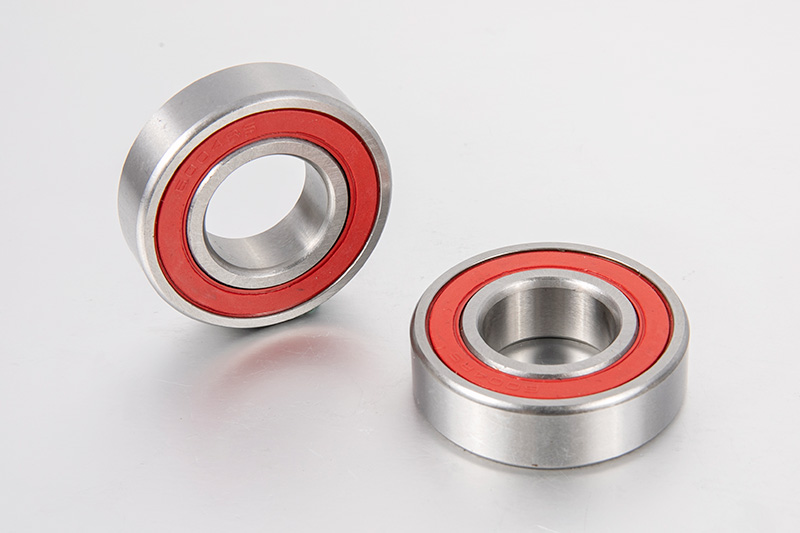
Key Features & Benefits 1. Superior Sealing Pe...

Product Overview:The 6200 Series Deep Groove Ball ...
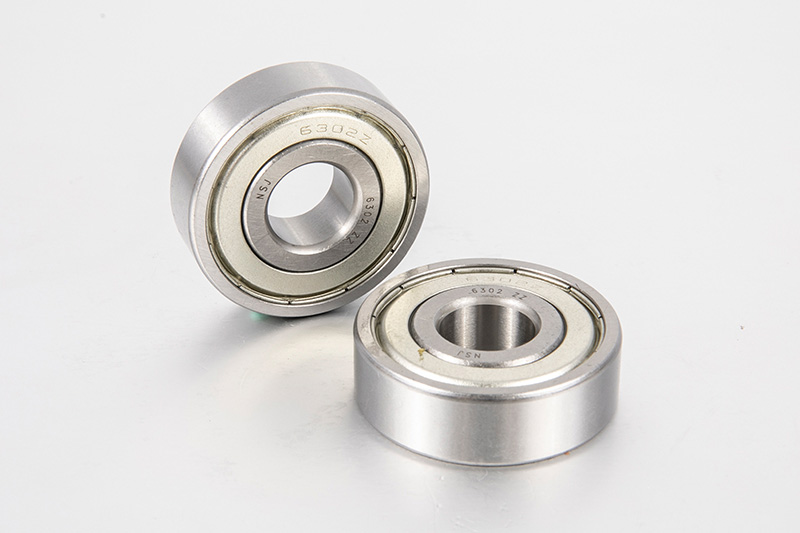
Core Differentiators: Enhanced Load Capacity: Unl...
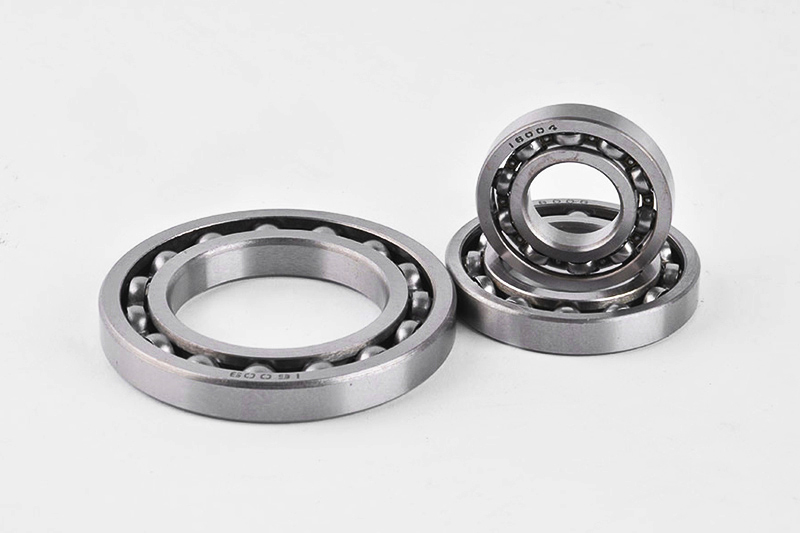
Core Technical Advantages: Maximum Space Efficien...