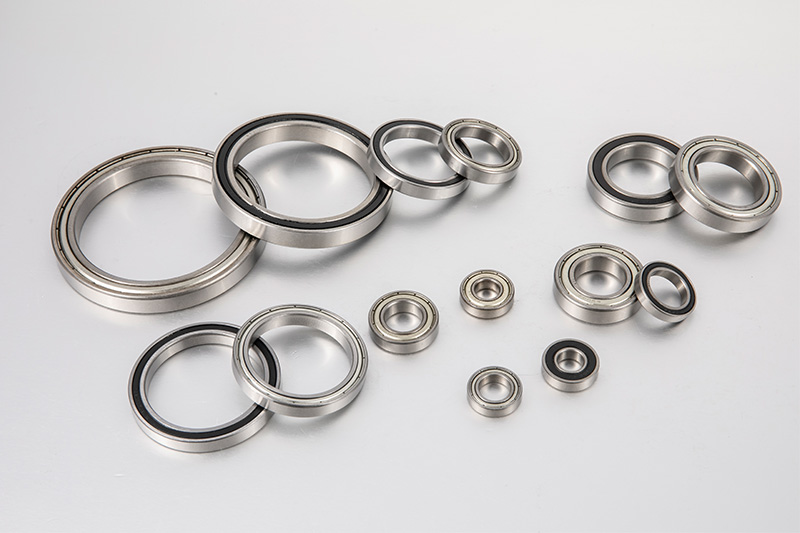
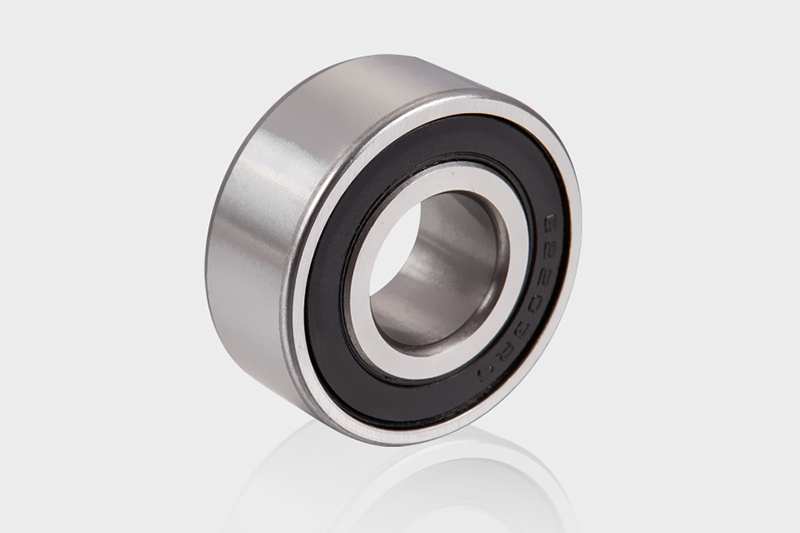
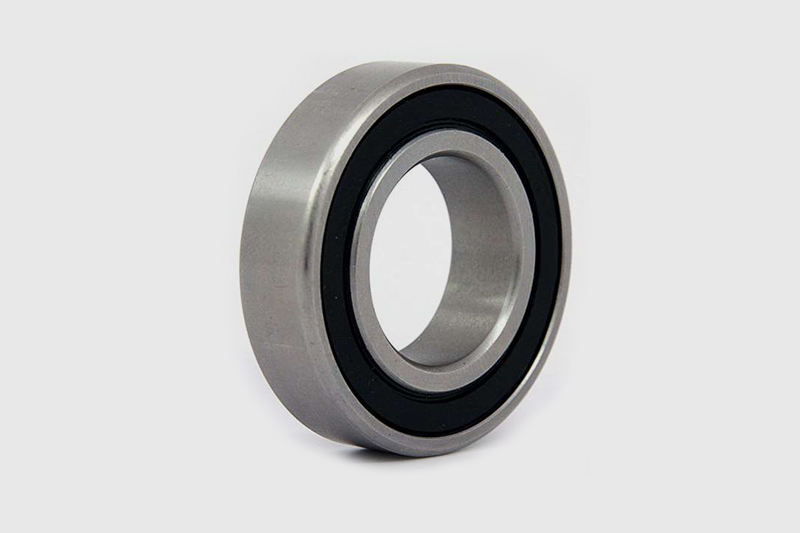
Series 1600 Chrome Steel Deep Groove Ball Bearing
Product Overview The Series 1600 Deep Groove Ball ...




Content
Needle roller bearing dimensions are governed by ISO 1206 and ISO 3245 for metric series, but the catalogues of major manufacturers — INA (Schaeffler) and SKF — include proprietary series that extend beyond ISO coverage and use different designation systems. The key dimensions that define a needle roller bearing are bore diameter (Fw or d), outer diameter (D), and width (C or B), along with roller diameter and length. Understanding how INA and SKF encode these dimensions in their part numbers — and where they align with or diverge from ISO standards — is essential for correct cross-referencing, interchangeability verification, and procurement.
Before comparing manufacturer standards, it is necessary to establish what dimensions matter and what each one controls in bearing performance and installation.
| Dimension | Symbol | What It Controls |
|---|---|---|
| Bore diameter | d / Fw | Shaft fit; inner ring or roller contact diameter |
| Outer diameter | D | Housing fit; radial envelope size |
| Width / length | C / B | Load capacity; axial space requirement |
| Roller diameter | Dw | Contact stress; fatigue life; speed limit |
| Roller length | Lw | Load distribution; edge stress |
| Section height | (D − d) / 2 | Defines "needle" geometry; radial compactness |
The defining geometric characteristic of a needle roller bearing is the roller length-to-diameter ratio. By ISO definition, a needle roller has an Lw/Dw ratio of 2.5 to 10 and a roller diameter of 5mm or less in most standard series. This geometry delivers high radial load capacity within a very small radial cross-section — the fundamental advantage over ball or standard cylindrical roller bearings.
ISO standards provide the baseline dimensional framework that both INA and SKF reference for their standard metric series. The key standards are:
ISO standards define boundary dimensions only — the outer envelope (d, D, B/C) that must be maintained for interchangeability. They do not mandate internal geometry such as roller count, cage design, or internal radial clearance beyond defined tolerance classes. This is why two ISO-compliant bearings from different manufacturers with identical boundary dimensions can have different load ratings and speed limits.
INA, part of the Schaeffler Group, uses a designation system where the bearing series prefix encodes both the bearing type and the dimensional series. Understanding the prefix is the key to reading INA part numbers correctly.
For NK and NKI series, INA appends the bore diameter and width directly after the prefix, separated by a slash: NK [bore]/[width]. For RNA and NA series, a four-digit number encodes the dimension series and bore: the first two digits indicate the series (49 = light, 59 = medium), and the last two digits encode the bore. For example, RNA 4906 decodes as series 49, bore code 06 — which corresponds to Fw = 35mm per the INA bore code table (bore codes above 04 follow the formula: bore code × 5 = bore diameter in mm for codes 04 and above in most series).
SKF uses a parallel designation structure that aligns with ISO series for standard metric bearings but applies different prefix conventions and suffix codes for internal variants. SKF's system is designed to be self-descriptive from the part number.
SKF appends suffixes to the base designation to indicate variants that may affect dimensional or performance specifications:
For ISO-compliant series, INA and SKF boundary dimensions are identical and fully interchangeable. The following table confirms this for the most commonly used needle roller bearing types.
| Bearing Type | INA Designation | SKF Designation | Fw / d (mm) | D (mm) | C / B (mm) | ISO Standard |
|---|---|---|---|---|---|---|
| Drawn cup, open | HK 2516 | HK 2516 | 25 | 32 | 16 | ISO 3245 |
| Drawn cup, closed | BK 2016 | BK 2016 | 20 | 26 | 16 | ISO 3245 |
| Machined, no inner ring | RNA 4906 | RNA 4906 | 35 | 47 | 17 | ISO 1206 |
| Machined, with inner ring | NA 4906 | NA 4906 | 30 | 47 | 17 | ISO 1206 |
| Needle/cage assembly | K 25×29×17 | K 25×29×17 | 25 | 29 | 17 | ISO 3030 |
| Without inner ring (NK) | NK 35/20 | NK 35/20 | 35 | 45 | 20 | ISO 1206 |
Boundary dimensions are identical for all ISO-compliant series listed above. Interchangeability on boundary dimensions does not guarantee identical dynamic load ratings (C) or static load ratings (C₀), which are determined by internal geometry and manufacturing precision and vary between manufacturers even within the same ISO series.
Both manufacturers offer bearing series that go beyond ISO coverage, which is where cross-referencing becomes more complex and direct substitution requires verification.
This is the most important practical point for engineers specifying needle roller bearings: identical ISO boundary dimensions do not mean identical load ratings. Dynamic load rating (C) and static load rating (C₀) depend on roller geometry, roller count, material quality, and manufacturing tolerances — none of which are fixed by ISO dimensional standards.
| Bearing | INA Dynamic C (kN) | SKF Dynamic C (kN) | INA Static C₀ (kN) | SKF Static C₀ (kN) |
|---|---|---|---|---|
| RNA 4906 | 20.3 | 19.0 | 28.0 | 26.0 |
| NA 4906 | 20.3 | 19.0 | 28.0 | 26.0 |
| HK 2516 | 14.0 | 13.2 | 16.0 | 15.0 |
| NK 35/20 | 32.5 | 31.0 | 44.0 | 42.0 |
The differences shown above — typically 5–10% between INA and SKF for the same ISO designation — reflect differences in internal geometry optimization. When a bearing is operating near its rated capacity, always use the specific manufacturer's load rating from their current catalogue, not a generic ISO value, for life calculation using the L10 = (C/P)³ × 10⁶ / n formula.
For standard applications, both INA and SKF supply needle roller bearings to ISO tolerance class Normal (PN) by default. For precision machinery, higher classes are available: P6, P5, and P4 in ascending order of precision, with tighter bore and OD tolerances.
The bore tolerance for a Normal class RNA 4906 (Fw = 35mm) is +0 / −0.012mm per ISO 1132. At P6 class, this tightens to +0 / −0.008mm. These tolerances directly determine the shaft interference or clearance fit and must be factored into housing and shaft design, particularly in high-speed or precision positioning applications.
For drawn cup HK/BK series, the outer cup is a press fit into the housing bore. The cup OD tolerance is tightly controlled — typically +0 / −0.013mm for a 32mm OD — to ensure the cup does not rotate in the housing under load. Both INA and SKF follow ISO 3245 tolerances for standard HK/BK series, so fit calculations are directly transferable between manufacturers.
Use the following decision process when cross-referencing needle roller bearings between manufacturers or verifying ISO compliance:

Product Overview The Series 1600 Deep Groove Ball ...
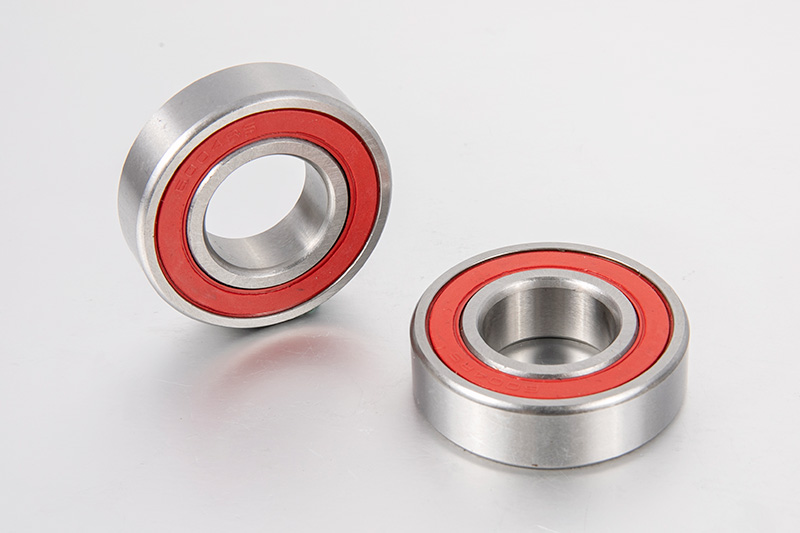
Key Features & Benefits 1. Superior Sealing Pe...

Product Overview:The 6200 Series Deep Groove Ball ...
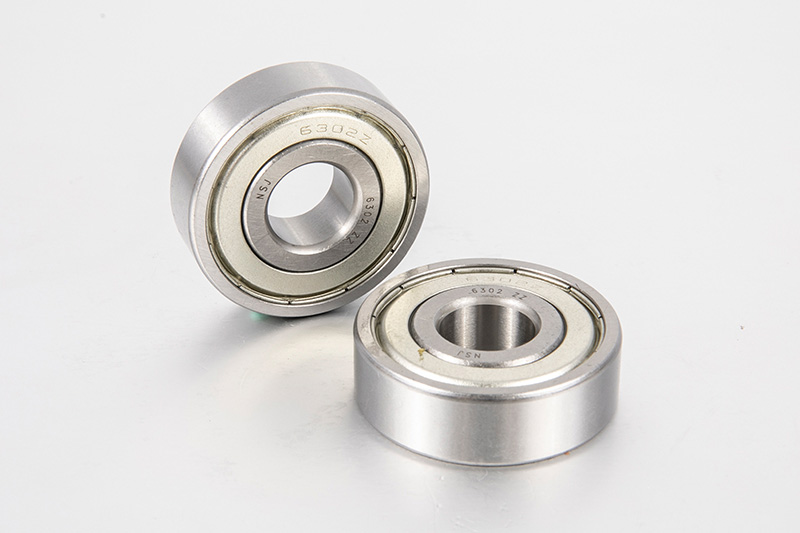
Core Differentiators: Enhanced Load Capacity: Unl...
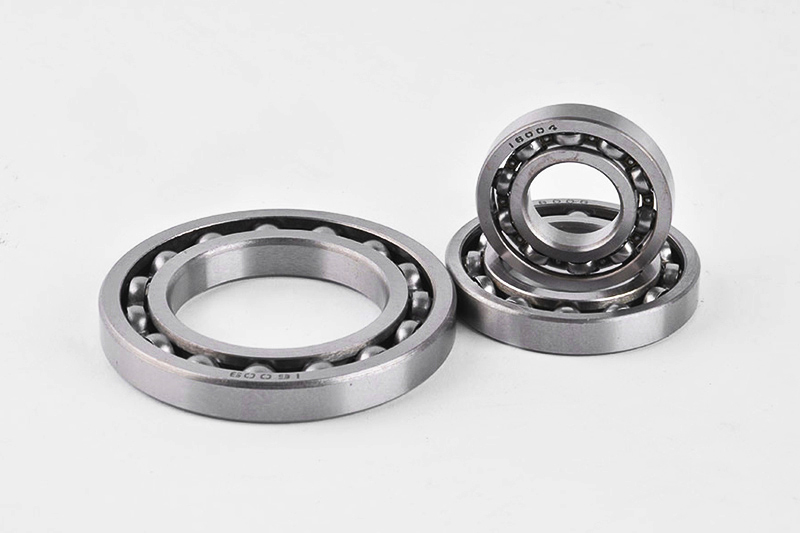
Core Technical Advantages: Maximum Space Efficien...