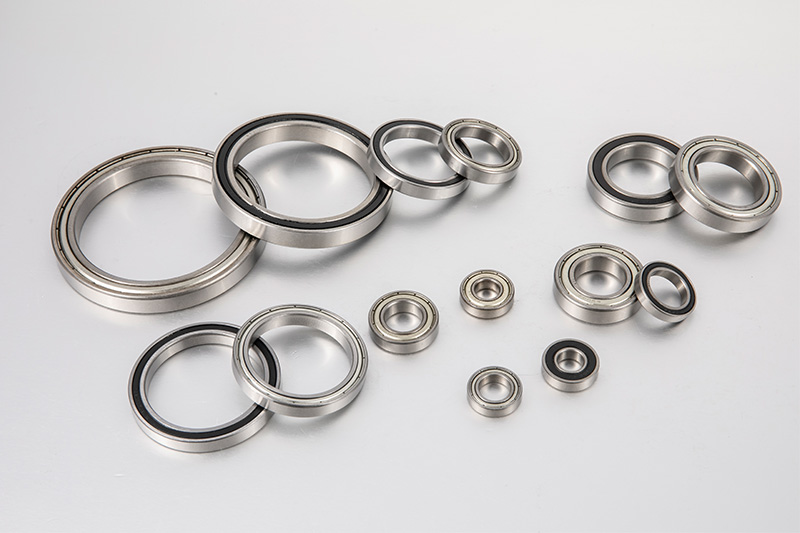
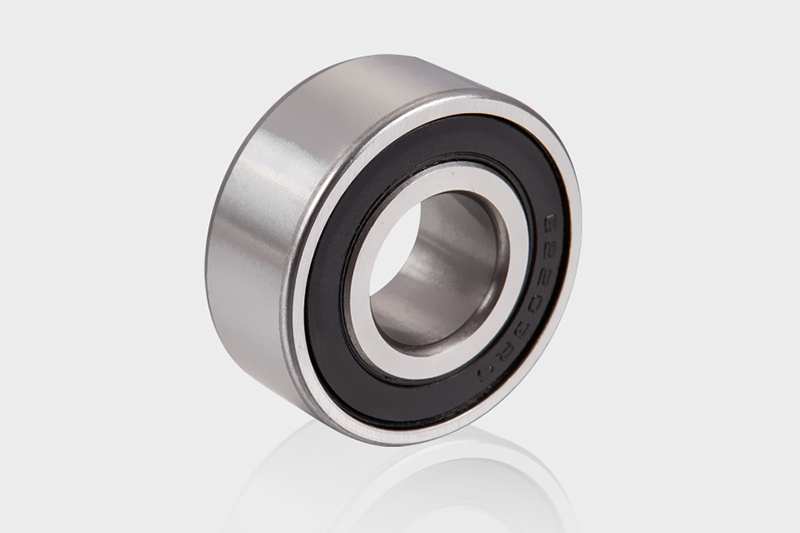
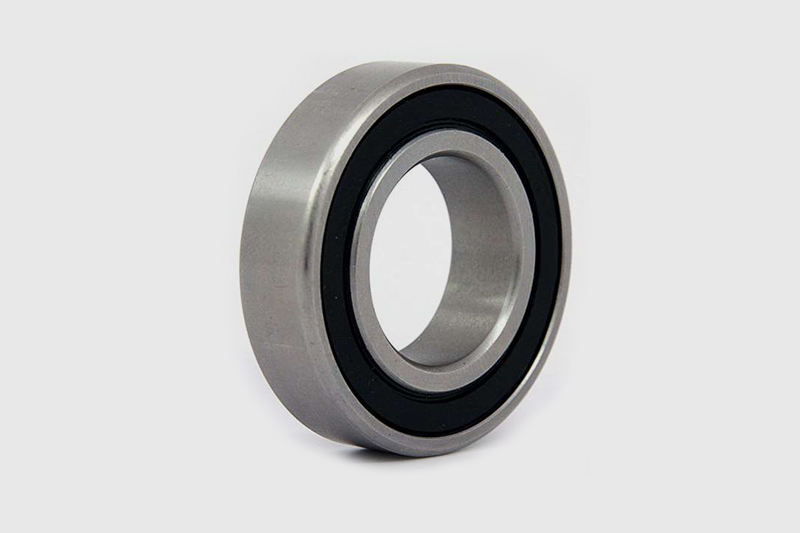
Series 1600 Chrome Steel Deep Groove Ball Bearing
Product Overview The Series 1600 Deep Groove Ball ...




Content
Choose a taper roller bearing when your application involves heavy combined radial and axial (thrust) loads — such as wheel hubs, gearboxes, or differentials — since their tapered rollers and races handle mixed loading roughly 2 to 3 times more effectively than a standard ball bearing of the same size. Choose a ball bearing instead when your application prioritizes high rotational speed, low friction, and lighter radial loads, such as electric motors, fans, and precision spindles. The core tradeoff is straightforward: taper roller bearings win on combined heavy-load capacity, while ball bearings win on speed and quiet, low-friction operation.
The fundamental difference between these two bearing types comes down to geometry. A ball bearing uses spherical balls making point contact with the inner and outer races, which is efficient for smooth rotation but limits how much load can be transferred through each contact point before deformation occurs.
A taper roller bearing uses cone-shaped rollers set at an angle between an inner and outer race, creating line contact rather than point contact. This line contact spreads load across a much larger surface area, which is why taper roller bearings can handle significantly higher combined radial and thrust loads without premature wear.
| Factor | Taper Roller Bearing | Ball Bearing |
|---|---|---|
| Radial load capacity | Very high | Moderate |
| Axial (thrust) load capacity | Very high (one direction per bearing) | Low to moderate |
| Maximum rotational speed | Lower | Higher |
| Friction / noise level | Higher | Lower |
| Installation complexity | Requires preload/clearance adjustment | Simple, sealed units common |
| Typical relative cost | Moderate to high | Low to moderate |
Taper roller bearings are the right choice whenever an application combines significant radial load with axial thrust in one direction, which is extremely common in rotating machinery that also pushes or pulls along its shaft.
Because a single taper roller bearing only supports thrust in one direction, most applications mount them in matched pairs — either face-to-face or back-to-back — to handle thrust loads from both directions.
Ball bearings are the better fit whenever speed, low friction, and simplicity matter more than raw combined-load capacity.
Bearing manufacturers publish two key ratings for any bearing: dynamic load rating (C), the load a bearing can handle for a rated number of revolutions, and static load rating (C0), the maximum load it can bear at rest without permanent deformation. As a general benchmark, a taper roller bearing of a given bore size often carries a dynamic load rating 1.5 to 2.5 times higher than a deep-groove ball bearing of the same bore diameter, largely due to the line-contact design.
Taper roller bearings are further categorized by contact angle, typically ranging from 10 to 30 degrees. A steeper contact angle increases axial load capacity but reduces radial load capacity, so selecting the right angle for your specific load ratio is an important part of proper bearing selection.
Ball bearings are generally easier to install, since many come as sealed, pre-lubricated units requiring no field adjustment. Taper roller bearings, by contrast, require careful setting of internal clearance or preload during installation — too little preload allows excessive play and premature wear, while too much preload generates excess heat and shortens bearing life.
Taper roller bearings and ball bearings solve different problems: taper roller bearings excel at heavy combined radial and axial loads found in wheel hubs, gearboxes, and heavy machinery, while ball bearings excel at high-speed, low-friction operation in motors, fans, and precision equipment. Matching the bearing type to your dominant load pattern — and, for taper roller bearings, setting preload correctly during installation — is what determines whether your bearing delivers years of reliable service or fails well ahead of its rated life.

Product Overview The Series 1600 Deep Groove Ball ...
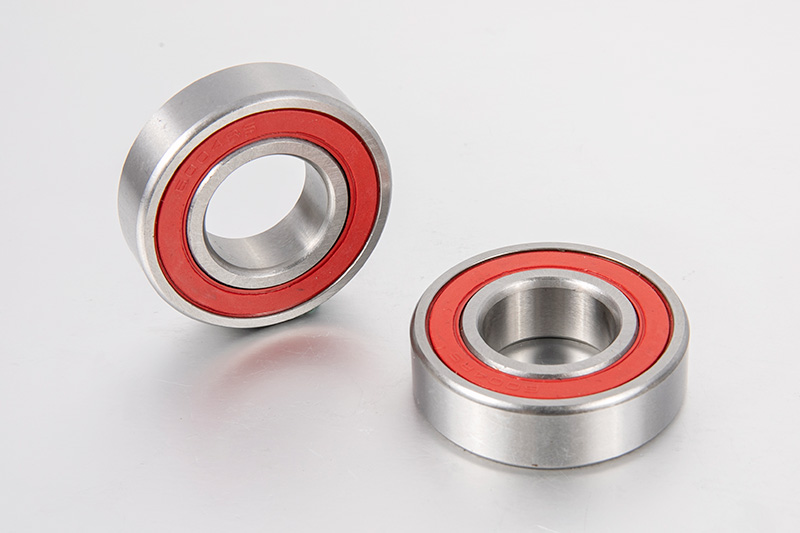
Key Features & Benefits 1. Superior Sealing Pe...

Product Overview:The 6200 Series Deep Groove Ball ...
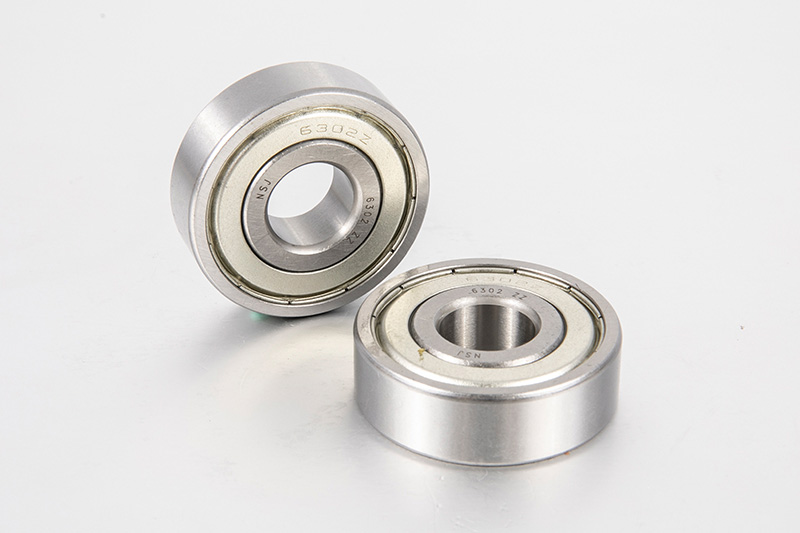
Core Differentiators: Enhanced Load Capacity: Unl...
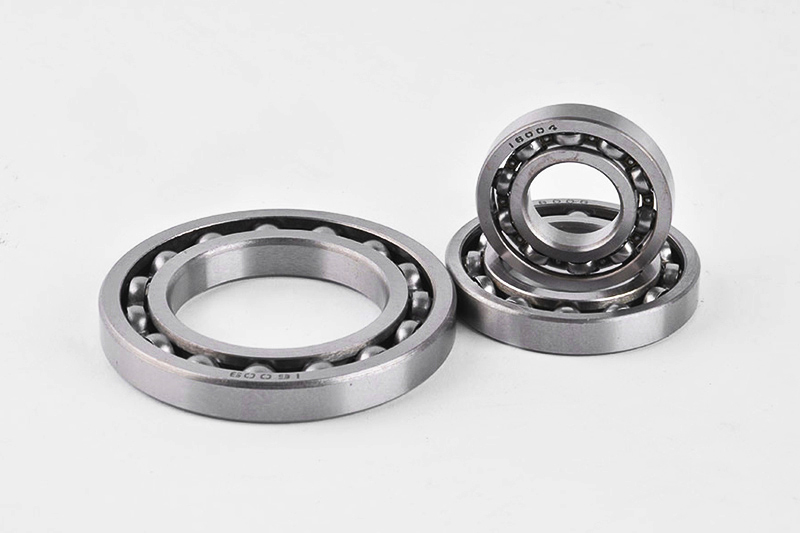
Core Technical Advantages: Maximum Space Efficien...