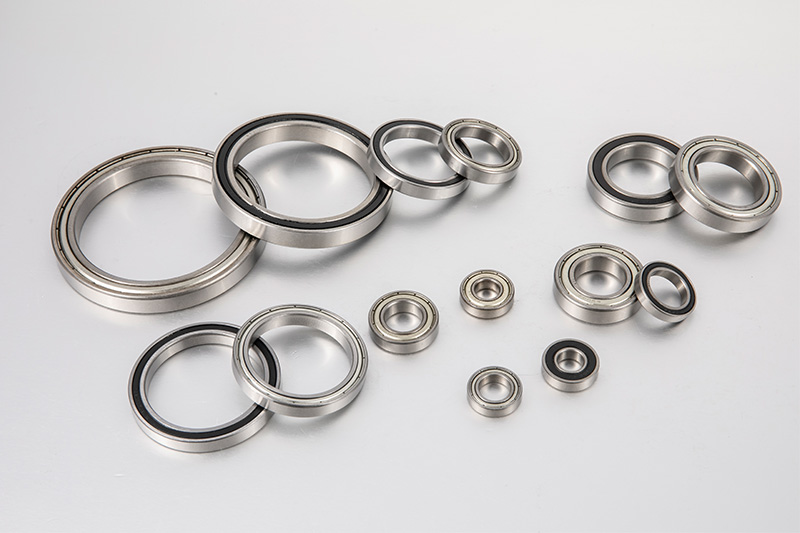
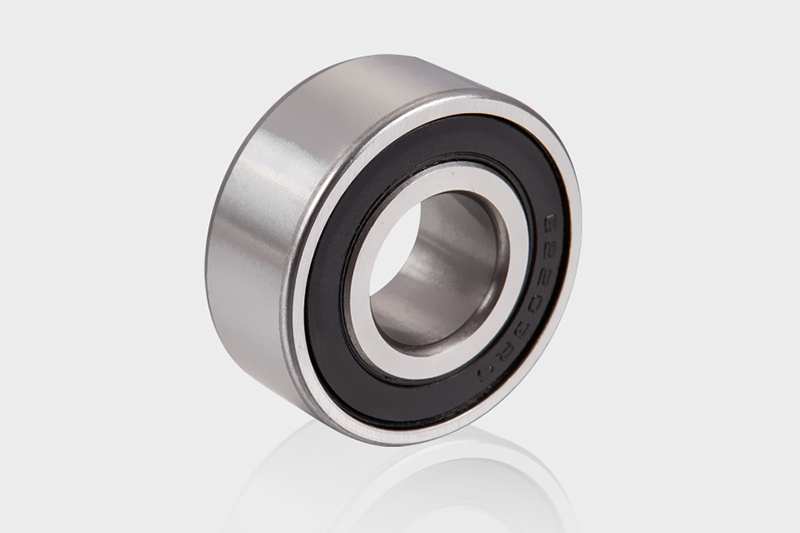
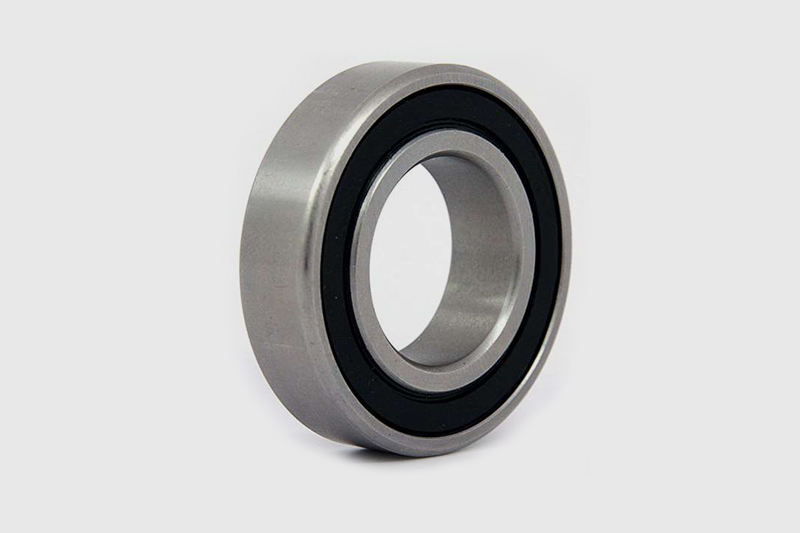
Series 1600 Chrome Steel Deep Groove Ball Bearing
Product Overview The Series 1600 Deep Groove Ball ...




Content
Incorrect installation is responsible for over 50% of premature self-aligning ball bearing failures — more than any operational factor including overloading, contamination, or lubrication deficiency. The most damaging mistakes happen in the first minutes of mounting: applying force through the rolling elements, using impact tools directly on the ring faces, or pressing a bearing onto a shaft with incorrect fit. A correctly installed self-aligning ball bearing requires a controlled interference fit on the rotating ring, force applied only through the ring being pressed, and a verified alignment within the bearing's self-aligning capacity before the machine is started. Every deviation from these principles leaves permanent damage that determines how long the bearing will last — regardless of how well it is maintained afterward.
Fit selection — the interference or clearance between the bearing bore and shaft, and between the outer ring and housing — is the most consequential pre-installation decision. A fit that is too loose allows the ring to creep on its seat, generating fretting corrosion and progressive bore wear. A fit that is too tight reduces internal clearance, preloads the rolling elements, and raises operating temperature. Neither condition is recoverable once the machine is running.
The inner ring rotates with the shaft in most self-aligning ball bearing applications and must be interference-fitted to prevent creep. Recommended shaft tolerance for rotating inner ring loads:
| Shaft Diameter (mm) | Normal / Light Load | Heavy / Shock Load | Typical Interference |
|---|---|---|---|
| 18–30 | k5 / js5 | m5 / n5 | 0–18 µm |
| 30–50 | k5 / js6 | m5 / n6 | 5–25 µm |
| 50–80 | m5 / k6 | n5 / p6 | 10–35 µm |
| 80–120 | m6 / k6 | n6 / p6 | 13–45 µm |
The outer ring is stationary in most applications and receives a clearance or transition fit in the housing to allow controlled axial float that accommodates shaft thermal expansion. A typical housing tolerance for a stationary outer ring is H7, providing 0–30 µm clearance depending on bore size. Where the outer ring rotates or heavy shock loads are present, tighten to JS7 or K7 to prevent ring rotation. Never use an interference fit on both rings simultaneously in a standard two-bearing shaft arrangement — one bearing must float axially to prevent thermal lock-up.
Bearing installation onto an unprepared shaft or housing is one of the most common causes of short service life. Surface condition and dimensional accuracy of the seating surfaces directly determine whether the bearing runs true and whether the fit delivers its designed interference.
Cold mounting — pressing the bearing onto the shaft at ambient temperature — is appropriate for bearings with bore diameters up to approximately 80 mm where the required interference force does not exceed the capacity of available tooling. Beyond this size, thermal mounting becomes necessary.
Mounting force must be applied directly and exclusively to the ring being pressed onto its seat. When pressing the inner ring onto a shaft, force must act on the inner ring face only. When pressing into a housing bore, force acts on the outer ring face only. If force is applied to the outer ring while pressing the inner ring onto a shaft, the full mounting load passes through the balls and raceways — creating brinelling indentations in the raceways that are permanent and immediately reduce bearing life by 30–80% depending on the force magnitude.
After cold mounting, verify that the inner ring is fully seated against the shaft shoulder with zero feeler gauge clearance (below 0.05 mm) at all points around the circumference. A partially seated bearing runs cocked on the shaft — generating the same failure mechanism as a misaligned housing but far more severe because the misalignment is at the inner ring level.
For bearings with bore diameters above 80 mm or where interference exceeds approximately 25 µm, thermal expansion of the inner ring is the preferred mounting method. Heating the bearing ring expands the bore sufficiently to slide onto the shaft without force, eliminating the risk of brinelling entirely.
An induction heater is the correct tool for thermal bearing mounting. It heats the bearing ring uniformly, rapidly, and to a precisely controlled temperature — typically 80–110°C above ambient. At 100°C above ambient, a bearing with a 100 mm bore expands approximately 120 µm in diameter — sufficient to overcome any standard interference fit with clearance to spare for easy sliding.
Critical rules for induction heating:
Open flame (oxy-acetylene torch, propane burner) and oil bath heating are both unacceptable for self-aligning ball bearings. Open flame creates extreme local temperature gradients that warp the ring geometry and can exceed 200°C locally before the average temperature reaches 80°C. Oil baths can reach the correct temperature but contaminate the bearing's lubricant and internal clearances with oil residue that may be incompatible with the specified grease. Both methods are prohibited by all major bearing manufacturers for precision bearings.
Self-aligning ball bearings are frequently supplied with a tapered bore (1:12 taper ratio) for mounting on adapter sleeves or tapered shaft seats. This mounting method is particularly common in conveyor, fan, and agitator applications where bearings must be installed and removed frequently without specialist tools or shaft modification.
The adapter sleeve's outer surface has the same 1:12 taper as the bearing bore. As the locknut drives the bearing axially along the taper, the bore diameter contracts — creating the interference fit with the sleeve, which in turn grips the shaft. The amount of axial drive-up onto the taper directly determines the resulting internal clearance reduction and interference magnitude.
Over-tightening the locknut is the most common adapter sleeve mounting error and the one with the most severe consequence. Excessive drive-up compresses the inner ring beyond its designed limit, reducing internal clearance to zero or negative — preloading the balls and causing immediate overheating and early raceway fatigue. Insufficient drive-up leaves the bearing loose on the sleeve, allowing creep and fretting.
Two methods are used to control drive-up correctly:
After tightening, secure the locknut with the locking washer tab bent into the nearest locknut slot. Never leave an adapter sleeve locknut unsecured — vibration loosens unsecured locknuts within hours of operation, causing the bearing to migrate axially on the sleeve.
Self-aligning ball bearings are supplied from the manufacturer with a preservation coating — either a light oil or corrosion inhibitor — that is not a functional lubricant and must not be relied upon for initial operation. The correct lubrication must be applied before or immediately after installation.
Overfilling with grease is as damaging as underfilling. Excess grease churns within the bearing, generating heat that degrades the base oil and thickener — raising operating temperature by 10–30°C compared to a correctly filled bearing and shortening grease life proportionally. The correct initial grease fill for a self-aligning ball bearing in a standard housing is 30–50% of the free internal volume of the bearing. For reference, a 60 mm bore, 22 mm wide self-aligning ball bearing has a free volume of approximately 8–12 cm³ — the correct grease fill is 3–6 cm³ (approximately 3–6 grams) depending on speed.
Mixing incompatible greases at installation — for example, adding a polyurea-thickened grease to a bearing pre-packed with a lithium-thickened grease — causes thickener interaction that can liquefy the mixture, causing the lubricant to run out of the bearing within the first hours of operation. Always verify grease compatibility before installation, or flush any existing lubricant completely before applying a new grease type.
Installation is not complete when the bearing is seated and lubricated. A structured post-installation check and controlled running-in procedure catches mounting errors before they cause irreversible damage and conditions the lubricant for full-load service.
Start the machine at no load or reduced load for the first 30–60 minutes of operation. Monitor bearing housing temperature at 10-minute intervals. A correctly installed and lubricated bearing will show a temperature rise of 10–25°C above ambient during running-in that stabilizes within 30–45 minutes. Temperature that continues rising beyond 70°C housing temperature or does not stabilize indicates a problem — stop the machine and investigate before the temperature reaches 80°C, which is the point at which grease degradation accelerates irreversibly in most standard greases.
The table below summarizes the most damaging installation errors, the specific failure mechanism each triggers, and how quickly each manifests in service.
| Installation Error | Failure Mechanism | Time to Failure | Observable Symptom |
|---|---|---|---|
| Force applied through rolling elements during press-fit | Brinelling of inner and outer raceways | Immediate — first hours | Noise, vibration at ball-pass frequency |
| Heating above 120°C during thermal mounting | Tempering of ring steel — reduced hardness | 2–6 months | Premature raceway pitting and spalling |
| Adapter sleeve locknut over-tightened | Zero or negative internal clearance — ball overload | Hours to days | Rapid temperature rise, seizure |
| Shaft undersize — inner ring creep | Fretting corrosion, shaft bore wear | 1–6 months | Red-brown fretting debris, shaft scoring |
| Contamination on seating surface during installation | Hard particle indentation of raceway | Weeks to months | Progressive noise increase, vibration |
| Grease overfill at installation | Churning heat generation, grease degradation | Days to weeks | Elevated operating temperature, grease leakage |
Use this checklist for every self-aligning ball bearing installation. Each step addresses a specific failure mode. Skipping any step transfers the risk of that failure mode directly into the bearing's operating life.

Product Overview The Series 1600 Deep Groove Ball ...
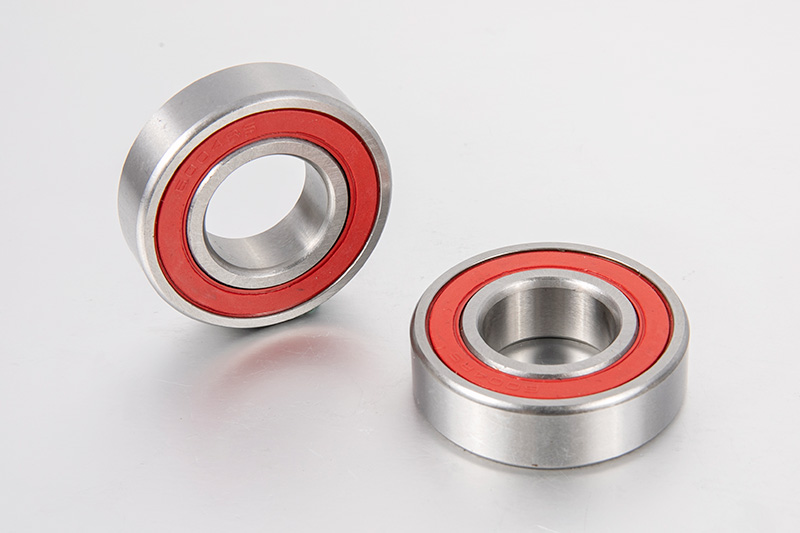
Key Features & Benefits 1. Superior Sealing Pe...

Product Overview:The 6200 Series Deep Groove Ball ...
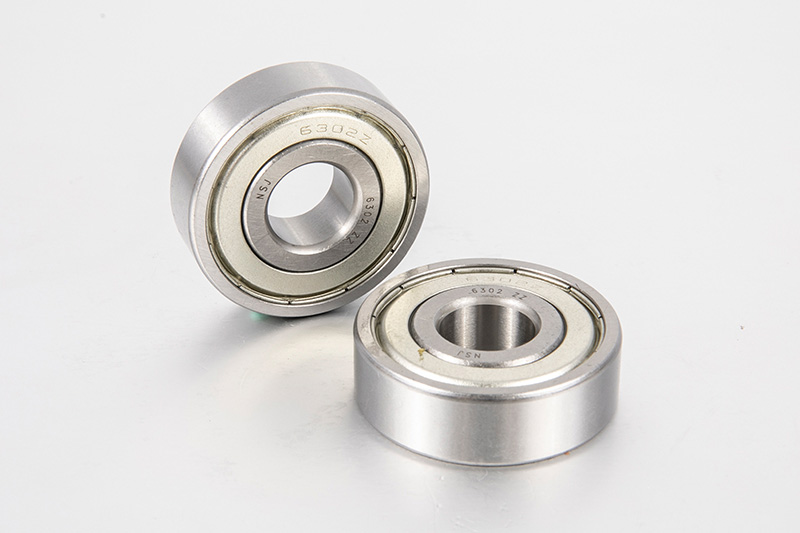
Core Differentiators: Enhanced Load Capacity: Unl...
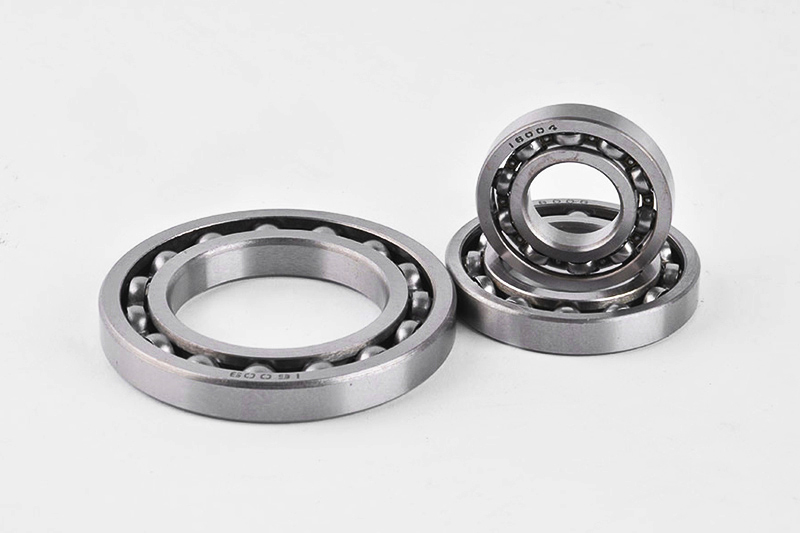
Core Technical Advantages: Maximum Space Efficien...