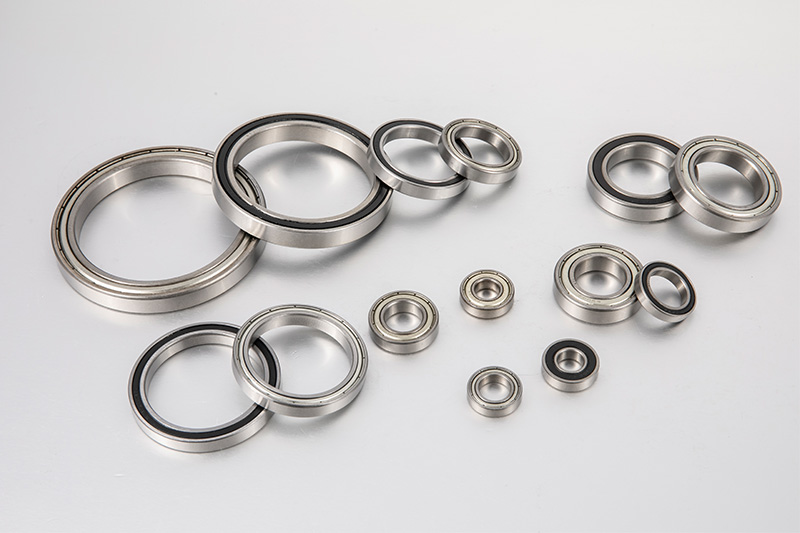
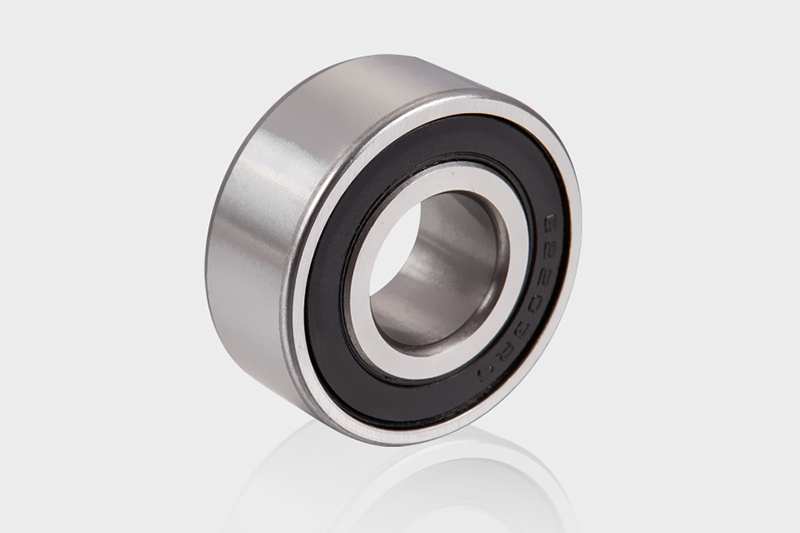
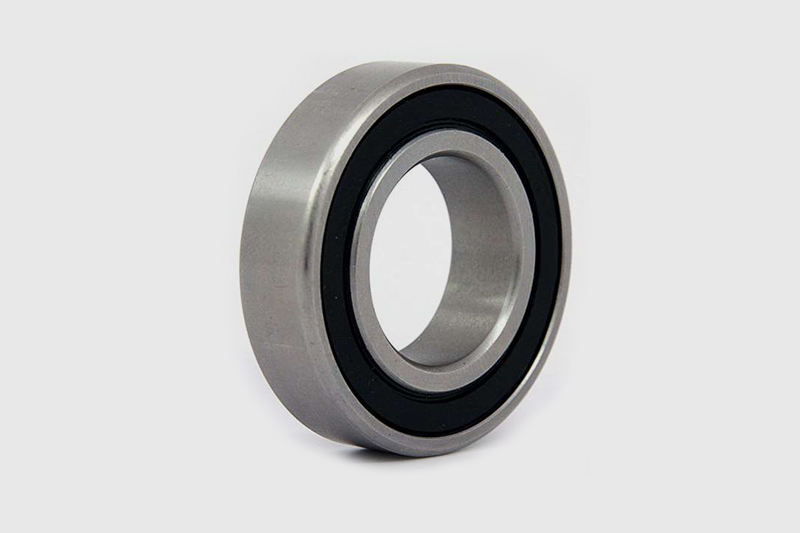
Series 1600 Chrome Steel Deep Groove Ball Bearing
Product Overview The Series 1600 Deep Groove Ball ...




Content
In heavy-duty mechanical design and industrial equipment maintenance, accurately calculating the load capacity of Thrust Cylindrical Roller Bearings is the core of ensuring system reliability. These bearings are renowned for their exceptional axial load-carrying capacity and high rigidity, making them widely used in oil drilling platforms, heavy-duty extruders, and industrial gearboxes. To maximize bearing service life and avoid catastrophic equipment failure, engineers must master the precise calculation methods for both Dynamic Load Ratings and Static Load Ratings.
To understand the load capacity of thrust cylindrical roller bearings, one must first distinguish their structural differences from ball bearings. Cylindrical rollers provide Line Contact rather than the Point Contact found in ball bearings. This geometric characteristic allows thrust cylindrical roller bearings to withstand massive axial thrust within a very small space. However, it also demands higher precision regarding vibration control and alignment.
In the calculation process, line contact means that the pressure is distributed across the entire length of the roller. According to the Hertzian contact stress theory, the calculation of load capacity must consider the effective length of the rollers. If the bearing is installed improperly, leading to tilting, the load will concentrate on the edges of the rollers, creating “Edge Stress.” This can reduce the theoretical load capacity by more than 50 percent. Therefore, in high-frequency searches, “Bearing Misalignment” remains a critical long-tail keyword related to load calculations.
The calculation of the dynamic load rating is the basis for predicting bearing Fatigue Life. For thrust cylindrical roller bearings, the globally recognized standard is ISO 281. This formula considers not only physical dimensions but also the impact of material technology and processing precision on load capacity.
For single-row thrust cylindrical roller bearings, the basic dynamic axial load rating Ca (measured in Newtons) is calculated using the following variables:
Ca = fc * (Lw * cos alpha)^7/9 * Z^3/4 * Dw^29/27
After obtaining Ca, engineers need to calculate the Rating Life (L10). For thrust roller bearings, the calculation formula is:
L10 = (Ca / Pa)^10/3
The exponent of 10/3 (approximately 3.33) reflects the fact that roller bearings are more durable before fatigue failure compared to ball bearings (which use an exponent of 3). On a corporate website, demonstrating this precise life prediction significantly enhances customer trust in the product.
In many applications, bearings are not always in a high-speed operating state. For example, when opening a heavy valve or at the moment a crane lifts a load, the bearing is subjected to immense pressure while stationary. In such cases, we must rely on the ISO 76 standard to calculate the static load capacity.
The static load capacity is defined as the load that results in a total permanent deformation at the contact center of the most heavily loaded roller and raceway, not exceeding 0.0001 of the roller diameter. If this value is exceeded, the bearing will generate severe vibration and noise during subsequent rotation. This is commonly referred to in industrial searches as the “Brinelling Effect.”
The general formula for the static axial load rating C0a is expressed as:
C0a = 220 * Z * Lw * Dw * sin alpha
The constant 220 represents the performance level of standard hardened bearing steel under specific contact stress levels.
Actual working conditions are far more complex than laboratory conditions. Lubrication, temperature, and installation accuracy all act as “correction factors” that directly affect the effective load capacity of the bearing.
| Impact Factors | Variable | Impact on Capacity | Recommendations |
|---|---|---|---|
| Operating Temperature | ft | Significant decrease above 120C | Use heat-stabilized steel |
| Lubrication Conditions | kappa | Poor lubrication causes metal contact | Ensure viscosity ratio kappa > 1.5 |
| Alignment Errors | beta | Small tilt angles cause load concentration | Use spherical washers or self-aligning seats |
| Material Purity | aISO | Impurities lead to early spalling | Choose vacuum-degassed or ESR steel |
| Operating Speed | n | Centrifugal force increases stress | Verify Limiting Speed specifications |
No. These bearings are designed strictly for axial loads. Because the rollers are arranged perpendicular to the shaft axis, radial forces cause severe friction with the cage or can even lead to the collapse of the assembly. If radial forces are present, please use a needle roller bearing in combination.
This is due to the difference in contact mechanics. Ball bearings utilize point contact, which results in higher stress concentration and an exponent of 3. Cylindrical roller bearings utilize line contact, which distributes stress more evenly, thus using the superior exponent of 10/3.
The thickness of the lubrication oil film determines whether the roughness peaks of the contact surfaces will collide. Even if the theoretical load rating is high, if the oil viscosity is too low, the actual service life may be less than 10 percent of the calculated value.

Product Overview The Series 1600 Deep Groove Ball ...
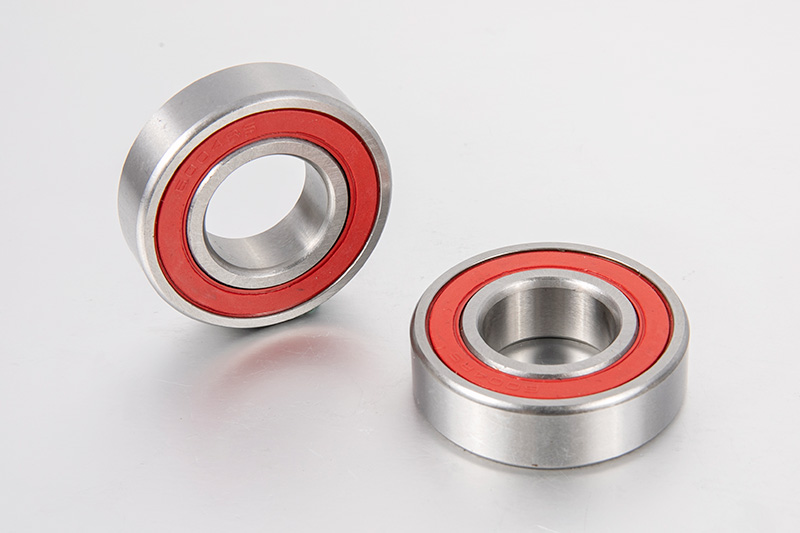
Key Features & Benefits 1. Superior Sealing Pe...

Product Overview:The 6200 Series Deep Groove Ball ...
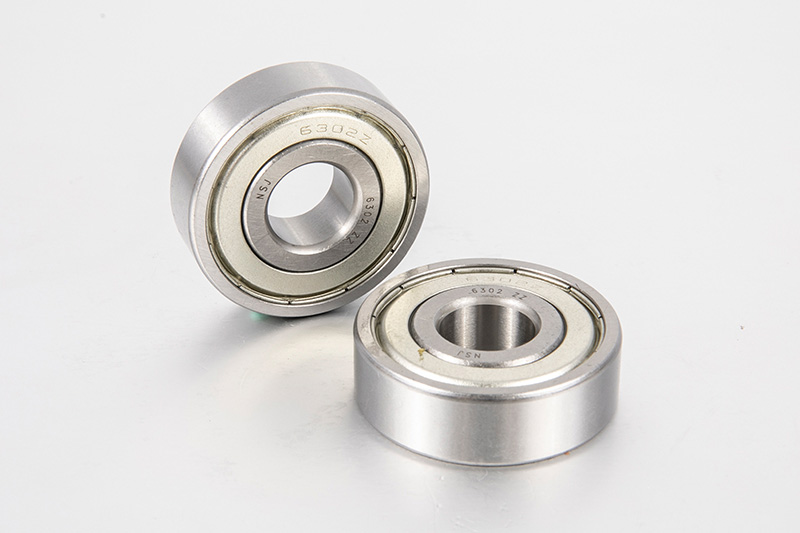
Core Differentiators: Enhanced Load Capacity: Unl...
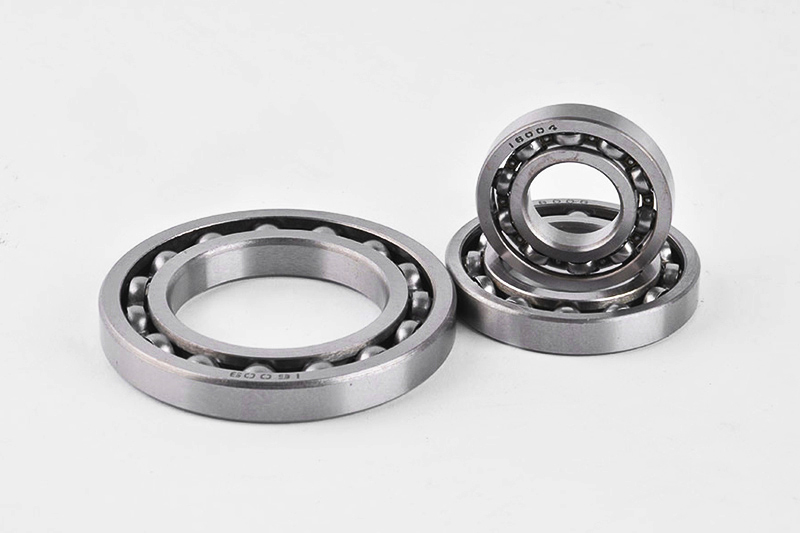
Core Technical Advantages: Maximum Space Efficien...