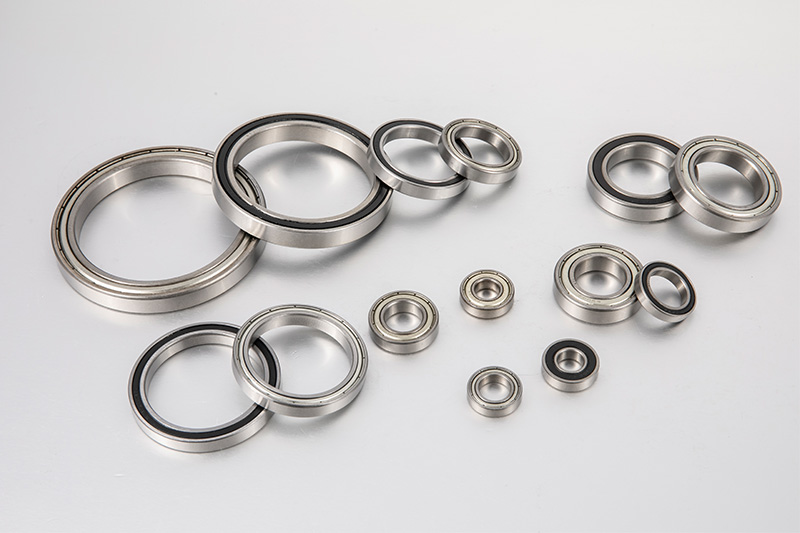
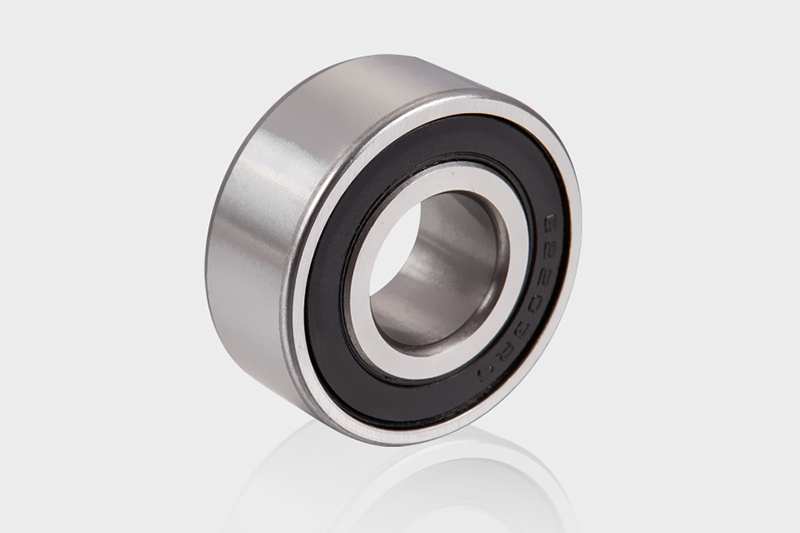
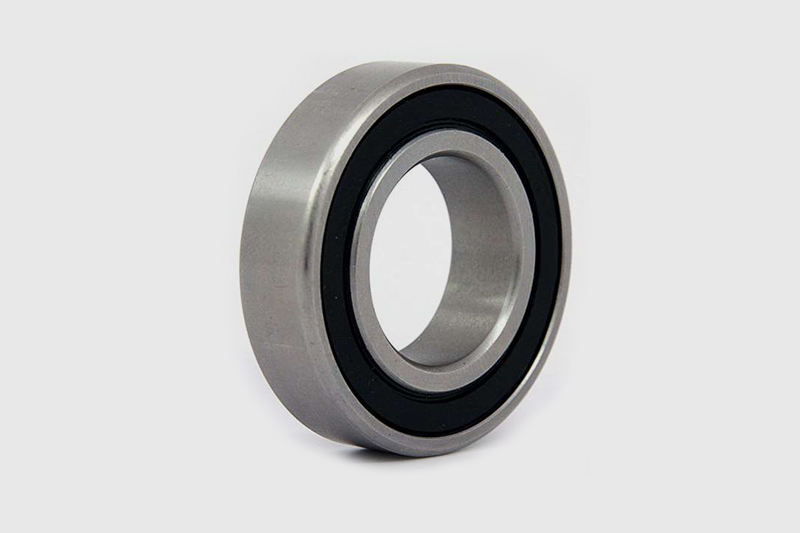
Series 1600 Chrome Steel Deep Groove Ball Bearing
Product Overview The Series 1600 Deep Groove Ball ...




Content
In a perfect world, every motor shaft would align perfectly with every pump, fan, or gearbox input shaft. In reality, shafts sag under their own weight, thermal expansion changes dimensions, mounting bases are never perfectly flat, and manufacturing tolerances stack up. Misalignment is inevitable. When shafts are not perfectly aligned, standard bearings suffer. They overheat, wear rapidly, and fail prematurely. Yet some rotating equipment runs for years despite noticeable misalignment. The secret is often self-aligning ball bearings. These remarkable components tolerate angular misalignment that would destroy ordinary bearings. But how exactly do they do it? Understanding the internal geometry and working principle of self-aligning ball bearings explains why they are indispensable for long shafts, flexible couplings, and equipment prone to thermal movement.
Before exploring how self-aligning bearings work, it helps to understand why ordinary bearings fail when shafts are not perfectly aligned.
A standard deep groove ball bearing has a single row of balls running in two rigid raceways—one on the inner ring and one on the outer ring. Both raceways are ground to precise curvatures that match the ball diameter. When the inner ring (mounted on the shaft) tilts relative to the outer ring (mounted in the housing), several problems occur:
Even a small misalignment of 0.5 to 1 degree can reduce the life of a deep groove ball bearing by 50–90%. At 2 degrees of misalignment, many standard bearings fail within hours or days.
Certain equipment designs make perfect alignment nearly impossible:
Self-aligning ball bearings solve these problems by allowing the inner ring (and shaft) to tilt relative to the outer ring without creating edge loading.
The magic of self-alignment lies entirely in the shape of the outer ring raceway. While a deep groove bearing has a single spherical radius on its outer raceway, a self-aligning ball bearing has a spherical radius on the outer ring’s inner diameter.
A self-aligning ball bearing contains two rows of balls. Both rows run on a single continuous spherical raceway machined into the outer ring. This raceway is not a simple circular groove—it is a segment of a sphere. The center of this sphere coincides with the bearing’s geometric center.
The inner ring has two separate raceways, one for each row of balls. But the outer ring’s spherical surface allows the entire inner ring and ball assembly to tilt like a pendulum inside the outer ring.
Imagine a ball-and-socket joint, like a human hip joint. The ball (the inner ring assembly) can rotate and tilt inside the socket (the outer ring’s spherical raceway). No matter how the inner ring tilts, the balls maintain full contact with both raceways because the outer raceway’s spherical surface presents the same curvature in every direction.
This is the key insight: In a standard bearing, the outer raceway is a curved groove that matches the ball’s radius in one direction only (the direction of rotation). In a self-aligning bearing, the outer raceway is a spherical surface that matches the ball’s radius in every direction.
| Feature | Deep Groove Ball Bearing | Self-Aligning Ball Bearing |
|---|---|---|
| Number of ball rows | One | Two |
| Outer ring raceway shape | Circular groove (single radius in one plane) | Spherical surface (same radius in all planes) |
| Inner ring raceway shape | Circular groove | Two separate circular grooves |
| Tolerance to misalignment | 0.5–1.0 degrees (with significant life reduction) | 1.5–3.0 degrees (with minimal life reduction) |
| Relative load capacity (same size) | 100% (baseline) | 70–85% of deep groove |
| Maximum speed capability | Very high | Moderate to high |
When a shaft is perfectly aligned with the bearing housing, the self-aligning bearing behaves like two standard bearings side by side. The balls roll in the centers of their raceways, and the load is distributed evenly across both rows.
Now imagine the shaft tilts relative to the housing. The inner ring, mounted on the shaft, tilts with it. Inside the bearing:
The result is that the bearing operates with near-normal friction, normal heat generation, and near-normal life despite angular misalignment that would destroy a non-self-aligning bearing.
As the shaft rotates, the balls circulate around the raceways. The tilt angle remains constant relative to the shaft. The balls do not “hunt” or seek alignment; they simply roll along a path that is slightly offset from the center of the outer raceway. Because the spherical raceway has no “edges” in the direction of tilt, the rolling motion remains smooth.
Manufacturers specify the permissible misalignment angle for their self-aligning ball bearings. Typical values range from 1.5 to 3 degrees, depending on bearing size and series.
| Factor | Effect on Misalignment Capacity |
|---|---|
| Bearing bore diameter | Larger bearings generally allow slightly more misalignment (up to 3 degrees) |
| Bearing series (light, medium, heavy) | Heavier series have larger balls and more robust cages, allowing higher misalignment |
| Operating speed | Higher speeds require reduced misalignment (friction increases with speed) |
| Load magnitude | Higher loads reduce allowable misalignment (contact stresses increase) |
| Lubrication type | Oil lubrication handles misalignment better than grease at high speeds |
For comparison, a standard deep groove ball bearing should never exceed 0.25–0.5 degrees of dynamic misalignment. The self-aligning bearing offers 5–10 times more misalignment capacity.
One common concern is whether misalignment causes one row of balls to carry all the load. The answer depends on the direction of misalignment relative to the load direction.
When a self-aligning bearing carries pure radial load and experiences angular misalignment, both ball rows continue to share the load, but not equally. The row toward which the shaft tilts carries slightly more load. However, because the outer raceway is spherical, the load distribution remains much more even than in a misaligned deep groove bearing.
Self-aligning ball bearings can carry axial loads in both directions, but their axial load capacity is lower than that of angular contact bearings. Under misalignment, axial load capacity decreases further because the load path becomes less direct. For applications with significant axial loads plus misalignment, self-aligning roller bearings (spherical roller bearings) are often a better choice.
| Bearing Type | Dynamic Load Rating (relative) | Tolerance to Misalignment | Axial Load Capacity |
|---|---|---|---|
| Self-aligning ball bearing | 70–85% | Excellent (1.5–3.0°) | Moderate |
| Deep groove ball bearing | 100% | Poor (0.25–0.5°) | Moderate |
| Spherical roller bearing | 120–150% | Excellent (1.5–2.5°) | Very high |
| Angular contact ball bearing | 90–110% | Poor (0.1–0.3°) | High (one direction) |
Self-aligning ball bearings occupy a middle ground: better misalignment capacity than deep groove bearings, but lower load capacity. They are ideal for moderate loads with significant misalignment.
Certain industries and equipment types depend on the self-aligning feature to function reliably.
Tractors, combines, and balers operate in dusty, uneven fields. Shafts flex, frames twist, and misalignment is constant. Self-aligning ball bearings are standard in:
Long conveyor shafts sag between supports. Idler rollers on belt conveyors also benefit from self-alignment. Applications include:
These industries use long, slender rolls that heat up during operation. Thermal expansion causes roll growth, which shifts bearing positions. Self-aligning bearings accommodate this movement.
Large industrial fans often have shafts that pass through housings with bearings mounted on flexible supports. Misalignment from ductwork stresses and thermal growth is common.
Ship propeller shafts are long and flexible. The stern tube bearing and the engine thrust bearing are rarely perfectly aligned, especially as the hull flexes in waves.
Self-aligning ball bearings are not universal solutions. They have specific limitations.
For the same envelope dimensions (bore diameter and outside diameter), a self-aligning ball bearing has a lower dynamic load rating than a deep groove ball bearing. Why? Because the two rows of balls require space, which means each ball can be smaller than the single row of larger balls in a deep groove bearing. If your application has high radial loads and minimal misalignment, a deep groove bearing is better.
Self-aligning ball bearings can handle axial loads, but poorly compared to angular contact bearings. The spherical outer raceway does not provide a steep contact angle for axial forces. For applications with significant thrust loads (e.g., vertical shafts, worm gears), consider angular contact or tapered roller bearings.
The two-row design and the cage geometry of self-aligning ball bearings limit their maximum speed compared to deep groove bearings. At very high speeds (DN values above 500,000), the balls generate more heat due to the slightly longer rolling path. For ultra-high-speed applications, deep groove or angular contact bearings are preferred.
Self-aligning ball bearings require some radial load to maintain proper ball-raceway contact. Under pure axial load with no radial component, the balls may not roll correctly, leading to skidding and wear.
To achieve the self-aligning benefit, the bearing must be installed correctly. The most common mounting method uses an adapter sleeve or a tapered bore.
Many self-aligning ball bearings have a tapered bore (1:12 taper). They mount on a plain shaft using an adapter sleeve. The sleeve slides between the shaft and the bearing bore. As you tighten the lock nut, the sleeve expands, clamping the bearing onto the shaft. This method:
However, over-tightening the adapter sleeve can preload the bearing, reducing internal clearance and eliminating the self-aligning capability. Follow the manufacturer’s tightening specifications precisely.
Self-aligning ball bearings are often supplied as complete units with a pillow block housing (called self-aligning ball bearing units). These units have a spherical outer diameter on the bearing that mates with a spherical bore in the housing. This arrangement allows the entire bearing to tilt inside the housing, providing a second level of self-alignment.
| Mistake | Consequence |
|---|---|
| Over-tightening adapter sleeve | Reduces internal clearance, prevents self-alignment, causes overheating |
| Using a hammer to install | Damages raceways and balls, creates brinelling (indentations) |
| Ignoring housing bore tolerance | Housing that is too tight restricts outer ring movement; too loose allows spinning |
| Forcing misaligned bearing | The bearing self-aligns only when free; forcing it into a misaligned housing defeats the purpose |
When self-aligning ball bearings fail, the causes differ from standard bearing failures.
Q1: Can self-aligning ball bearings compensate for both angular and parallel misalignment?
Self-aligning ball bearings compensate only for angular misalignment (shaft tilt). They do not compensate for parallel offset (where the shaft centerline is shifted sideways but parallel to the housing centerline). For parallel misalignment, you need flexible couplings or a different bearing arrangement. However, angular misalignment is far more common in rotating equipment.
Q2: What happens if I exceed the recommended misalignment angle?
Exceeding the manufacturer’s recommended misalignment angle causes the balls to contact the edges of the outer ring raceway. This creates edge loading, high contact stresses, rapid wear, and heat generation. The bearing will fail prematurely, often within hours. In extreme misalignment (over 5 degrees), the balls may lose contact with one raceway entirely, causing the cage to break.
Q3: How do self-aligning ball bearings compare to spherical roller bearings for misalignment?
Spherical roller bearings tolerate similar misalignment angles (1.5–2.5 degrees) but have much higher load capacity, especially for heavy radial and axial loads. However, spherical roller bearings are larger, more expensive, and generate more heat at high speeds. Self-aligning ball bearings are better for moderate loads and higher speeds. Choose spherical roller bearings for heavy industrial applications (crushers, vibrating screens). Choose self-aligning ball bearings for fans, conveyors, and agricultural machinery.
Q4: Can I replace a deep groove ball bearing with a self-aligning ball bearing in an existing machine?
Not directly. Self-aligning ball bearings have different external dimensions (width, outer ring shape) and require housings with spherical seats or appropriate clearance. You cannot simply swap them without modifying the housing. However, complete self-aligning bearing units (pillow blocks) can replace existing mounted bearings if the shaft diameter and mounting bolt pattern match.
Q5: Do self-aligning ball bearings require special lubrication?
No. Standard grease or oil lubrication works well. However, because the balls roll on a spherical surface, the lubrication film must reach all areas of the outer raceway. Use a lithium-based grease with good adhesion properties. For high-speed applications, oil lubrication (oil bath or circulating oil) is preferred. Do not over-grease; excess grease increases drag and heat.
Q6: How do I know if my equipment needs self-aligning bearings?
If you experience frequent bearing failures (every few months), and the failed bearings show signs of uneven raceway wear or edge loading, misalignment is likely the cause. Measure the alignment of your shafts. If angular misalignment exceeds 0.5 degrees and you cannot correct it (due to structural limitations, thermal growth, or long shaft spans), self-aligning bearings are a good solution.
Q7: What is the difference between a self-aligning ball bearing and a self-aligning bearing unit (pillow block)?
A self-aligning ball bearing is just the bearing itself (inner ring, outer ring, balls, cage). A self-aligning bearing unit (often called a pillow block or take-up unit) consists of a self-aligning ball bearing mounted inside a housing. The housing has a spherical bore that matches the bearing’s spherical outer diameter, allowing the entire bearing to tilt inside the housing. This provides even more misalignment capability and simplifies mounting.
Q8: Can self-aligning ball bearings be used in vertical shaft applications?
Yes, but with caution. Vertical shafts impose axial loads from the weight of the shaft and any attached components. Self-aligning ball bearings have limited axial load capacity. For vertical shafts, ensure the axial load does not exceed approximately 20% of the bearing’s radial load rating. For heavy vertical shafts, consider angular contact bearings or tapered roller bearings instead.
Q9: How do I measure the misalignment angle in an existing bearing installation?
Use a dial indicator or laser alignment tool. Mount the indicator on the shaft near the bearing. Rotate the shaft and measure runout at two points along the shaft length. Calculate the angular difference. Alternatively, use a straightedge and feeler gauges: place a precision straightedge across the bearing housing faces and measure the gap at the shaft. For laser alignment, tools like the SKF TKSA or Fluke 830 provide direct angular misalignment readings.
Q10: Are self-aligning ball bearings always better than flexible couplings for handling misalignment?
No. Flexible couplings (gear couplings, grid couplings, elastomeric couplings) are designed specifically to connect two shafts and accommodate both angular and parallel misalignment. Bearings should not be relied upon to compensate for misalignment that should be handled by the coupling. The best practice is to align shafts as closely as possible (within 0.25 degrees) using proper alignment tools, then use self-aligning bearings as a safety factor for residual misalignment and thermal movement. Do not use self-aligning bearings to cover up gross alignment errors.

Product Overview The Series 1600 Deep Groove Ball ...
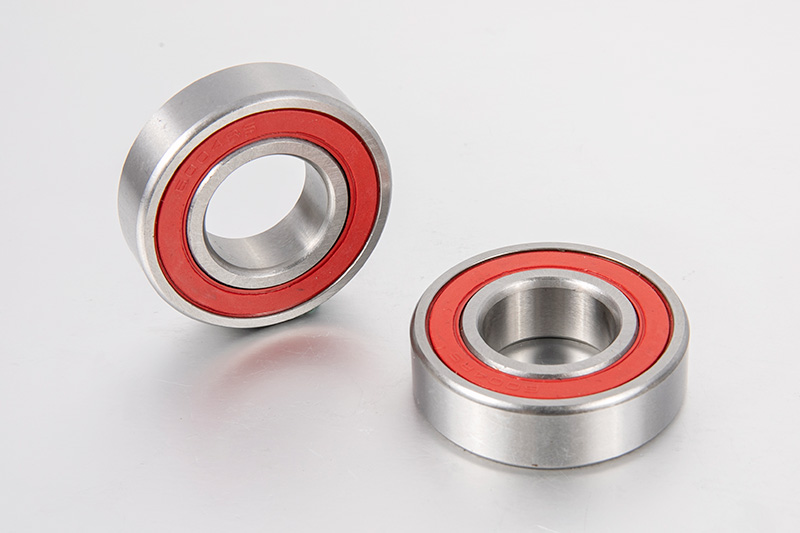
Key Features & Benefits 1. Superior Sealing Pe...

Product Overview:The 6200 Series Deep Groove Ball ...
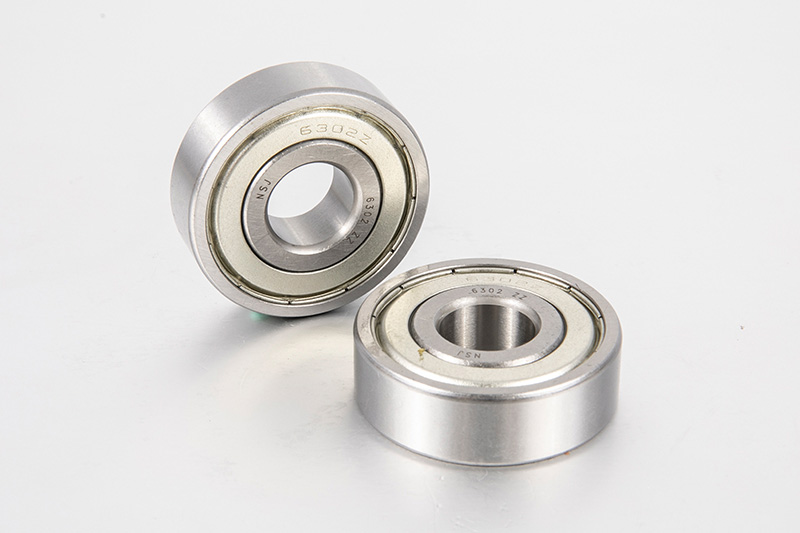
Core Differentiators: Enhanced Load Capacity: Unl...
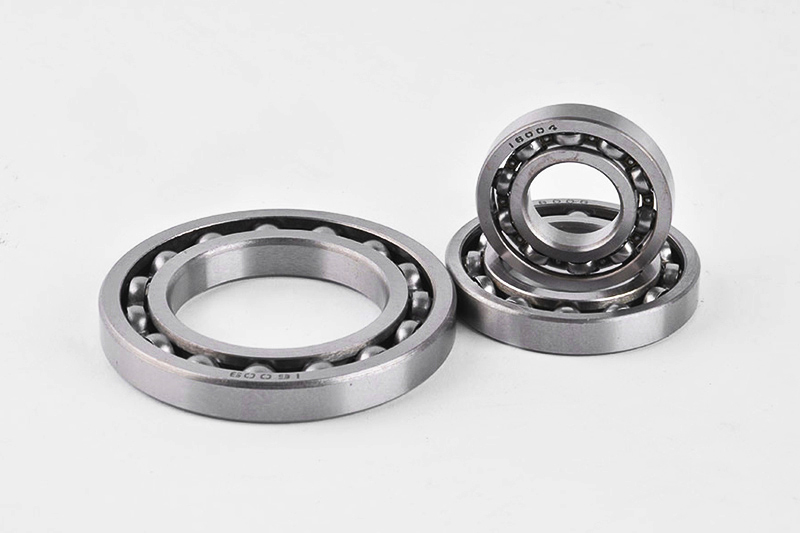
Core Technical Advantages: Maximum Space Efficien...